

Mental health support has expanded beyond traditional methods. Nowadays, online courses tailored to the unique needs of individuals are readily available.
In 2026, demand for accessible mental health education remains very strong across Canada, driven by continued focus on workplace mental health, stigma reduction, crisis response, and personal resilience following the pandemic years.
This article lists the best mental health online courses available to Canadians and discusses how these virtual resources foster personal growth, resilience, and proactive self-care.
| Course Name | Students Enrolled | Reviews |
|---|---|---|
| Coursera – Psychological First Aid | 45,000+ | 12,000+ |
| Coursera – Positive Psychiatry and Mental Health | 25,800+ | 3,800+ |
| Coursera – Social Context of Mental Health and Illness | 18,700+ | 5,200+ |
| Udemy – Mental Health and Wellness Professional Diploma Course | 20,000+ | 2,000+ |
| Udemy – Certificate in Mental Health Awareness | 18,000+ | 1,100+ |
| CAMH (Centre for Addiction and Mental Health) – Fundamentals of Mental Health Course | 29,400+ | 15,600+ |
| Links Institute – Mental Health Online Courses | 15,500+ | 2,400+ |
| Opening Minds – The Working Mind | 12,000+ | 4,500+ |
Coursera – Psychological First Aid
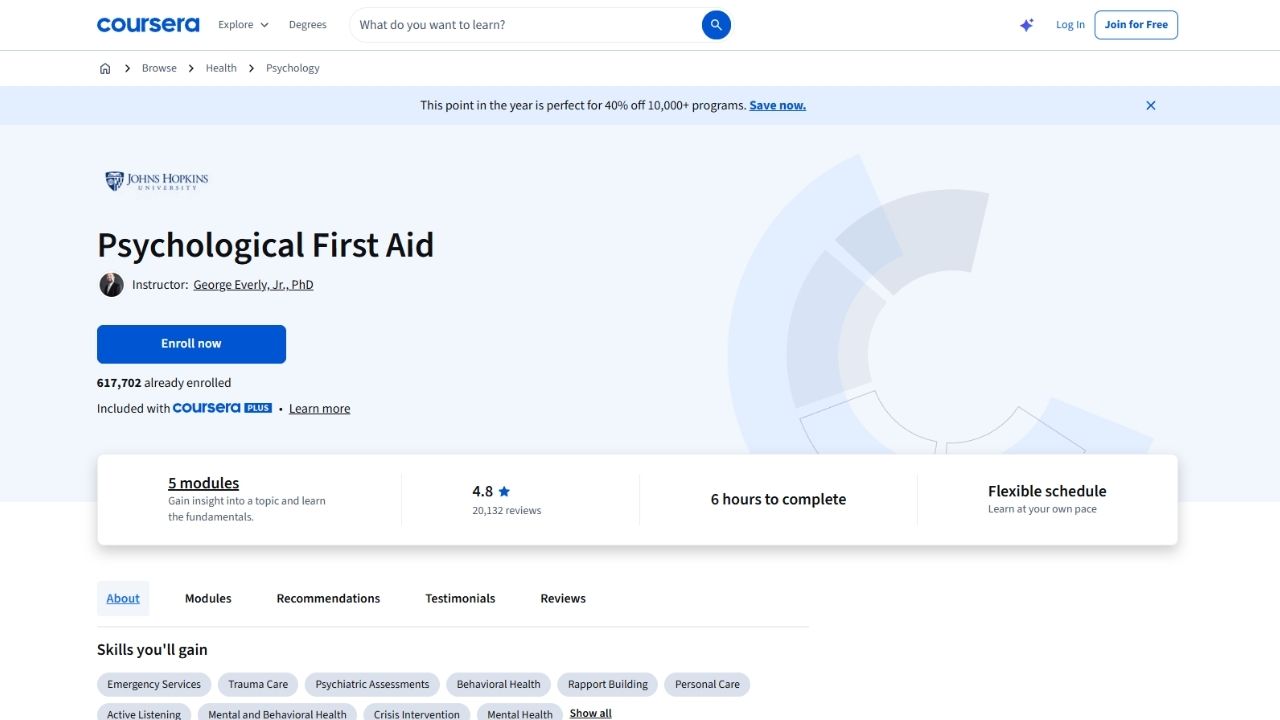
This course introduces participants to Psychological First Aid (PFA), an evidence-based approach to helping individuals in the immediate aftermath of a crisis or traumatic event. It teaches practical skills to reduce stress, promote safety, and support recovery without requiring clinical training. The course is highly relevant for anyone who may encounter people in distress, including workplace leaders, educators, first responders, and community members. It is particularly valuable in 2026 as mental health crises and disaster response awareness continue to grow across Canada.
Coursera – Positive Psychiatry and Mental Health
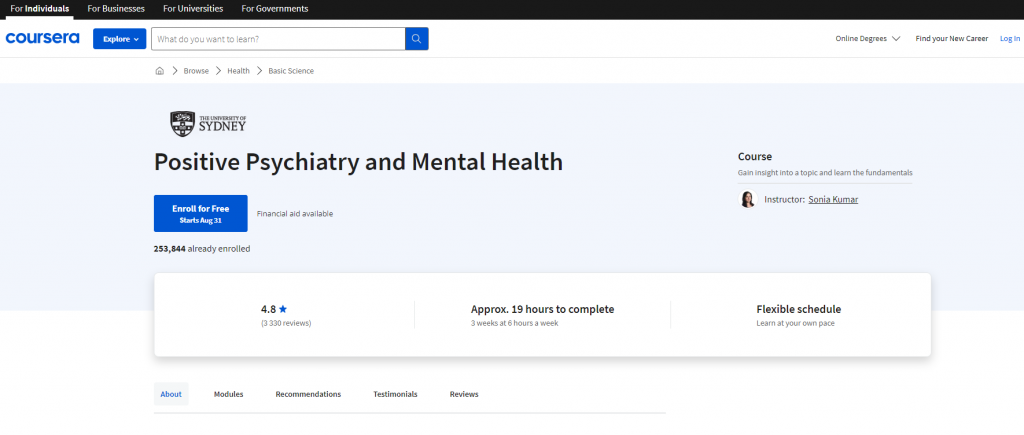
Coursera’s “Positive Psychiatry and Mental Health” course profoundly explores the prevalent challenges of mental illness and distress that affect our modern society.
These issues contribute significantly to the burden of disability in our communities. However, alongside this recognition of difficulties, there is a growing emphasis on comprehending and enriching positive mental health and overall well-being. This course takes a holistic perspective to present a comprehensive approach to addressing these complexities.
Throughout the duration of the course, you will delve into topics that contribute to sound mental health. Moreover, various types of mental disorders will be discussed, including insights into their origins, potential treatments, and guidance on seeking assistance and resources.
The course offers a rich and well-rounded learning experience as it is distinguished by the participation of numerous esteemed Australian experts specializing in psychiatry, psychology, and mental health research.
Access the course materials here.
Coursera – Social Context of Mental Health and Illness
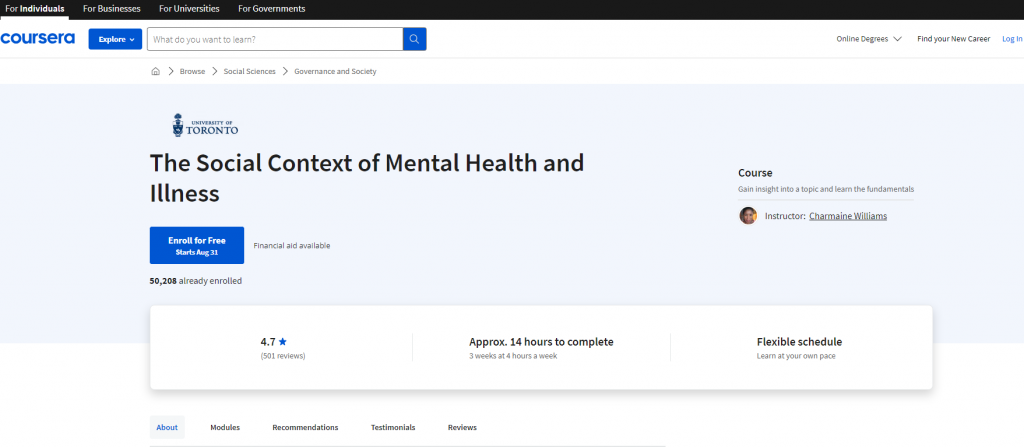
Coursera’s The Social Context of Mental Health and Illness Course explores the intricate connection between our perspectives of mental health and the broader societal attitudes and developments that shape them.
This course delves into how our understanding of mental well-being has evolved, driven by prevailing social norms and shifts in North America and worldwide.
The course starts with framing contemporary mental health practices within a historical context, providing a solid foundation to comprehend the transformation of approaches over time. As the course progresses, you will learn about multifaceted mental health and illness dimensions, examining their intricate connections to the dynamic social environment.
By examining the social backdrop against which mental health concepts evolve, you will gain a deeper insight into how societal attitudes, cultural shifts, and global developments influence our perspectives. This comprehensive exploration broadens your knowledge and fosters a heightened awareness of the relationship between mental health and the environment.
Get started with the course by following this link.
Udemy – Mental Health and Wellness Professional Diploma Course
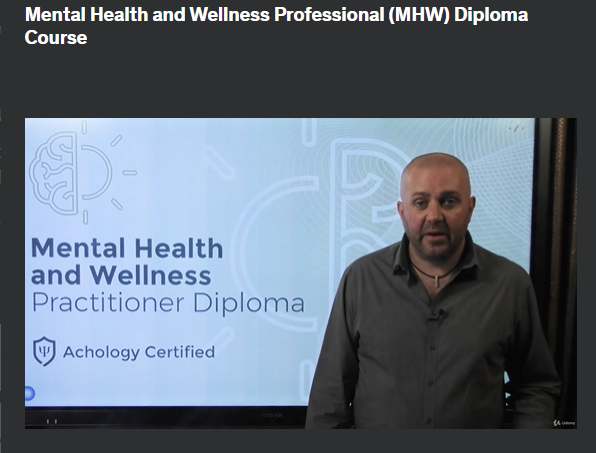
Udemy’s Mental Health and Wellness Professional (MHW) Diploma Course is a comprehensive program that introduces you to various psychology-based teachings and strategies that can profoundly shape your perspective and interactions with others.
In this course, you’ll gain insight into the origins of mental health issues and acquire the tools to guide individuals toward positive lifestyle adjustments. After completing the program, you will gain the following learnings:
- Elevate your mental well-being by applying life-enhancing principles.
- Cultivate emotional maturity and amplify interpersonal competence.
- Strengthen relationships, heighten self-awareness, and refine communication.
- Bolster your leadership, management, and communication proficiencies.
- Comprehend the core psychology of mental health and wellness.
- Foster robust emotional boundaries to fortify connections.
- Guide positive shifts in individuals’ self-perceptions.
- Replace self-limiting thought patterns with constructive alternatives.
- Develop a deep understanding of yourself and human behavior.
This course fosters engagement, collaboration, positive thinking, and innovative approaches, all within a nurturing environment for personal growth.
Shifting the focus from illness to growth is pivotal for enhancing mental health and emotional well-being. The course presents a holistic outlook that focuses on the connections between one’s choices and emotional outcomes.
This course is ideal for those who are actively pursuing self-improvement and personal growth. Students with an enthusiasm for psychology will find this course valuable, enriching their understanding and knowledge in this field. It is also ideally suited for individuals dedicated to self-discovery and advancement, helping them uncover their potential.
Explore the course by clicking here.
Udemy – Certificate in Mental Health Awareness
Udemy’s “Certificate in Mental Health Awareness Course” is an excellent introduction to different mental health conditions.
You will get the chance to see real-world perspectives as this course presents candid interviews with individuals who provide authentic accounts of what it truly means to live with mental health conditions. This approach enriches your understanding by bridging the gap between theory and lived experiences.
Flexibility defines the learning experience. You can choose your pace, whether you prefer to complete the course in one continuous journey or opt for bite-sized segments that fit into your schedule seamlessly.
Throughout the course, you will delve into the fundamentals of several mental health conditions, including depression, anxiety, bipolar disorder, psychosis, OCD, phobias, eating disorders, and substance misuse.
By the course’s conclusion, you’ll confidently grasp the essence of each condition, positioning yourself as a contributor to the positive shift in societal perceptions of mental health.
The course is perfect for beginners and those seeking a quick refresher in mental health awareness.
Discover the course at this link.
CAMH (Centre for Addiction and Mental Health) – Fundamentals of Mental Health Course
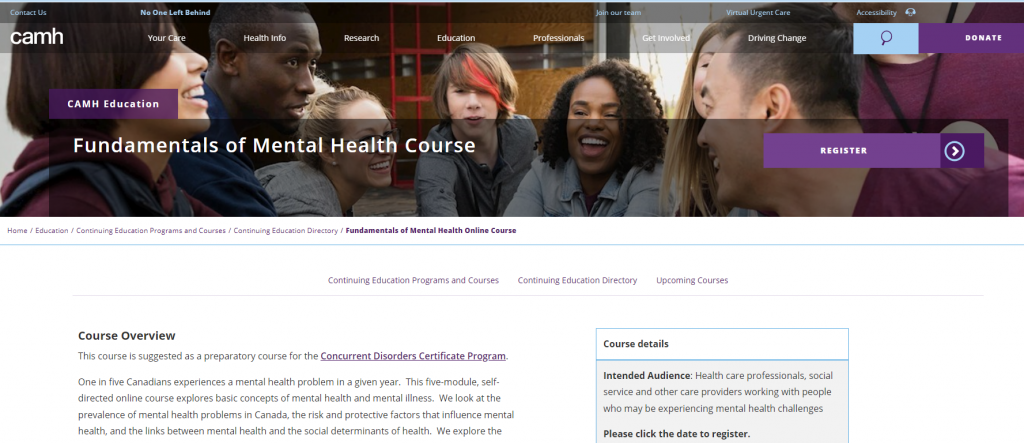
The “Fundamentals of Mental Health Course” offered by CAMH is recommended as a preparatory course for those venturing into the Concurrent Disorders Certificate Program.
This self-paced online course, spanning five modules, tackles the foundational principles of mental health and mental illness. It serves as a comprehensive exploration of key aspects, addressing the prevalence of mental health concerns within the Canadian context.
The course examines the influential risk and protective factors that shape mental health outcomes while also spotlighting the interplay between mental health and the social determinants of health.
The curriculum encompasses several subjects, ranging from identifying common mental health challenges such as:
- depression,
- anxiety,
- bipolar disorder,
- schizophrenia,
- substance use disorder, and
- post-traumatic stress disorder
Upon successful completion, you can expect to attain the following objectives:
- Articulate the prevalence of mental health issues.
- Elaborate on the intricate relationship between social determinants of health and mental health challenges.
- Construct a comprehensive outline of the components involved in establishing a positive therapeutic alliance with clients.
- Define the indicators and symptoms of prevalent mental health challenges.
- Examine assessment and treatment methodologies tailored to common mental health issues.
- Engage in discussions regarding strategies to provide support for clients and their families.
This course also discusses treatment strategies, including psychoeducation, lifestyle adjustments, pharmaceutical interventions, psychotherapy, and other supplementary approaches for clients and their families.
Check out the course here.
Links Institute – Mental Health Online Courses
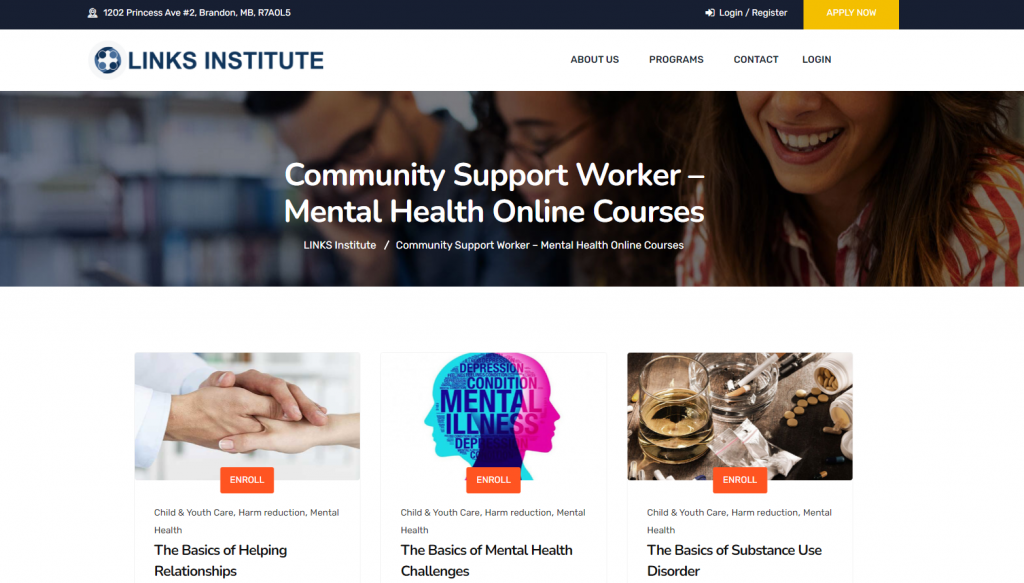
Learn about different in-depth online mental health courses Links Institute offers, covering areas including:
- Anxiety disorders,
- Depression,
- Eating disorders,
- Personality disorders, and more.
These courses offer a strong platform for learning and development since they are grounded in the knowledge of seasoned professionals with lots of client-focused experience. The distinctive quality and authenticity of Links Institute are attested to by its certification by the Canadian Council on Learning.
One notable offering is their Mental Health Certificate Online in Canada. This program will equip you with the required skills to impact individuals’ well-being positively. The curriculum not only imparts knowledge about various mental health issues but also provides you with the tools to offer assistance to those in need.
Find the course details right here.
Opening Minds – The Working Mind
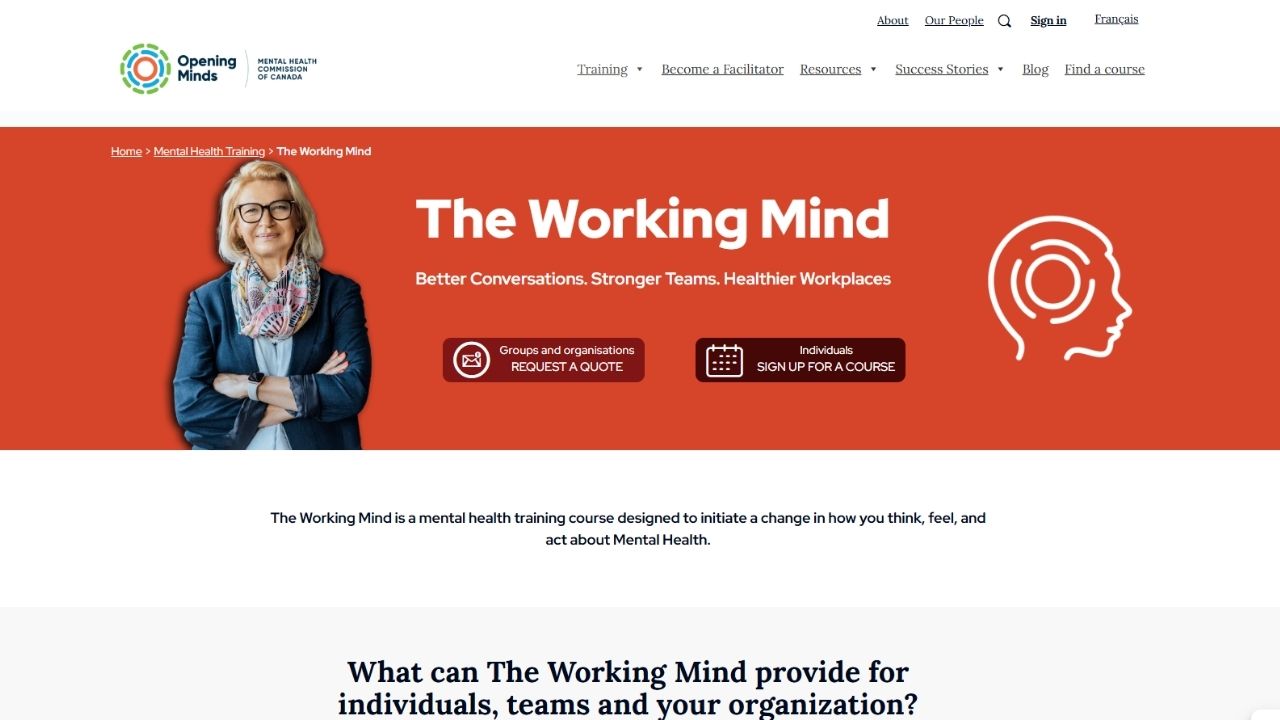
The Working Mind is a leading Canadian mental health training program designed to reduce stigma, improve mental health literacy, and encourage early help-seeking in the workplace. Developed with input from the Mental Health Commission of Canada and other experts, it is widely used by organizations across Canada. The training helps participants recognize signs of mental health issues, respond appropriately, and create psychologically safe work environments. It is especially relevant for managers, HR professionals, and teams in 2026 as Canadian workplaces continue to prioritize mental health under emerging standards and legislation.
Additional Helpful Information for Canadians in 2026
2026 Mental Health Career Snapshot (Canada)
| Role | Entry Level (0–2 years) | Mid-Level (3–5 years) | Senior / Specialized Roles | Notes |
|---|---|---|---|---|
| Mental Health Support Worker | $42,000 – $55,000 | $58,000 – $72,000 | $78,000 – $95,000+ | High demand in community & non-profit |
| Crisis / Psychological First Aid Responder | $48,000 – $62,000 | $68,000 – $85,000 | $90,000 – $115,000+ | Growing need in workplaces & communities |
| Workplace Mental Health Facilitator | $52,000 – $68,000 | $75,000 – $95,000 | $100,000 – $130,000+ | Strong demand due to new workplace standards |
| Peer Support Worker | $40,000 – $52,000 | $55,000 – $70,000 | $75,000 – $95,000+ | Lived experience is highly valued |
| Community Mental Health Worker | $45,000 – $58,000 | $62,000 – $78,000 | $85,000 – $105,000+ | Stable sector with government funding |
| HR / Manager with Mental Health Focus | $58,000 – $75,000 | $82,000 – $105,000 | $115,000 – $145,000+ | Increasingly required in larger organizations |
National Average (Mid-Level): $62,000 – $82,000 Highest earning potential: Roles that combine mental health knowledge with training, facilitation, or workplace program development.
Career Paths After Taking These Courses
| Goal | Recommended Starting Course(s) | Time | Outcome |
|---|---|---|---|
| Personal growth & better self-awareness | Coursera Positive Psychiatry or Udemy Mental Health Awareness | 1–3 months | Improved personal mental health + basic knowledge |
| Support others in crisis (non-clinical) | Coursera Psychological First Aid | 1–2 months | Ability to provide immediate support |
| Work in mental health support roles | CAMH Fundamentals + Udemy Mental Health Diploma | 3–6 months | Entry into support worker or community roles |
| Reduce stigma & promote mental health at work | Opening Minds – The Working Mind | 1–2 months | Workplace mental health champion / facilitator |
| Understand broader social context | Coursera Social Context of Mental Health and Illness | 2–4 months | Stronger foundation for advocacy or policy work |
| Start a career in mental health field | Combination of CAMH + Coursera Psychological First Aid | 4–8 months | Good starting point for support roles |
Important Trends in Canadian Mental Health (2026)
- Workplace Psychological Safety — The National Standard of Canada for Psychological Health and Safety in the Workplace continues to gain traction. Many organizations now expect staff to have basic mental health training.
- Psychological First Aid — Growing demand for people trained in immediate crisis support (especially post-pandemic and with increasing climate-related emergencies).
- Peer Support — Lived experience is increasingly valued. Many organizations now hire peer support workers.
- Stigma Reduction — Programs like Opening Minds – The Working Mind are widely adopted by Canadian employers.
- Hybrid & Community-Based Care — More focus on community mental health support rather than only clinical settings.
Quick 2026 Decision Guide
| Your Goal | Recommended Course(s) |
|---|---|
| Want practical skills to help people in crisis | Coursera – Psychological First Aid |
| Want a strong foundation in positive mental health | Coursera – Positive Psychiatry and Mental Health |
| Want Canadian workplace-focused training | Opening Minds – The Working Mind |
| Want recognized Canadian mental health training | CAMH Fundamentals of Mental Health Course |
| Want broad understanding of mental health conditions | Udemy – Certificate in Mental Health Awareness |
| Want to work in mental health support roles | CAMH Fundamentals + Coursera Psychological First Aid |
| Interested in the social and cultural side of mental health | Coursera – Social Context of Mental Health and Illness |
Practical Tips for Canadians in 2026
- Psychological First Aid is one of the most practical and widely applicable skills you can learn — it’s useful even if you don’t work in mental health.
- Many employers now value The Working Mind certification, especially in larger organizations and government.
- CAMH courses carry strong recognition in Canada and are often viewed favourably by employers in healthcare and social services.
- If you want to work in the mental health field, combining one foundational course (like CAMH or Coursera) with Psychological First Aid gives you a strong, well-rounded starting point.
- Lived experience is increasingly valued — don’t underestimate the power of sharing your own story if you’ve overcome mental health challenges.
Funding Options
- Canada Training Credit — Up to $250 per year tax credit.
- Employer sponsorship — Many companies will pay for mental health training (especially The Working Mind or Psychological First Aid).
- Provincial workforce grants — Some provinces offer funding for mental health or social services training.
- Second Career (Ontario) — May fully fund eligible career changers entering mental health support roles.
Conclusion
Each of the listed courses offers valuable insights and learning opportunities in the field of mental health.
These courses tackle different mental health topics, including anxiety disorders, depression, eating disorders, personality disorders, and more. The knowledge imparted by these courses equips individuals to understand and address mental health challenges, contributing to a positive change in attitudes toward mental well-being.
Our top recommendation is Coursera’s Psychological First Aid for its practical, evidence-based approach to crisis support, followed by Coursera’s Positive Psychiatry and Mental Health for a strong foundation in positive mental health approaches.
With its flexibility and expert-designed content, these courses can help you build meaningful skills in the mental health field.