

Criminology has emerged as a vital discipline for understanding the forces that shape our legal systems, societal norms, and the individuals within them. Many online courses offer chances for Canadians to obtain knowledge and experience from the comfort of their own homes for those interested in exploring the field of criminology.
Whether you’re a curious mind interested in criminal behavior, a professional looking to enhance your career, or someone dedicated to making our communities safer, online criminology courses provide an accessible pathway into this field.
Below is a list of the top online criminology courses you can take. Check each one of them to find out which course suits your needs.
| Course Name | Students Enrolled | Reviews |
|---|---|---|
| Coursera – Introduction to International Criminal Law | 160,000+ | 80,000+ |
| Coursera – Hot Topics in Criminal Justice | 19,000+ | 8,000+ |
| Coursera – Introduction to Forensic Science | ~95,000+ | ~6,500+ |
| Udemy – Fully Accredited Professional Criminology Diploma Course | 190,000+ | 85,000+ |
| Udemy – Criminology – A Critical Understanding of Crime 2023 | 6,000+ | 1,100+ |
| Algonquin College – Criminology (Online) | 79,000+ | 21,000+ |
| George Brown College – Criminology Online Course | 95,000+ | 38,000+ |
Coursera – Introduction to International Criminal Law

This course consists of 8 engaging modules, each meticulously intended to integrate academic knowledge with practical interaction. Each unit is meticulously curated and includes an assigned reading, often an insightful article or a pertinent book chapter, to establish a solid theoretical foundation.
Video lectures, accompanied by engaging slides, further enhance the learning experience. This multimedia approach ensures that you will gain a holistic understanding of the subjects under scrutiny.
The course’s curriculum follows the following structured sequence:
- History: From Nuremberg to The Hague
- International Crimes Part 1: War Crimes, Genocide, Crimes against Humanity, and Torture
- International Crimes Part 2: Terrorism and Piracy
- Special modes of liability: command responsibility, co-perpetration, and incitement
- Special defenses: insanity, obedience to orders, coercion, and head-of-state immunity
- Gaining custody of the accused: extradition, luring, abduction, and targeted killing
- Pre-Trial Issues: plea bargaining, self-representation, and exclusion of torture evidence
- Maintaining control of the courtroom
While prior legal knowledge is not required, the course functions at a level comparable to advanced undergraduate courses. For best involvement, students should be able to read and write comfortably in English at the undergraduate college level.
Access the course materials here.
Coursera – Hot Topics in Criminal Justice

This dynamic program from Coursera focuses on two critical problems underpinning the criminal justice system: how we should handle and identify criminals.
The course navigates these intricate issues with precision and nuance, dissecting complex topics that shape the modern criminal justice landscape.
Upon completion of the course, you can expect to learn the following skills and knowledge:
- Grasp the complexities of mass incarceration and its underlying causes
- Propose innovative solutions to reduce incarceration rates
- Evaluate the efficacy of risk assessment instruments in preventive detention
- Delve into the pros and cons of the death penalty, the insanity defense, and the exclusionary rule
- Examine the relevance of neurological evidence in criminal cases
- Identify factors contributing to wrongful convictions
- Explore the role of race in sentencing and police conduct
- Catalog surveillance technologies available to law enforcement and the constitutional principles governing their use
The course further examines the aspects surrounding the death penalty, the role of the insanity defense, and the integration of neuroscience in assessing criminal responsibility. It also navigates the evolving laws surrounding police conduct and the use of technology.
Additionally, you will explore topics such as police use of force, integrating technology and big data in policing, and the mechanisms in place to address police misconduct.
Find the course details right here.
Coursera – Introduction to Forensic Science
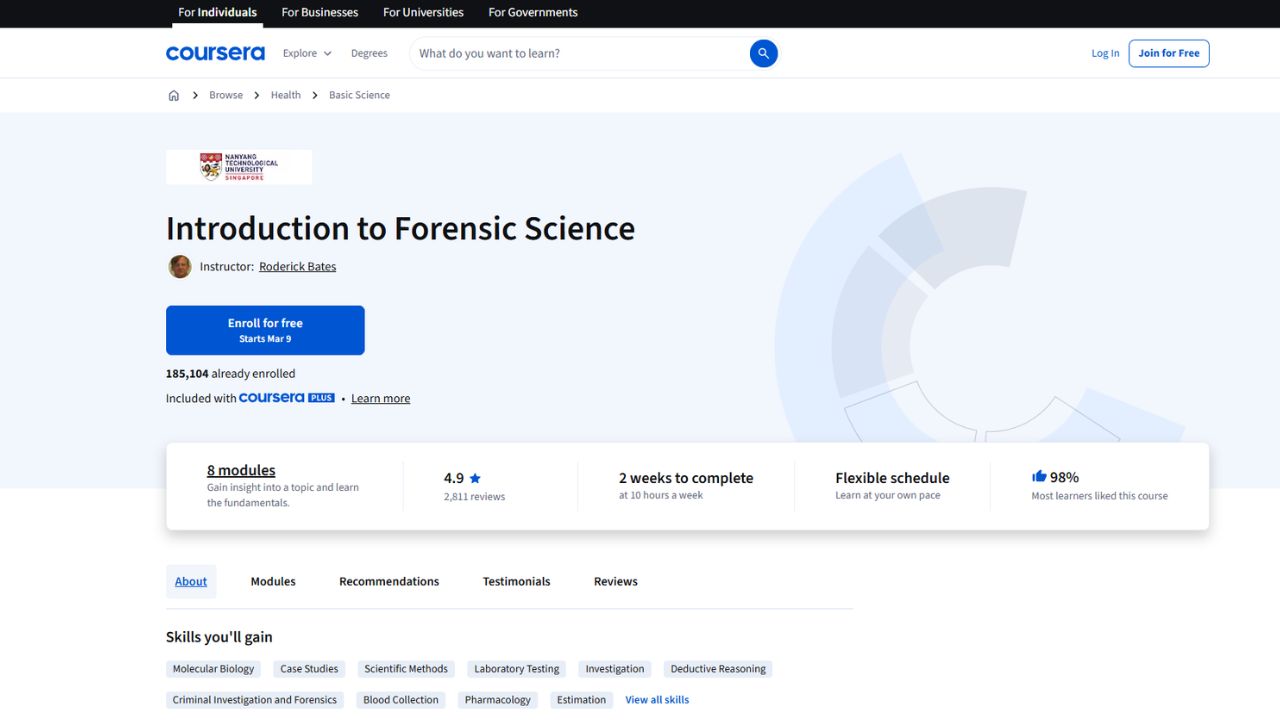
This University of Strathclyde course introduces the core principles of forensic science and its application to criminal investigations.
It covers crime scene management, evidence collection, fingerprint analysis, bloodstain pattern analysis, DNA profiling, and courtroom presentation of evidence.
Self-paced (approximately 12–15 hours), beginner-friendly, with videos, quizzes, and case studies.
Highly rated (4.8/5+) and extremely relevant in 2026 for anyone interested in the scientific side of criminology, criminal justice, or forensic careers.
Udemy – Fully Accredited Professional Criminology Diploma Course

This course offers a platform for understanding the very essence of criminology. It tackles the intricate realm of criminal behavior, the mechanics of punishment, and the intricate powers inherent in public services.
The course is structured into easily digestible modules, each contributing to a comprehensive understanding of the subject matter:
- Introduction to your Fully Accredited Professional Criminology Diploma Course
- Your Fully Accredited Professional Criminology Diploma Course Training PDF
- The Basics of Criminology
- Measuring Crime
- Why Crime Happens
- Crime Prevention
- Crime Detection
- Murderers and Serial Killers
- Final Summary & Bringing It All Together
- Accreditation
You will also learn the art of interrogation, the assessment of criminals, and an appreciation for the inner workings of the justice system.
The perception of crime varies considerably among individuals, with an even broader spectrum of interpretations within criminology.
Discover the course at this link.
Udemy – Criminology – A Critical Understanding of Crime 2023
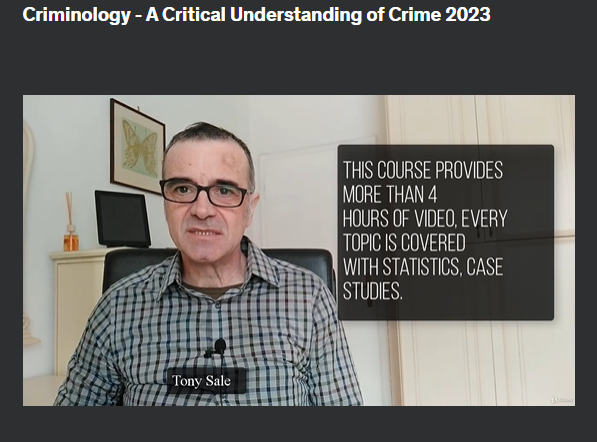
This online course from Udemy provides an immersive learning experience through almost 4 hours of video content, statistics, case studies, and insightful theory.
The course provides a solid foundation for understanding the motivations underlying criminal actions and the significant impact of crime on both victims and communities.
You will gain knowledge about the long-term consequences of crimes. Furthermore, the course tackles the approaches social scientists and criminologists use to investigate and comprehend the intricacies of criminal concerns.
You can expect to learn the following after finishing the course:
- Define ‘crime’ with precision and depth.
- Grasp the fundamental criminological theories.
- Navigate the intricacies of the Sociology of Crime.
- Recognize the contested nature of defining crime.
- Articulate a comprehensive definition of criminology and its subject matter.
- Understand the roles and responsibilities of criminologists.
- Cultivate and apply the criminological imagination to rethink crime and justice issues, surpassing conventional understandings.
By the course’s conclusion, participants are encouraged to foster what can be referred to as a “critical understanding of crime” – a perspective that transcends the surface and explores the multifaceted dimensions of criminality.
Delve into the course at this location.
Algonquin College – Criminology (Online)
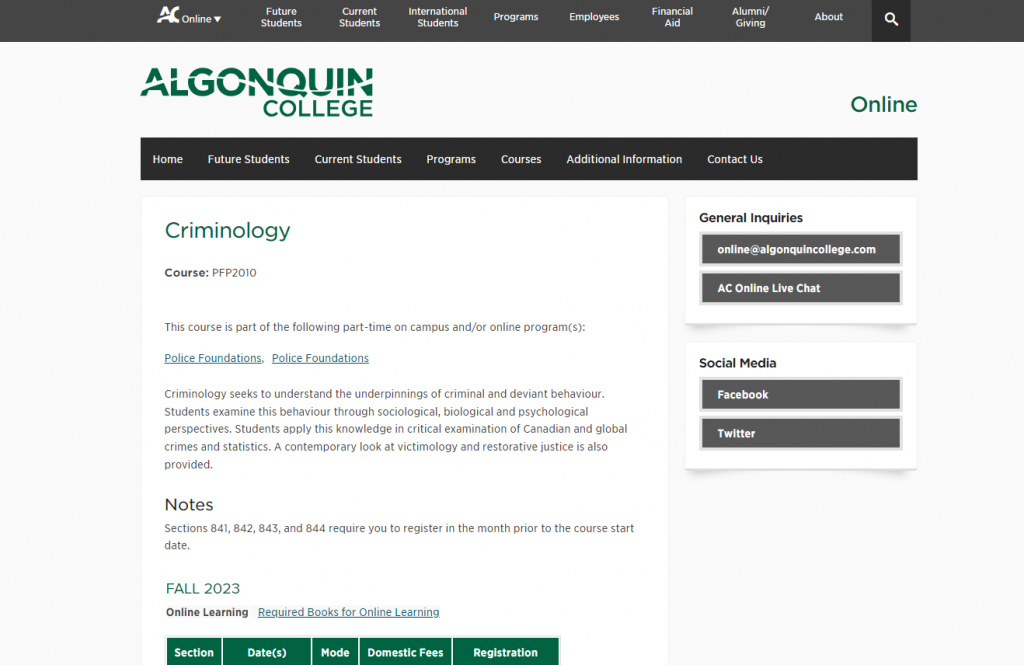
Algonquin College’s Criminology Online Course is a comprehensive program that offers an in-depth exploration of the underlying factors that drive individuals to engage in criminal activities.
The course tackles different topics such as sociology, biology, and psychology. It also provides a multidimensional perspective that enriches students’ understanding of the intricate dynamics behind criminal behavior.
The course’s scope extends beyond theoretical frameworks as it encourages students to apply their knowledge to examine both Canadian and global crime trends and statistics critically.
Whether you’re a prospective criminologist, a law enforcement professional, or an individual with a curiosity for understanding human behavior, this course offers a comprehensive educational journey that empowers you to navigate the complexities of crime in the modern world.
Explore the course by clicking here.
George Brown College – Criminology Online Course
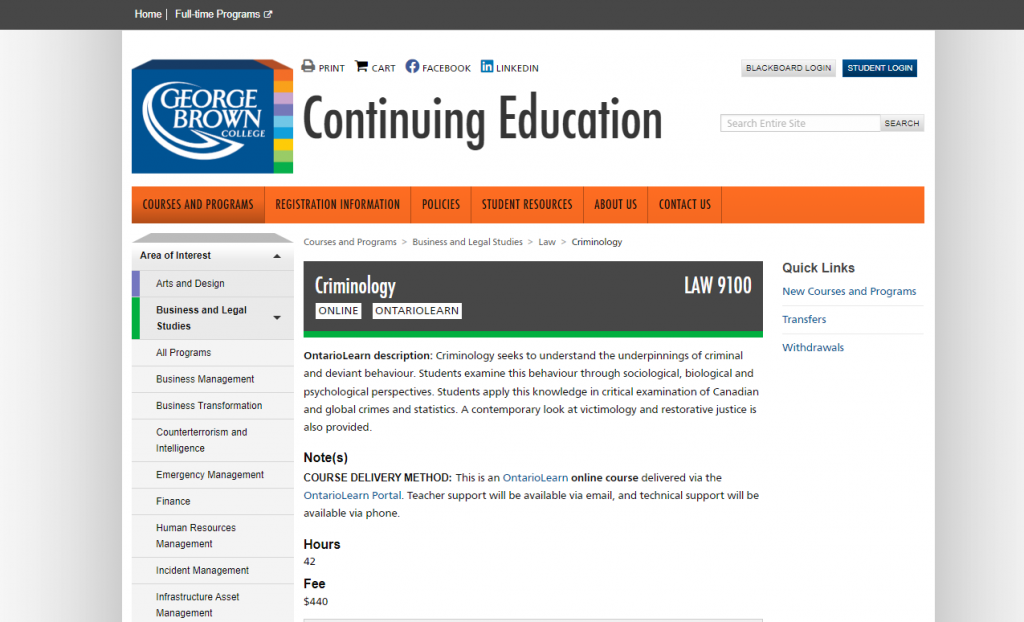
The Criminology Online Course at George Brown College is a thorough program focusing on the fundamental aspects motivating people to commit criminal acts.
The curriculum of the course covers a wide range of topics. You will learn to analyze the complex bases of criminal conduct by integrating social, biological, and psychological perspectives. This multidisciplinary approach will allow you to comprehend the difficult circumstances contributing to deviant behavior.
Moreover, the course dives into contemporary subjects, such as victimology and restorative justice, and its core features. These components offer a perspective on the greater implications of criminal action, investigating the effects for the criminals and the victims and exploring opportunities for healing and repair.
This online course is facilitated through the OntarioLearn Portal, which offers a flexible and accessible way to engage with the material.
Teacher support is also available through email to ensure students receive guidance and clarification. Technical support is also readily accessible via phone to guarantee a seamless learning experience.
Get started with the course by following this link.
2026 Criminology & Criminal Justice Landscape in Canada: Demand, Outlook, and Salary Insights
Criminology and criminal justice remain high-demand fields in Canada in 2026, with sustained need for professionals in policing, corrections, probation/parole, victim services, policy analysis, research, restorative justice programs, and community safety initiatives.
Job prospects are strong: Government of Canada Job Bank rates social worker, probation officer, and related justice roles (NOC 41300/41301/42201) as “good” to “very good” in most provinces (high demand in Ontario, BC, Alberta, Manitoba), with thousands of openings projected annually through 2031–2035 from retirements, new programs, and workforce shortages.
Average salaries range from $28–$48/hour (median ~$35–$42/hour or $60,000–$90,000+ annually full-time), with higher earnings in specialized roles (e.g., forensic analysis, policy advising, Indigenous justice coordination), urban centers (Toronto/Vancouver often $40–$55+/hour), or with MSW/advanced credentials.
Entry-level often starts $25–$32/hour, but quick advancement to supervisor, clinical, or policy roles boosts pay.
Regulation varies: CASWE-accredited BSW/MSW programs are required for registered social worker status in regulated provinces; criminology/criminal justice certificates/diplomas support related roles (probation, corrections, victim services).
These realities make 2026 an excellent time for learning—courses emphasizing justice, Indigenous perspectives, digital crime, and practical skills position you for stable, impactful careers in a high-need sector.
Emerging Trends in Criminology & Criminal Justice for 2026
The field is evolving rapidly with societal, technological, and equity shifts:
- Cybercrime & Digital Forensics — Explosive growth in online fraud, identity theft, cyberbullying, and digital evidence; courses covering forensics and tech in justice are increasingly essential.
- Restorative & Indigenous Justice — Continued implementation of TRC calls to action, healing lodges, community-based alternatives, and culturally safe practices—Indigenous-led approaches and reconciliation-focused training are prioritized.
- Mental Health & Crisis Intervention — Increased focus on mental health courts, diversion programs, trauma-informed policing, and de-escalation training amid rising concurrent disorders.
- Data-Driven & Evidence-Based Policy — Use of big data, risk assessment tools, and outcome evaluation to reduce recidivism and improve system efficiency—courses teaching critical analysis of data and policy are valuable.
- Victim-Centered & Equity Approaches — Stronger emphasis on victim rights, gender-based violence response, anti-racism, and intersectional frameworks across all justice stages.
Courses covering international law, forensic science, and justice advocacy (e.g., Coursera) align well with these trends—preparing learners for ethical, culturally responsive, and future-ready practice.
Practical Tips for Choosing and Succeeding with Online Criminology Courses in 2026
- Match to Your Goals & Province: Beginners/aspiring → Start with accessible options like Coursera for foundational/global perspectives. Career-focused? → Choose CASWE-accredited BSW/MSW distance programs (Dalhousie, Manitoba, Victoria) or college certificates (Thompson Rivers) for regulated pathways. Current practitioners → Prioritize CE/professional development (CASW Institute, UCalgary, Laurier) for ACSW/OASW credits.
- Understand Regulation & Accreditation: CASWE accreditation is key for BSW/MSW eligibility in regulated provinces; check provincial regulators (e.g., OCSWSSW Ontario, BCCSW BC) for registration requirements, exams, and supervised practice hours. Criminology certificates/diplomas support related roles but may not lead directly to registered status.
- Maximize Online Learning — Use self-paced flexibility—supplement with free resources (CASW, provincial ministry guides, TRC reports) and apply concepts through volunteer work, case studies, or reflective journals.
- Career Launch/Advancement Tips — Network via CASW, provincial associations, and student groups; gain experience through field placements, internships, or entry roles; specialize in high-demand areas (mental health, Indigenous justice, cybercrime) for better opportunities. Consider liability insurance, ethics training, and resume-building focused on values and impact.
- Stay Current — Monitor changes (e.g., mental health funding, digital privacy laws, reconciliation progress) via Health Canada, CASW, and provincial regulators; revisit courses or add CE as practice evolves.
Conclusion
These online courses provide an opportunity to investigate the complexity of criminal conduct, justice systems, and societal effect. Each course offers a distinct perspective, equipping students with a broad arsenal for navigating this complex field.
While all the courses outlined above are valuable in their own right, we highly recommend Udemy’s Fully Accredited Professional Criminology Diploma Course as an exceptional choice. This course covers a lot of topics with easily digestible modules and fosters an in-depth comprehension of the subject matter.
Enrolling in these online criminology courses can help you comprehensively understand the subject and achieve your career objectives.