

In this modern age, visual is power. Everything with image speaks. Thus, photography is a great skill to acquire, as you can use it in various ways. You can use your camera skills as a hobby, event business, digital marketing, or more.
If you plan to take a path to photography, here is a list of the online photography courses you can take.
| Course Name | Students Enrolled | Review Count |
|---|---|---|
| Coursera – Photography Basics and Beyond: From Smartphone to DSLR | 150,000+ | 5,500+ |
| Udemy – Photography Masterclass: Your Complete Guide to Photography | 310,000+ | 62,500+ |
| University of Northern British Columbia – Introduction to Digital Photography | 20,000+ | 11,000+ |
| Learn Photography Canada – Business Skills for Photographers | 15,500+ | 8,300+ |
| Udemy – iPhone Photography | 70,000+ | 22,400+ |
| Photography Institute – The Professional Photography Course | 25,000+ | 12,500+ |
| Udemy – Landscape & Nature Photography | 94,000+ | 18,000+ |
| Udemy – A Masterclass in Photography | 10,000+ | 5,000+ |
| New York Institute of Photography (NYIP) – Professional Photography Course | N/A (not publicly available) | N/A (strong testimonials & reviews) |
| Skillshare – Fundamentals of DSLR Photography (or similar beginner series) | N/A (subscription-based views) | N/A (high class ratings, e.g., 4.6+) |
Coursera – Photography Basics and Beyond: From Smartphone to DSLR
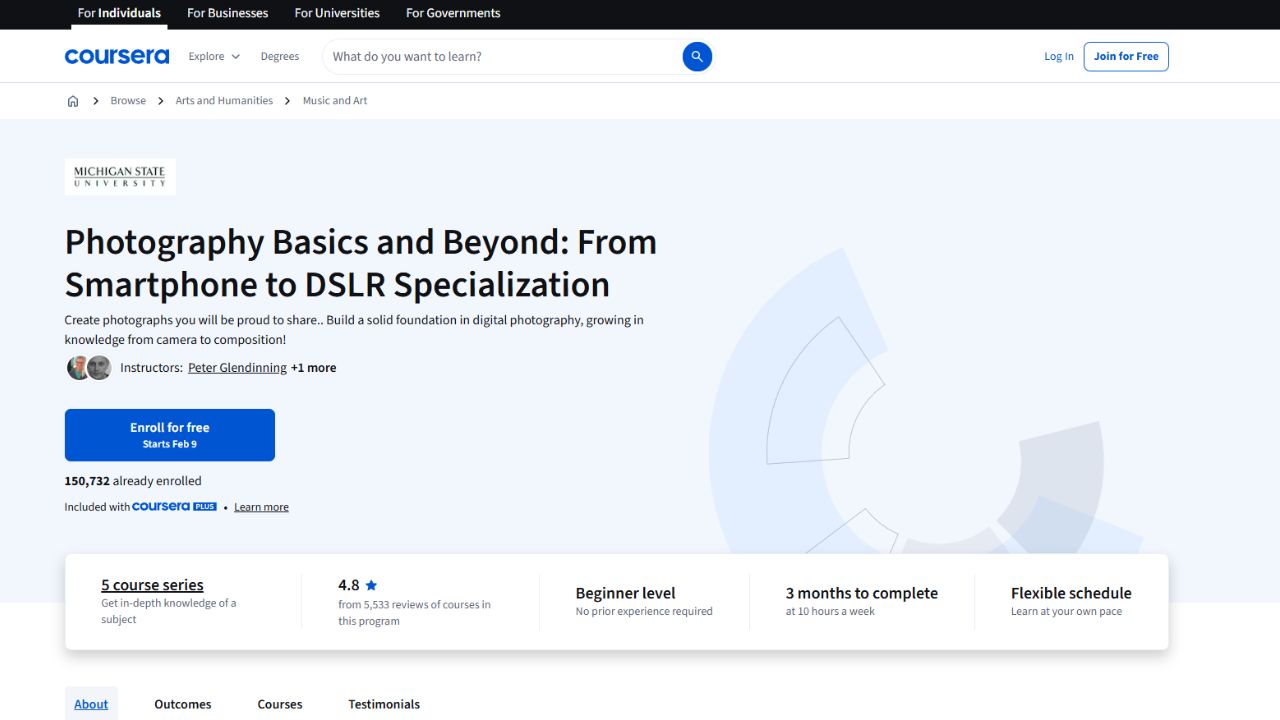
This Coursera specialization from Michigan State University is an excellent foundational program for beginners and intermediates alike. It builds a solid understanding of digital photography, starting from smartphone basics and progressing to DSLR/mirrorless control.
You will learn:
- Fundamental camera operations and exposure triangle (aperture, shutter speed, ISO).
- Principles of composition, light, color, and creative concepts.
- Post-production techniques for refining images.
- Documentary and artistic approaches to create shareable, high-quality photos.
The specialization includes multiple courses (e.g., Cameras, Exposure, and Photography; Camera Control; Principles of Photo Composition and Digital Image Post-Production), with flexible pacing over 3-6 months. It requires no prior experience and works with any camera type. Students praise its structured, university-level instruction and practical assignments. This makes it highly relevant in 2026 for anyone building core skills in a smartphone-dominated era.
Access the specialization here.
Udemy – Photography Masterclass
This photography course will teach you the fundamentals of photography. Even if you have little to no prior expertise, you will learn to make good photographs to help you stand out.
You will study the following photography styles:
- Portrait photography
- Product photography
- Long exposure photography
- Landscape photography
- Low light photography
- Street photography
- Sports and action photography
- Event and wedding photography
- Architecture photography
- Wildlife photography
- Aerial and drone photography
- Night photography
- Mirrorless photography
- DSLR photography
- Smartphone photography
This comprehensive course is designed to equip you with everything you need to develop your photography skills. Unlike other photography programs that are more limited in scope, this informative course teaches you how to take stunning images and generate money from them.
This online course is 27 hours in total length. The course is divided into 42 sections and 375 lectures. When you sign up for this class, you will get lifetime content access and 44 downloadable resources.
What students like in this course is the versatility of cameras you can use during lessons. Even if you only have a smartphone, you can use it in this course to gain photography skills. Also, the course is jam-packed with learnings as it covers every photography topic you need to know. Discover the course at this link.
University of Northern British Columbia – Introduction to Digital Photography
UNBC’s Introduction to Digital Photography online course is highly recommended to individuals interested to learn to generate high-quality, professional images using their digital SLR cameras.
This online digital photography course teaches students to operate digital SLR cameras, digital image files, and image processing in Adobe Photoshop.
This course is offered in conjunction with OCAD (Ontario College of Art and Design) to provide a comprehensive choice of methods for expanding your career knowledge in multimedia, design, photography, analytics, and technology.
As a requirement, students must have a digital SLR or mirrorless camera to use during class. A high-speed broadband internet connection is also a requirement since this course is purely online. Students who finish the course can also get OCAD U certifications. Explore the course by clicking here.
Learn Photography Canada – Business Skills for Photographers
If you want to use your photography skills in business, this online course from Learn Photography Canada is perfect for you.
You can finish the whole self-paced course in approximately 3 hours. You will also spend additional hours doing exercises and learning materials to help you manage your first wedding effectively, practically, and hands-only.
In this course, students will gain knowledge about the following:
- Goal setting
- The journey to profit
- Getting Started
- Pricing
- Marketing
- Customer Service
- Planning.
You can also take this course by getting their LPC Photography Certification Bundle.
Learners of this course could apply their knowledge in their photography business—enrolees like the concise and informative topics in this valuable online course.
Find the course details right here.
Udemy – iPhone Photography
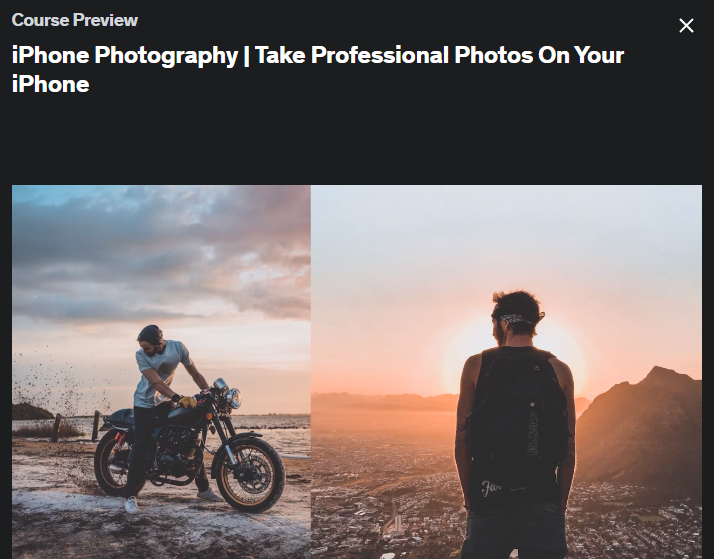
If you specifically want to learn iPhone photography, this course is ideal. With only an iPhone or equivalent smartphone, this online photography course will provide you with all the essentials to become a skilled digital photographer.
This online course from Udemy is intended to keep you excited while honing your abilities to take your photography to the next level.
This course will cover the following subjects:
- How to use shot composition to take great images.
- How to tweak your iPhone camera settings for the finest possible photos.
- Creating depth in your photography
- How and why the best photographers tell tales through their photographs.
- How to use ambient light to light your objects correctly
- How to edit images professionally on your iPhone using Lightroom.
- iPhone Photography tips and tricks
This photography course has 11 sections and 27 lectures. Signing up for the class will give you lifetime access to the lessons and materials. Learners can finish the entire online course within one hour and a half.
Students like the simplicity and straightforwardness of the course. They find it practical and beneficial for photography beginners. Get started with the course by following this link.
Photography Institute – The Professional Photography Course
This online photography course is a cutting-edge professional photography program designed and supervised by some of the most successful working photographers in their field.
The course’s objective is to educate you on the knowledge and abilities needed for a career as a professional photographer or an enthusiastic hobbyist. It is a current and complete course that covers all areas of photography.
The Professional Photography Course is online and includes 12 modules and 12 assignments. The course takes an average of 24 weeks to complete. However, we give students 12 months. If more time is needed, extensions can be purchased.
This online course will discuss the following photography topics:
- Lenses and Cameras
- Shutters and Apertures
- Metering, ISO, and Exposure
- The Film and Digital Production Process
- Color and light
- Lighting
- Refining The Image Process
- Hardware and software
- Image Resolution, Retouching, and Printing
- Essentials for the Photography Business and Studio
- Portfolio and Specialization
- Photo Agents and Picture Agencies
Students of this course have left excellent reviews. They were amazed at the tutors, and the course helped them progress in their photography careers. Find the course details right here.
Udemy – Landscape & Nature Photography
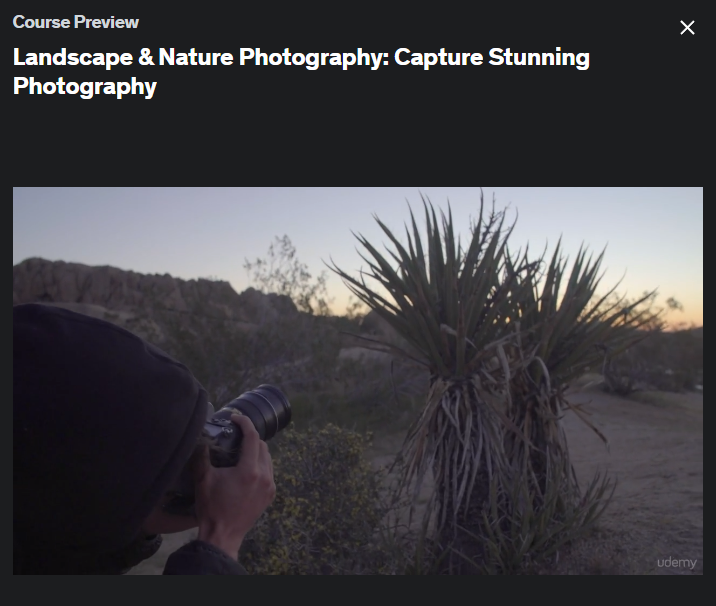
While this course was designed for newbie photographers, understanding basic photography fundamentals such as aperture, shutter speed, and ISO would be advantageous. If you need to know the basics, the instructors have included a refresher session.
This comprehensive landscape photography course will teach you all you need about the various camera gears, their camera settings, composition recommendations, and the picture editing technique they use to create award-winning landscape photos.
This landscape photography course will teach you the following skills:
- What equipment is required for landscape photography
- How to Get Ready for a Photography Trip
- Shutter speed, aperture, ISO, and all basic camera settings.
- How to Take Beautiful Landscape Photographs
- Using a polarizing filter to enhance your photography
- How to Make a Panoramic Photograph with Any Camera
- How to Improve the Look of Your Landscape Photos
- Photographing aerial landscapes using DJI drones (coming soon)
This online course also includes 26 downloadable materials. The entire course will take approximately 4 hours to finish.
Students like the practical exercises that this course offers. Both beginner and intermediate photography students enjoyed this Udemy class. Check out the course here.
Udemy – A Masterclass in Photography
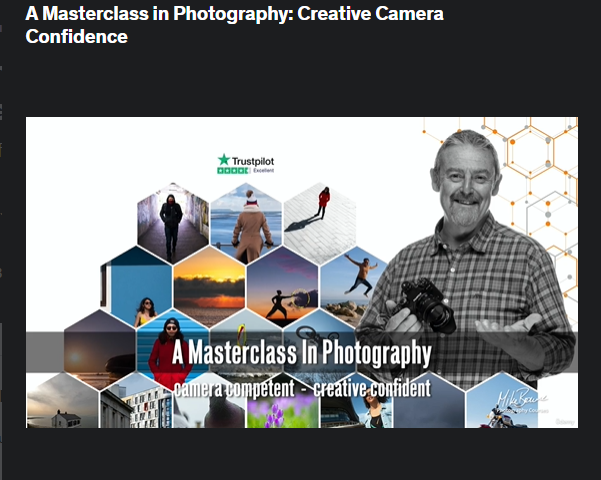
This online photography course discusses viewing and taking stunning photographs with a mirrorless DSLR or bridge camera.
This detailed photography course is specifically created to make camera controls smooth and straightforward while also combining innovative ideas for photographers of all levels, from beginner to advanced.
Learners will gain knowledge of the following photography topics after completing the course:
- How a camera works
- Camera menus and feature configurations
- Camera and equipment you need
- Why are manual settings necessary, and how easy are they for creative, eye-catching photography?
- Why use different camera settings for each image in the course?
- What do auto modes do, how to use them, and why they’re useful
- Why, when, and how should you disagree with your camera’s recommended exposure?
- How to exploit the shutter speed and aperture settings’ hidden creative talents
- How to see and use light qualities correctly
- The reasoning behind settings, techniques, composition, and lighting
- Everything mentioned above in real-world scenarios
- How to Be a Competent and Self-Assured Photographer
The course is divided into six sections with 98 lectures. You can complete the course in an 8-hour duration.
Students that took the course had no regrets about enrolling in the program. They appreciate the instructors’ step-by-step approach to understanding photography’s technical aspects, allowing them to be creative.
Access the course materials here.
New York Institute of Photography (NYIP) – Professional Photography Course
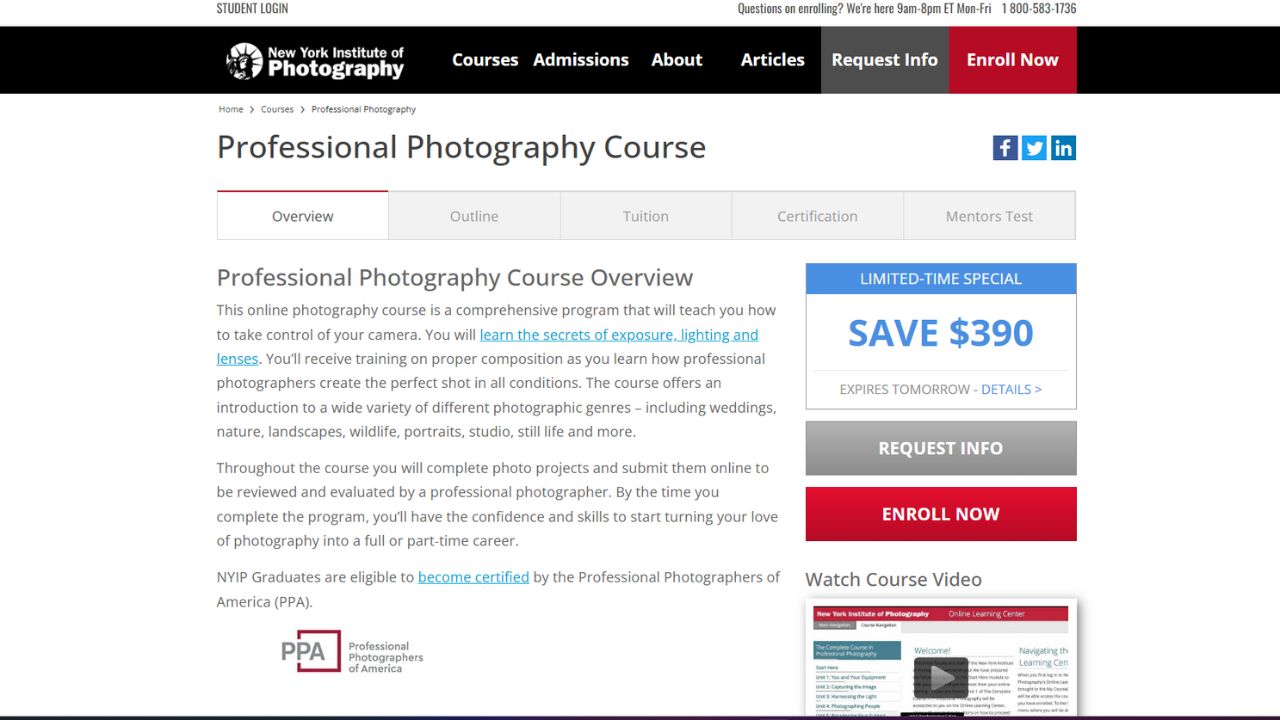
The New York Institute of Photography (NYIP) offers this comprehensive, accredited online program as a flagship course for hobbyists aiming to go pro or professionals seeking structured advancement. It teaches full control over your camera through lessons on exposure rules, lenses, lighting (natural, flash, and studio), composition, genres (portraits, weddings, landscapes, wildlife, still life, etc.), workflow, image editing, and business essentials like building a portfolio and monetizing skills. The self-paced format (up to 18 months to complete) features high-quality video demonstrations by working photographers, downloadable resources, photo projects submitted for personalized feedback, one-on-one mentorship via email or calls from a matched professional photographer, and access to a global student community forum. Upon completion, graduates earn an NYIP Certificate in Professional Photography and become eligible for optional certification from the Professional Photographers of America (PPA). Students consistently praise the mentor support, practical projects, and career-oriented guidance, making it a solid choice for those wanting structured progression, accountability, and real-world applicability in 2026’s competitive photography landscape—whether freelancing, building a side hustle, or refining artistic vision.
Skillshare – Fundamentals of DSLR Photography (or similar beginner series, e.g., by Justin Bridges or comparable classes)
Skillshare’s photography library includes excellent short, project-based classes like “Fundamentals of DSLR Photography” (taught by professionals such as Justin Bridges), which focus on core DSLR/mirrorless skills in an engaging, hands-on format. These classes (typically 1-2 hours each) cover manual exposure balancing (shutter speed, aperture, ISO for perfect results), understanding creative modes, capturing motion vs. depth of field, basic composition, and getting out of auto mode confidently. Many are part of broader paths (e.g., “Intro to DSLR Photography: Get Confident & Go Manual”) with sequential lessons on lenses, focal length, lighting, and editing. The subscription model gives unlimited access to thousands of photography classes, allowing bite-sized, ongoing learning—perfect for experimenting with new techniques or refreshing skills without long commitments. Classes often include downloadable resources, class projects for feedback from the community, and emphasis on practical application. Highly rated (e.g., 4.6+ stars) for clear instruction and motivation, they’re ideal in 2026 for learners who prefer creative, community-driven exploration alongside tools like AI filters or hybrid shooting, making it easy to build habits and experiment affordably.
2026 Photography Trends: What’s Shaping the Field Right Now
As of early 2026, photography is shifting toward more human-centered, authentic visuals amid AI advancements and market changes. Key trends include:
- Emotion Over Perfection (Authenticity Reigns): Clients and audiences crave raw, intimate, imperfect moments—real expressions, candid energy, and genuine connections—over flawless, overly polished images. This counters the “AI-perfect” look, making human storytelling a premium skill.
- Narrative-Driven & Story-Focused Imagery: Documentary-style, cinematic sequences, and atmospheric storytelling dominate, especially in portraits, weddings, and commercial work. Think editorial candids with movement, mood lighting, and context-rich series rather than single static shots.
- Analog Aesthetics & Film Revival: Film looks (grain, soft imperfections, timeless colors) are surging in popularity for their soulful feel. Hybrid film-digital packages and analog-inspired editing are hot for weddings, portraits, and personal branding.
- AI as Invisible Workflow Tool (Not the Star): AI streamlines behind-the-scenes tasks like culling, basic retouching, noise reduction, masking, and upscaling—freeing photographers for creative work. Disclosure of AI use is becoming standard (even contractual) in high-stakes sectors, but the final art stays human-driven.
- Mobile-First & Vertical Formats + Cinematic Hybrids: Vertical framing for social/Reels/TikTok, moving stills (short clips from photos), and bold, saturated colors or surreal dreamscapes are everywhere. Personal identity-driven portraits (focusing on who the subject is, not just how they look) also stand out.
These trends emphasize that technical mastery (from courses like Coursera’s exposure fundamentals or Udemy’s masterclass) pairs best with creative intent, storytelling, and authenticity—skills that AI can’t fully replace.
AI’s Growing Role in Photography (and Why Courses Still Matter)
In 2026, AI isn’t replacing photographers—it’s amplifying them. Tools for automated editing, generative fills, and workflow efficiency are standard, but success comes from knowing when (and how) to use them ethically while preserving your unique voice.
- Pros quietly embrace AI for speed (e.g., culling thousands of shots or sky replacements), but clients value “human-touch” final images.
- Disclosure and authenticity labels (e.g., C2PA “signed” cameras expanding) are rising for trust in commercial/advertising work.
- Courses help you stay ahead: Learn manual controls and composition first (to override AI suggestions creatively), then experiment with AI-assisted post-processing in platforms like Lightroom or Photoshop.
Mastering fundamentals ensures you direct AI, not depend on it—turning trends like “perfectly imperfect” into your signature style.
Practical Tips for Choosing and Succeeding with Online Photography Courses in 2026
- Align with Your Level & Goals: Beginners → Start with Coursera or Udemy fundamentals for camera basics and exposure. Smartphone/mobile shooters → iPhone courses or Skillshare bite-sized classes. Aspiring pros → NYIP for mentor feedback/portfolio building, or Photography Institute for business modules.
- Combine Free & Paid: Supplement with free resources (e.g., YouTube channels, manufacturer tutorials) and practice projects from courses. Platforms like Skillshare excel for ongoing inspiration.
- Build Habits & Portfolio: Apply lessons immediately—shoot daily challenges, join online communities for critiques, and create a personal project series (e.g., narrative portraits) to showcase growth.
- Monetize & Network: Business-focused courses (Learn Photography Canada) teach pricing/marketing; add social media strategies for vertical content. Join associations or forums for gigs in growing areas like boudoir, commercial content, or authentic weddings.
- Gear Considerations: Many courses work with smartphones/mirrorless; invest in basics (tripod, prime lens) as you progress.
Conclusion
Photography is an exciting subject and an excellent skill to learn. In this age of visual solutions, knowing about photography can bring different wonders to your creative projects or even your career.
We highly recommend all of the listed photography courses above. But our top pick would be Coursera – Photography Basics and Beyond: From Smartphone to DSLR for its structured, comprehensive foundation that applies to modern devices.
This online course has everything you need to know about cameras and photography. It is an ideal course to start if you are new in this field.
Learning new skills is a self-investment. If you are thinking of gaining a new skill and hobby, why don’t you try photography for a change?