Key Takeaways
- The fastest route among the options listed on this page is Nova Scotia's: a licensed 25-week CCA program with 204 practicum hours, the CCA Certification Exam and the Nova Scotia Continuing Care Assistant Registry, with tuition at $0 for eligible citizens and permanent residents who agree to 2 years of qualifying CCA work in Nova Scotia. NSCC also lists a 24-week full-time program.
- Certification is mandatory in Nova Scotia, where the registry requires a licensed program plus the CCA Certification Exam; Saskatchewan Polytechnic states a Continuing Care Assistant certificate is required to work as a CCA, and it is the standard credential cited for the Saskatchewan Health Authority, with no provincial registry listed; Alberta's Health Care Aides are regulated under the Health Professions Act since February 2, 2026.
- Foundations for Assisting in Home Care, a six-week online course from The State University of New York, is the try-first option; it does not qualify you for the CCA Certification Exam, any registry or a provincial certificate.
- NOC 33102 shows a Canada median wage of $24.00 per hour, with listed provincial medians of $22.55 in Alberta, $23.00 in Nova Scotia, $23.97 in Saskatchewan and $27.89 in British Columbia, and a strong risk of shortage from 2026 to 2035.
- Fiona's verdict: commit to Nova Scotia's free tuition if you can work 2 years there, take the Saskatchewan Polytechnic certificate if Saskatchewan is home, and start on Coursera only if you are still testing the field.
A Continuing Care Assistant (CCA) helps clients with mobility, personal care, eating and medication monitoring. Nova Scotia has the shortest listed full-time routes on this page: NSCC at 24 weeks on its official page, and 25 weeks listed by the providers CCATCM and Willis College, each followed by the CCA Certification Exam and registry listing, with tuition covered for eligible citizens and permanent residents who agree to 2 years of qualifying CCA work in the province.
In Saskatchewan the credential is a college certificate, about 8 months full-time at Saskatchewan Polytechnic for $8,960. This page compares the classes, the costs, the wages under NOC 33102, and where a Coursera course fits before you commit.
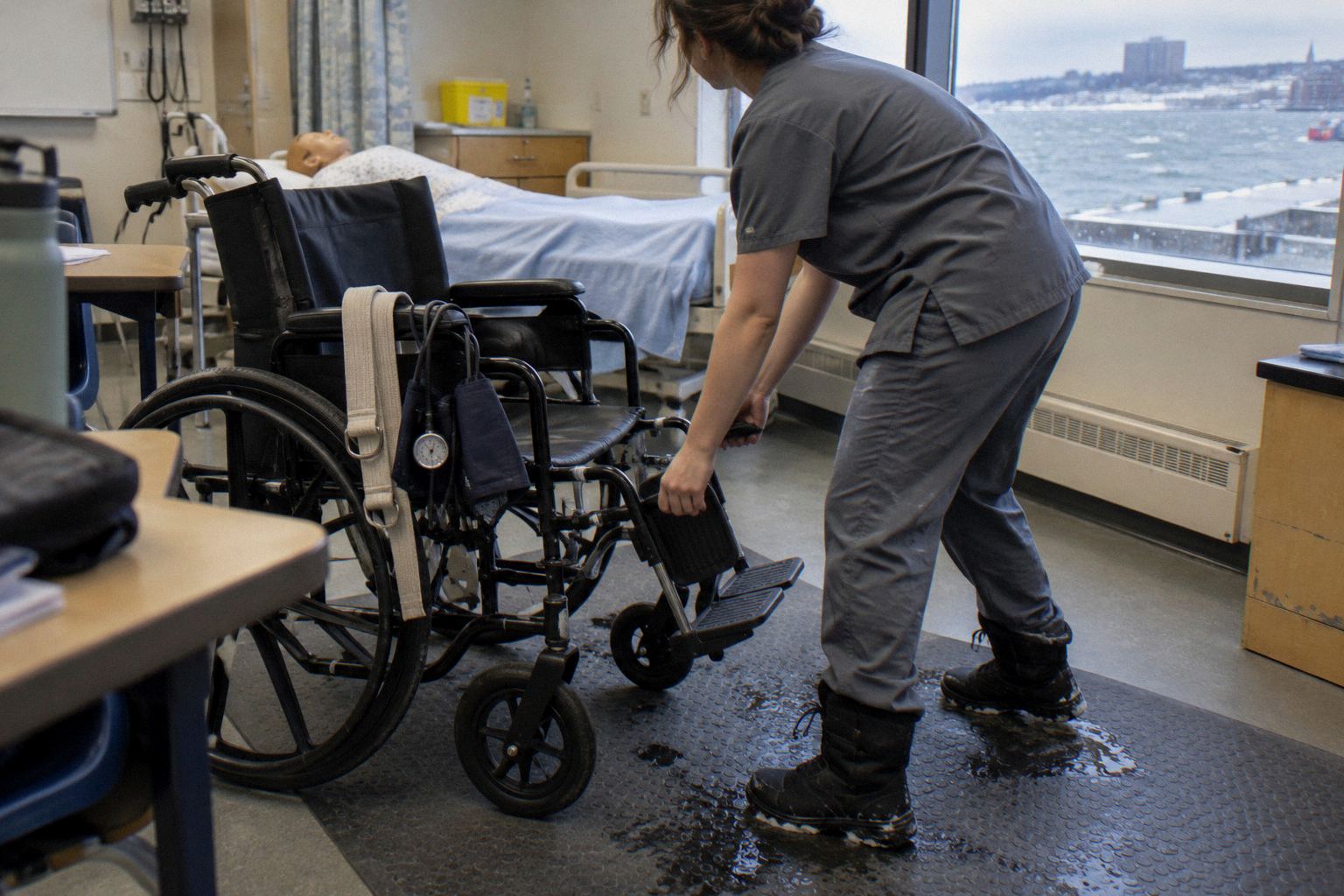
What Are The Ways To Become A CCA In Canada?
The ways to become a CCA in Canada fall into two families: provincial programs that lead toward the required certificate, exam eligibility or registry pathway, and online courses that test your interest first. The table starts with the online route because it is the one I tell undecided clients to try before paying tuition.
| Route | Time | Cost (CAD) | What You Get | Recognised By | Best For |
|---|---|---|---|---|---|
| Foundations for Assisting in Home Care | 6 weeks at 10 hours a week | Not listed | Shareable certificate in home care fundamentals | No provincial regulator or registry | Testing the field before committing |
| Continuing Care Assistant (CCA) Diploma Program | 25 weeks (19 campus + 6 practicum) | $0 with free tuition for eligible citizens and permanent residents who agree to 2 years of qualifying CCA work in Nova Scotia | Continuing Care Assistant Diploma | Health Association of Nova Scotia | Eligible Nova Scotia students using free tuition |
| Continuing Care | 24 weeks | $3,800 domestic (2026-27) | Certificate plus eligibility to write the provincial exam | Nova Scotia Department of Seniors and Long-Term Care | Nova Scotia residents near an NSCC campus |
| Continuing Care Assistant | Not listed | Free tuition for eligible citizens and permanent residents who agree to 2 years of qualifying CCA work in Nova Scotia | CCA Diploma | Nova Scotia CCA pathway after exam and registry | Nova Scotia applicants wanting a second provider |
| Continuing Care Assistant (CCA) | About 8 months full-time | $8,960 domestic (2026-27) | Certificate | Saskatchewan Health Authority | Saskatchewan residents; Saskatoon, Regina or Prince Albert |
My recommendation: the Nova Scotia free-tuition route for citizens and permanent residents who can commit 2 years there, NSCC for the shortest listed provincial program, and the Coursera course first for anyone still deciding.
What Is The Fastest Way To Become A CCA In Canada?
The fastest way to become a CCA among the routes listed on this page is the Nova Scotia sequence: 25 weeks of licensed training, one exam, one registry application. NSCC lists an even shorter 24-week program.
- Apply to a licensed Nova Scotia CCA program, for example CCATCM or Eastern College; the province's become-a-CCA page sets this requirement, with a listed cost of $0 at this step.
- Complete the 25-week program, including 204 practicum hours; under the provincial free tuition offer the cost is $0 for eligible citizens and permanent residents who agree to 2 years of qualifying CCA work in Nova Scotia.
- Pass the CCA Certification Exam; the exam sitting falls within your eligibility period.
- Register on the Nova Scotia Continuing Care Assistant Registry; renewal runs annually from January to March and the renewal fee varies.
- Honour the commitment: free tuition, textbooks and some additional program costs come with an agreement to work as a CCA in Nova Scotia for 2 years.
Do You Need A Licence Or Certificate To Work As A CCA?
A licence or certificate is required in the three provinces with published rules here: Nova Scotia mandates a licensed program, the CCA Certification Exam and registry listing; Saskatchewan Polytechnic states a Continuing Care Assistant certificate is required to work as a CCA, and it is the standard credential cited for the Saskatchewan Health Authority, with no provincial registry listed; Alberta's Health Care Aides are regulated under the Health Professions Act since February 2, 2026.
| Province | Required? | Regulator Or Registry | What It Means |
|---|---|---|---|
| Nova Scotia | Yes, mandatory | Nova Scotia Continuing Care Assistant Registry | Complete a CCA program through a licensed education provider, pass the CCA Certification Exam, then register, with annual renewal from January to March |
| Saskatchewan | Certificate required per Saskatchewan Polytechnic; no provincial registry listed | None listed | Saskatchewan Polytechnic states you require a Continuing Care Assistant certificate to work as a CCA, and it is the standard credential cited for the Saskatchewan Health Authority |
| Alberta | Yes, regulated since February 2, 2026 | College of Licensed Practical Nurses and Health Care Aides of Alberta (CLHA) | Health Care Aides are a regulated profession under the Health Professions Act |
Nova Scotia has a mandatory registry and certification pathway. The province states that to become a CCA you must successfully complete a CCA program through a licensed education provider and pass the CCA Certification Exam. NSCC's Continuing Care program makes you eligible to write the provincial certification exam once you complete all components. Registry listing, renewed each January to March, completes the picture.
So I will be blunt about the online options: Foundations for Assisting in Home Care and every other Coursera or Udemy course on this page grants no licence, no registry listing and no seat at the CCA Certification Exam. What they offer is the theory and an honest test of whether the work suits you, before you commit 24 to 32 weeks.
Which CCA Classes And Courses Are Worth Taking?
CCA classes worth taking split cleanly: provincial programs that lead toward a certificate, exam eligibility or the registry pathway, and online courses that do not. Start with Coursera if you are undecided; skip to the college reviews if you already know your province.
Foundations for Assisting in Home Care
Foundations for Assisting in Home Care is a six-week online course from The State University of New York, about 10 hours a week, rated 4.8 from 687 reviews.
| Provider | The State University of New York |
|---|---|
| Length | 6 weeks at 10 hours a week |
| Rating | 4.8 (687 reviews) |
| Credential | Shareable certificate |
| Format | online |
Fiona's take: This is the course I hand to clients who are curious but not yet sure. It covers what assisting clients at home actually involves day to day, and it ends with a shareable certificate. Treat that certificate as a resume signal of interest, nothing more.
Skip it if: Skip it once you have enrolled in a provincial program, because it adds no credential any provincial CCA registry recognises.
Start On CourseraThe Challenges of Modern Caregiving
The Challenges of Modern Caregiving is a one to three month online course from the University of Colorado Boulder, rated 5 from 9 reviews.
| Provider | University of Colorado Boulder |
|---|---|
| Length | 1 - 3 Months |
| Rating | 5 (9 reviews) |
| Credential | Course certificate |
| Format | online |
Fiona's take: This one is context, not technique: what modern caregiving demands of families and workers. I suggest it for people supporting a parent and weighing whether to turn that experience into a CCA career. Nine reviews is a thin signal, so weigh the rating lightly.
Skip it if: Skip it if you want hands-on skills, since the pack lists no provincial CCA recognition for it.
Start On CourseraNursing Assistant Fundamentals
Nursing Assistant Fundamentals is a one to three month online specialization from MedCerts, rated 4.8 from 1.3K reviews.
| Provider | MedCerts |
|---|---|
| Length | 1 - 3 Months |
| Rating | 4.8 (1.3K reviews) |
| Credential | Specialization certificate |
| Format | online |
Fiona's take: The closest Coursera match to actual CCA coursework, bundling patient-care fundamentals into a specialization certificate. Use it for general patient-care fundamentals, not provincial CCA qualification.
Skip it if: Skip it if your goal is the Nova Scotia registry, because only a licensed program plus the CCA Certification Exam gets you there.
Start On CourseraKnowledge and Skills for Dementia Care: the SSLD Approach
Knowledge and Skills for Dementia Care: the SSLD Approach is a one to three month online course from the University of Toronto, rated 4.6 from 132 reviews.
| Provider | University of Toronto |
|---|---|
| Length | 1 - 3 Months |
| Rating | 4.6 (132 reviews) |
| Credential | Course certificate |
| Format | online |
Fiona's take: The one Coursera option here from a Canadian university, aimed at dementia care, which is relevant to continuing care work. I recommend it as preparation before a provincial program or as depth after you register. It does not replace any provincial training.
Skip it if: Skip it if you need an entry credential, because this is depth, not entry.
Start On CourseraHEALTH AND SOCIAL CARE COURSE FOR CARE WORKERS,SUPPORT STAFF
HEALTH AND SOCIAL CARE COURSE FOR CARE WORKERS, SUPPORT STAFF is a self-paced online course from Aparna Ajay, rated 4.4 from 23 ratings.
| Provider | Aparna Ajay |
|---|---|
| Rating | 4.4 (23 ratings) |
| Credential | Certificate of completion |
| Format | online |
Fiona's take: A broad orientation to care work with a certificate of completion. Twenty-three ratings means the score carries limited weight, and the pack lists no provincial CCA recognition for this course; use it only as background reading for someone weighing the field.
Skip it if: Skip it whenever an employer or registry needs proof of training, since no provincial CCA recognition is listed for it.
View On UdemyPerson-Centred Care in Adult Nursing | Specialized Diploma
Person-Centred Care in Adult Nursing is a self-paced online specialized diploma from Bespoke Learning Solutions, rating not shown from 6 ratings.
| Provider | Bespoke Learning Solutions |
|---|---|
| Rating | not shown (6 ratings) |
| Credential | Certificate of Completion |
| Format | online |
Fiona's take: Person-centred care is the philosophy behind continuing care in Canada, and this course explains it in plain terms. With no displayed rating and only 6 ratings, I would treat it as optional reading rather than a planned step.
Skip it if: Skip it if you are chasing a credential, because the pack lists no provincial recognition for this diploma.
View On UdemyDiploma in Health and Social Care | Caregiver Certification
Diploma in Health and Social Care is a self-paced online caregiver course from Bespoke Learning Solutions, listed as highest rated from 40 ratings.
| Provider | Bespoke Learning Solutions |
|---|---|
| Rating | Highest Rated (40 ratings) |
| Credential | Diploma certificate |
| Format | online |
Fiona's take: The strongest Udemy signal of the three, suited to volunteers or family caregivers who want structured vocabulary for the work. The pack lists no provincial CCA recognition for it, so file it under personal preparation.
Skip it if: Skip it if you are comparing it to a Saskatchewan Polytechnic or NSCC credential, because they are different categories.
View On UdemyContinuing Care Assistant
Continuing Care Assistant at Southeast College is an eight-month in-person or hybrid certificate program in Saskatchewan, at $6,291 in tuition and mandatory fees plus $1,200 in materials.
| Provider | Southeast College |
|---|---|
| Length | 8 months |
| Cost (CAD) | Tuition and Mandatory Fees: $6,291; Materials: $1,200 |
| Credential | Certificate |
| Format | in person/hybrid, SK |
Fiona's take: A regional Saskatchewan delivery priced below Saskatchewan Polytechnic's listed $8,960. If you live in the province's southeast, this is a direct route to the certificate Saskatchewan Polytechnic says the work requires.
Skip it if: Skip it if speed is the priority, since eight months runs longer than the 24-week and 25-week Nova Scotia programs.
See Program DetailsContinuing Care Assistant
Continuing Care Assistant at Eastern College is an in-person Nova Scotia program leading to a CCA Diploma, with free tuition for eligible Canadian citizens or permanent residents.
| Provider | Eastern College |
|---|---|
| Cost (CAD) | Free tuition (for eligible Canadian permanent residents or citizens) |
| Credential | CCA Diploma |
| Format | in person, NS |
Fiona's take: Nova Scotia's guidance names licensed programs like this one, and Eastern College lists free tuition for eligible citizens and permanent residents who agree to 2 years of qualifying CCA work in Nova Scotia. Length is not listed, so confirm the schedule with admissions before you plan around a start date.
Skip it if: Skip it as an international student, because the free tuition does not extend to you.
See Program DetailsContinuing Care
Continuing Care at NSCC is a 24-week in-person certificate program in Nova Scotia, with domestic tuition of $3,800 for 2026-27.
| Provider | NSCC |
|---|---|
| Length | 24 Weeks (varies for part-time studies) |
| Cost (CAD) | Tuition (Domestic): $3,800 (2026-27) |
| Credential | Certificate |
| Format | in person, NS |
Fiona's take: The shortest listed provincial or college CCA program on this page. Complete all components and you are eligible to write the provincial certification exam. Part-time study varies the length, which matters if you will keep working while you train.
Skip it if: Skip it if you need distance delivery, because this program is in person.
See Program DetailsContinuing Care Assistant (CCA)
Continuing Care Assistant at Saskatchewan Polytechnic is a certificate program offered in person, hybrid or part-time distance, at $8,960 domestic tuition for 2026-27.
| Provider | Saskatchewan Polytechnic |
|---|---|
| Length | not shown (certificate program) |
| Cost (CAD) | $8,960 (2026-27 domestic) |
| Credential | Certificate |
| Format | in person/hybrid/part-time distance, SK |
Fiona's take: The reference credential for the province, delivered in Saskatoon, Regina or Prince Albert and recognised by the Saskatchewan Health Authority. The part-time distance option, also available through regional colleges, is the realistic format if you are employed.
Skip it if: Skip it at this price if you qualify for Nova Scotia's free tuition and can commit 2 years there.
See Program DetailsContinuing Care Assistant
Continuing Care Assistant at Suncrest College is a 32-week in-person certificate program in Saskatchewan, with approximate domestic tuition of $6,500 and part-time options.
| Provider | Suncrest College |
|---|---|
| Length | 32 Weeks |
| Cost (CAD) | Domestic Tuition $6,500.00 (approximate) |
| Credential | Certificate |
| Format | in person (part-time options), SK |
Fiona's take: A mid-priced Saskatchewan option between Southeast College and Saskatchewan Polytechnic on tuition. Thirty-two weeks is longer than the Nova Scotia routes, so the trade is time against location.
Skip it if: Skip it if you want the fastest possible certificate.
See Program DetailsContinuing Care Assistant (CCA) Course
Continuing Care Assistant at Carlton Trail College is an approximately 32-week in-person or blended Saskatchewan program, at $7,124 in tuition and fees plus an estimated $747 in books and supplies, awarding a Saskatchewan Polytechnic certificate.
| Provider | Carlton Trail College |
|---|---|
| Length | approximately 32 weeks |
| Cost (CAD) | Tuition etc.: $7124; Books,Supplies: $747 (estimate domestic) |
| Credential | Sask Polytechnic Certificate |
| Format | in person/blended, SK |
Fiona's take: Regional delivery of the Saskatchewan Polytechnic certificate, which Saskatchewan Polytechnic says is required to work as a CCA in the province. The blended format suits students who cannot relocate to Saskatoon or Regina.
Skip it if: Skip it if timeline matters most, since it runs about 32 weeks.
See Program DetailsContinuing Care Assistant (CCA) Diploma Program
The Continuing Care Assistant Diploma Program at CCATCM is a 25-week hybrid Nova Scotia program, 19 weeks on campus plus 6 weeks of practicum, per the provider, with tuition not shown and student funding available.
| Provider | CCATCM |
|---|---|
| Length | 25 weeks (19 weeks campus + 6 weeks practicum) |
| Cost (CAD) | not shown (student funding available) |
| Credential | Continuing Care Assistant Diploma (CCA) |
| Format | hybrid (blended lecture/lab), NS |
Fiona's take: Licensed by the Health Association of Nova Scotia, and the model behind this page's fastest listed route: the cost sits at $0 under the provincial free tuition offer for eligible citizens and permanent residents who agree to 2 years of qualifying CCA work in Nova Scotia.
Skip it if: Skip it if the two-year Nova Scotia work commitment does not fit your plans.
See Program DetailsContinuing Care Assistant Program
The Continuing Care Assistant Program at Willis College is a 25-week hybrid or in-person Nova Scotia program, per the provider, leading to an NS Diploma, with free tuition available to eligible students.
| Provider | Willis College |
|---|---|
| Length | 25 weeks |
| Cost (CAD) | not shown (free tuition available to eligible students) |
| Credential | NS Diploma |
| Format | hybrid/in person, NS |
Fiona's take: Same 25-week shape as CCATCM, with a hybrid option for scheduling flexibility. Cost is not listed, so confirm what remains after provincial coverage before you enrol.
Skip it if: Skip it if you need a published price up front.
See Program DetailsHow Much Do CCA Classes Cost In Canada?
Listed tuition in the options shown ranges from conditional $0 Nova Scotia tuition to $8,960 at Saskatchewan Polytechnic, before some listed fees and materials, plus a $400 Nova Scotia administration fee that includes the provincial exam fee. Nova Scotia's free tuition is what pulls the floor to zero.
| Cost Item | Amount (CAD) | Notes |
|---|---|---|
| Nova Scotia CCA administration fee, includes provincial exam fee | $400 | Listed Nova Scotia program fee |
| CCATCM diploma, Nova Scotia | $0 | Free tuition, textbooks and some program costs for eligible citizens and permanent residents who agree to 2 years of qualifying CCA work in Nova Scotia |
| NSCC Continuing Care tuition, domestic, 2026-27 | $3,800 | 24-week certificate program |
| Southeast College tuition and mandatory fees | $6,291 | Plus $1,200 in materials |
| Suncrest College tuition, domestic, approximate | $6,500 | 32-week program |
| Carlton Trail College tuition and fees | $7,124 | Plus an estimated $747 in books and supplies |
| Saskatchewan Polytechnic tuition, 2026-27 domestic | $8,960 | Certificate program, about 8 months full-time |
| Nova Scotia CCA Registry renewal | Varies | Annual renewal window runs January to March |
The Nova Scotia offer changes the arithmetic. The Government of Nova Scotia covers tuition, textbooks and some additional program costs for students who enrol in a CCA program, on two conditions: Canadian citizenship or permanent residency, and an agreement to work as a CCA in Nova Scotia for 2 years. International students do not qualify and should confirm tuition directly with providers.
The Coursera and Udemy courses on this page carry no listed Canadian dollar price, so treat them as triage, not tuition. The $400 administration fee is the one fixed Nova Scotia cost to plan for, because it carries the Provincial Exam fee.
How Much Does A CCA Earn In Canada?
A CCA working in Canada earns a median of $24.00 per hour under NOC 33102, nurse aides, orderlies and patient service associates, according to Job Bank's wage report.
| Region | Median Hourly Wage (NOC 33102) |
|---|---|
| Canada | $24.00 |
| British Columbia | $27.89 |
| Saskatchewan | $23.97 |
| Nova Scotia | $23.00 |
| Alberta | $22.55 |
Job Bank rates NOC 33102 as a strong risk of shortage from 2026 to 2035, which is a clear demand signal for a 25-week credential. The provincial spread is real money: among the provinces listed here, British Columbia's median sits at $27.89, with Saskatchewan at $23.97, Nova Scotia at $23.00 and Alberta at $22.55.
Set the wages against the tuition. A graduate carrying Saskatchewan Polytechnic's $8,960 earns against the same national median as an NSCC graduate at $3,800 or a Nova Scotia free-tuition graduate at $0, so province choice drives payback time more than the wage does.
Is A CCA Certificate Worth It In 2026?
A CCA certificate is worth it in 2026 if three things line up for you, and they line up easily. Training runs 24 to 32 weeks at the providers listed here. Job Bank flags a strong risk of shortage for NOC 33102 through 2035. And in Nova Scotia the tuition can be $0 for citizens and permanent residents who commit to 2 years of qualifying CCA work in the province.
The case weakens for international students excluded from free tuition, or for anyone anchored to Saskatchewan's $6,291 to $8,960 program prices. At a $24.00 national median wage those tuitions are manageable but not trivial, which is exactly why the try-first step exists: test the field with Foundations for Assisting in Home Care before you pay NSCC's $3,800 or relocate for a 25-week program.
Can You Get Funding For CCA Classes?
Funding for CCA classes exists, and the Nova Scotia free tuition program is the largest item on this page. Two Nova Scotia providers also list their own funding paths.
- Nova Scotia Free Tuition For CCA Students. The Government of Nova Scotia covers tuition, textbooks and some additional program costs for students who enrol in a CCA program. Eligibility requires Canadian citizenship or permanent residency and an agreement to work as a CCA in Nova Scotia for 2 years. International students are not eligible.
- CCATCM Student Funding. CCATCM lists student funding as available for its 25-week Continuing Care Assistant Diploma Program, with tuition not shown publicly. Ask the college what the net cost is after provincial coverage.
- Willis College Free Tuition. Willis College lists free tuition as available to eligible students in its 25-week Continuing Care Assistant Program, which leads to an NS Diploma. Confirm your status with admissions before you plan a budget.
CCA Questions Canadians Ask
Is The CCA Course Free In Nova Scotia?
Free it is, under conditions. The Government of Nova Scotia covers tuition, textbooks and some additional program costs for students who enrol in a CCA program. You must be a Canadian citizen or permanent resident, and you must agree to work as a CCA in Nova Scotia for 2 years. Meet both conditions and your tuition is $0.
Can International Students Get Free CCA Training In Nova Scotia?
International students cannot. The free tuition, textbook and program-cost coverage is limited to Canadian citizens and permanent residents, and it carries the 2-year Nova Scotia work commitment. International students are not eligible for the free-tuition offer and should confirm the provider's tuition directly.
How Long Is CCA Training?
CCA training typically runs 24 to 32 weeks full-time including practicum. On this page: 24 weeks at NSCC, 25 weeks listed by the providers CCATCM and Willis College, about 32 weeks at Suncrest and Carlton Trail colleges, and roughly 8 months full-time at Saskatchewan Polytechnic. Part-time and distance formats stretch the calendar further.
Is CCA Certification Mandatory In All Provinces?
Certification rules differ by province rather than applying uniformly. Nova Scotia mandates a licensed program, the CCA Certification Exam and registry listing. Alberta's Health Care Aides are regulated under the Health Professions Act since February 2, 2026. In Saskatchewan, Saskatchewan Polytechnic states you require a Continuing Care Assistant certificate to work as a CCA, though no provincial registry is listed.
What Is The Median Wage For CCAs In Canada?
The median wage is $24.00 per hour, the Canada-wide figure for NOC 33102 from Job Bank's wage report. Among the provinces listed here: Alberta sits at $22.55, Nova Scotia at $23.00, Saskatchewan at $23.97 and British Columbia at $27.89. Job Bank pairs the figures with a strong risk of shortage through 2035.
What NOC Code Is Used For CCA Jobs?
NOC 33102 is the code, titled nurse aides, orderlies and patient service associates. Job Bank publishes the wage and outlook data under it, and it is the classification to cite on a resume or check against job postings when you compare continuing care roles across provinces.
Are There Online CCA Courses In Saskatchewan?
Online study exists in part-time distance form. Saskatchewan Polytechnic lists flexible learning for its Continuing Care Assistant certificate, and regional colleges deliver the program too, with Carlton Trail College blending in-person and online study. The credential at the end is the certificate Saskatchewan Polytechnic says the work requires.
What's The Bottom Line On CCA Classes In Canada?
- The bottom line on CCA classes in Canada: among the routes listed on this page, Nova Scotia runs the fastest, a 25-week licensed program at $0 tuition for eligible citizens and permanent residents who agree to 2 years of qualifying CCA work in Nova Scotia, followed by the CCA Certification Exam and registry listing. NSCC lists a 24-week option.
- Saskatchewan's route is a college certificate: $8,960 at Saskatchewan Polytechnic, about $6,500 at Suncrest College, $7,124 at Carlton Trail College, or $6,291 plus $1,200 in materials at Southeast College.
- Alberta's Health Care Aides are regulated under the Health Professions Act since February 2, 2026, through the College of Licensed Practical Nurses and Health Care Aides of Alberta.
- NOC 33102 pays a $24.00 Canada median hourly wage, with listed provincial medians including $22.55 in Alberta, $23.00 in Nova Scotia, $23.97 in Saskatchewan and $27.89 in British Columbia, and Job Bank flagging a strong risk of shortage through 2035.
- Still deciding? Start with Foundations for Assisting in Home Care: six weeks that tell you whether care work fits, and no Coursera or Udemy course on this page qualifies you for a provincial CCA registry, certification exam or provincial CCA certificate.






