Key Takeaways
- The fastest realistic route to practising medicine in Canada is 3-4 years of undergraduate study, a 3-4 year MD program, then 2-5 years of residency; costs are not published in one figure and vary by school.
- A licence is mandatory. The College of Physicians and Surgeons of Ontario (CPSO), for example, requires a medical degree from an accredited Canadian or US medical school or from an acceptable international medical school.
- Medical Terminology Specialization from Rice University takes 4 weeks at 10 hours a week and is a low-risk way to test the material, but no Coursera course leads to the MD or to any medical licence.
- Job Bank reports a median wage of $232,227 per year for NOC 31102 family physicians, and some international medical graduates may shorten their route through Practice-Ready Assessment (PRA), roughly 12 weeks of supervised assessment plus exams, in 9 provinces.
- Fiona's verdict: this path suits applicants ready for a decade of study and provincial licensing exams; if you hold an MBBS from abroad, ask whether you may qualify for a PRA route before planning anything longer.
A Bachelor of Medicine, Bachelor of Surgery (MBBS), also written MBChB, MB ChB, BMBS or MBBCh, is the primary medical qualification awarded in countries such as India, the UK and Russia. Canadian medical schools do not award it: the nineteen faculties of medicine in Canada award the MD degree, which is the first professional degree in medicine.
So the Canadian equivalent of the MBChB is the MD, earned after 3-4 years of undergraduate study plus a 3-4 year MD program, followed by 2-5 years of residency and registration with a provincial college such as the CPSO in Ontario. Here is how I advise clients to plan that route.
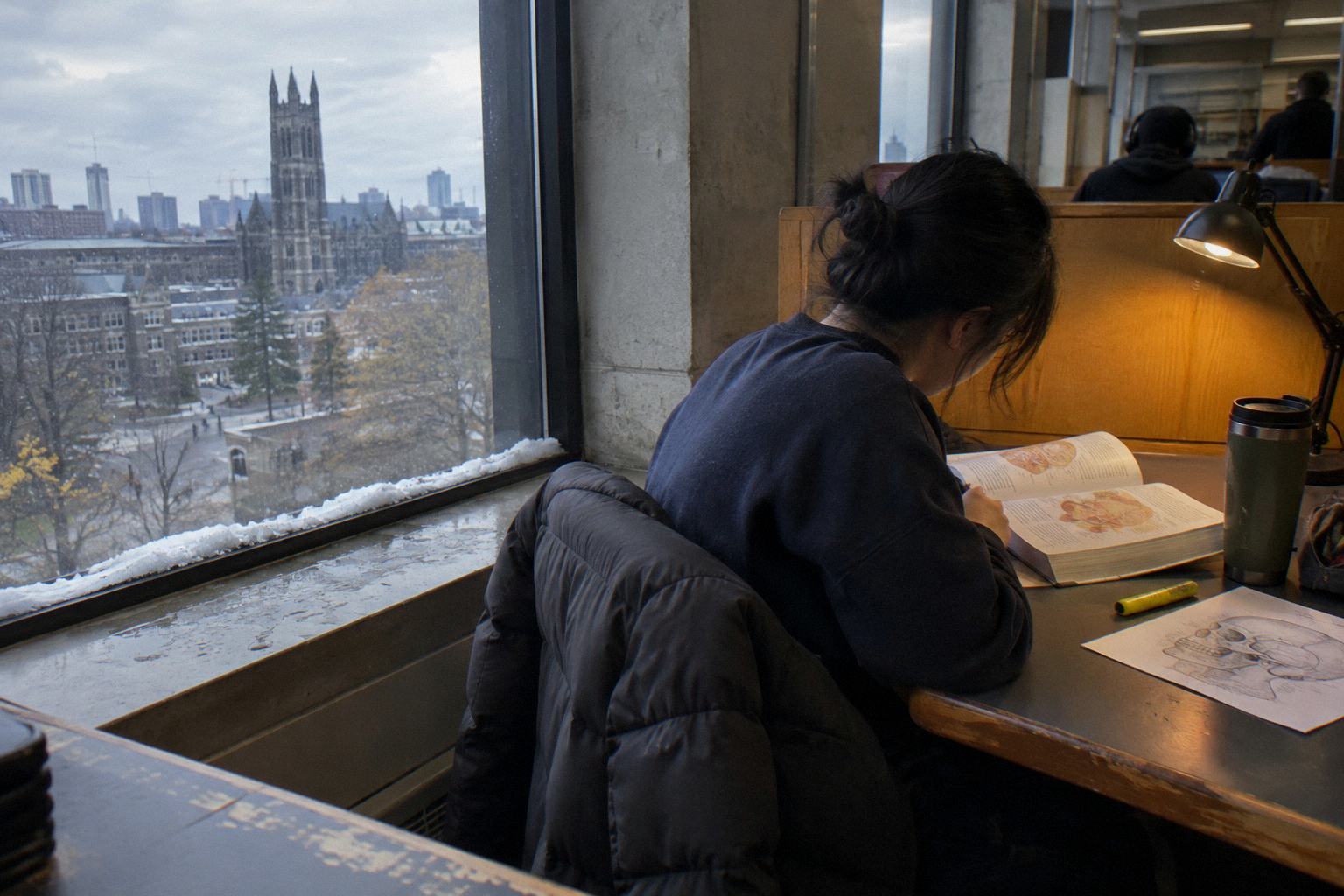
What Are The Ways To Get A Medical Degree In Canada?
Canadian medical schools award the MD, not the MBChB, so your route depends on where you are starting from.
| Route | Time | Cost (CAD) | What You Get | Recognised By | Best For |
|---|---|---|---|---|---|
| Medical Terminology Specialization plus other pre-med online courses | 4 weeks to 6 months | Not listed | A Specialization certificate, not a degree or licence | Specialization certificate only; not an MD and not a medical licence | Testing whether medicine suits you before applying |
| Standard Canadian MD pathway | 7-8 years (3-4 undergrad + 4 MD) | Varies by school | MD degree | Provincial colleges of physicians and surgeons | Canadian citizens and permanent residents starting from scratch |
| Practice-Ready Assessment (PRA) for IMGs | 1-2 years (exams + 12-week assessment) | Not listed | Provincial licence | Provincial regulators in 9 provinces | International medical graduates already holding an MBBS |
| Pre-medical program at a Canadian university | 1-2 years | Not listed | Pre-medical credential | Varies | Applicants who need science prerequisites before MD admission |
I recommend the Coursera route only as a first test of the material before you commit years and application fees; if you already hold an MBBS from abroad, the PRA route is the one to investigate first.
What Is The Fastest Way To Become A Doctor In Canada?
The fastest route from zero runs through the Canadian MD pathway, while the fastest route for a graduate who already holds an MBBS is Practice-Ready Assessment.
- Complete a 3-4 year undergraduate degree with the prerequisites Canadian medical schools expect.
- Write the MCAT if required by your target schools, then apply; the AFMC publishes admission requirements for all nineteen faculties of medicine.
- Complete a 3-4 year MD program at a faculty such as McGill University.
- Complete residency and obtain a provincial licence, which takes 2-5 years depending on the specialty.
- If you already hold an MBBS, the MCCQE and NAC OSCE or equivalents are the exams to investigate; some IMGs may qualify for Practice-Ready Assessment, roughly 12 weeks of supervised assessment, in 9 provinces.
Does The MD Degree Lead To A Licensed Profession In Canada?
Medicine is a regulated profession, and practising requires registration with a provincial college of physicians and surgeons; the degree alone is not a licence.
| Province | Required? | Regulator | What It Means |
|---|---|---|---|
| Ontario | Yes | College of Physicians and Surgeons of Ontario (CPSO) | The CPSO requires a medical degree from an accredited Canadian or US medical school or from an acceptable international medical school before registration |
Ontario is the example I cite because the CPSO publishes its registration requirements clearly: a medical degree from an accredited Canadian or US medical school, or from an acceptable international medical school. An MBBS can fall under that international category, which is why graduates from abroad pursue the IMG route rather than starting over.
International graduates should confirm the exams their target province expects. The MCCQE and the NAC OSCE or equivalents come up across provincial requirements, followed by provincial steps such as the Practice-Ready Assessment.
Which Pre-Med And Medical Courses Are Worth Taking?
Before you commit eight or more years, test the material; these are the courses I compare for clients planning an MD application.
Medical Terminology Specialization
Medical Terminology Specialization is a 4-week online Specialization from Rice University, at about 10 hours a week, rated 4.9 from 887 reviews.
| Provider | Rice University |
|---|---|
| Length | 4 weeks to complete at 10 hours a week |
| Rating | 4.9 (887 reviews) |
| Credential | Specialization |
| Format | online |
Fiona's take: I recommend this as the first stop for anyone exploring medicine, because it is short and focused: 4 weeks at about 10 hours a week, so you learn quickly whether the subject grips you. It develops medical terminology skills and helps you test your interest in the subject. It is a Specialization certificate only, not an MD and not a medical licence.
Skip it if: Skip it if you already work in healthcare and use medical terminology daily.
Start On CourseraAnatomy Specialization
Anatomy Specialization is an online Specialization from the University of Michigan.
| Provider | University of Michigan |
|---|---|
| Credential | Specialization |
| Format | online |
Fiona's take: I recommend it to applicants who want to study anatomy at university level before committing to the MD route. The University of Michigan name carries weight in medical education, and the Specialization format lets you sample the material and judge the study load. It grants a Specialization certificate, not a degree or licence.
Skip it if: Skip it if you have already completed university-level anatomy coursework.
Start On CourseraIntroductory Human Physiology
Introductory Human Physiology is a 1-3 month online course from Duke University, rated 4.8 from 5.4K reviews.
| Provider | Duke University |
|---|---|
| Length | 1 - 3 Months |
| Rating | 4.8 (5.4K reviews) |
| Credential | Course |
| Format | online |
Fiona's take: Duke's course has the review volume to back its reputation, 4.8 from 5.4K reviews over 1-3 months. I tell clients to pair it with the anatomy Specialization to build a base in anatomy and physiology before applying. It is a course certificate, not an MD and not a medical licence.
Skip it if: Skip it if your undergraduate degree already included full physiology courses.
Start On CourseraCancer Biology Specialization
Cancer Biology Specialization is a 3-6 month online Specialization from Johns Hopkins University, rated 4.8 from 10K reviews.
| Provider | Johns Hopkins University |
|---|---|
| Length | 3 - 6 Months |
| Rating | 4.8 (10K reviews) |
| Credential | Specialization |
| Format | online |
Fiona's take: This one goes deeper than most pre-med material, a 3-6 month Specialization from Johns Hopkins, a major name in cancer research. I position it after the basics, for applicants exploring a specific field before they commit to the MD route. It is a Specialization certificate only, not an MD and not a medical licence.
Skip it if: Skip it if you are still deciding whether medicine suits you at all.
Start On CourseraMedical Anatomy
Medical Anatomy is a roughly 4-hour online course from Udemy, rated 3.8 from 180 ratings.
| Provider | Udemy |
|---|---|
| Length | 3 Hours 58 Minutes |
| Rating | 3.8 (180 ratings) |
| Credential | Course |
| Format | online |
Fiona's take: Four hours is a single weekend, which makes this a quick taste test rather than a foundation. The 3.8 rating is lower than the university-backed options on this page, so I treat it as a sampler. It grants a course certificate only, not an MD and not a medical licence.
Skip it if: Skip it if you would rather spend the same weekend on a university-backed Coursera Specialization.
View On UdemyHuman Anatomy - Bachelor of Medicine (for MBBS, BDS, BHMS )
Human Anatomy, Bachelor of Medicine (for MBBS, BDS, BHMS) is an online Udemy course rated 4.4 from 18 ratings.
| Provider | Udemy |
|---|---|
| Rating | 4.4 (18 ratings) |
| Credential | Course |
| Format | online |
Fiona's take: The title targets students in MBBS-style programs abroad, which is a different curriculum from the Canadian MD, so the content may not map onto what Canadian faculties teach. Eighteen ratings is a thin base to judge from. It is a course certificate only, not an MD and not a medical licence.
Skip it if: Skip it if you are pursuing the Canadian MD pathway rather than an MBBS abroad.
View On UdemyMD Program
MD Program is an in-person medical degree program at McGill University in Quebec.
| Provider | McGill University |
|---|---|
| Credential | MD |
| Format | in person, Quebec |
Fiona's take: McGill is one of the nineteen faculties of medicine in Canada and its MD is the credential the provincial colleges recognise. This is the real commitment: in-person study, competitive admission, and years of residency after. I tell clients to apply broadly across the nineteen faculties rather than fixating on one.
Skip it if: Do not apply if you are not prepared for in-person study; Canada has no online MD.
See Program DetailsBachelor of Health Science
Bachelor of Health Science (BHS) is a hybrid undergraduate credential offered by various Canadian institutions.
| Provider | Various Canadian institutions |
|---|---|
| Credential | BHS |
| Format | hybrid, Various |
Fiona's take: A BHS is an undergraduate health-science credential; check each school's AFMC-listed prerequisites before relying on it for MD admission. It is not a medical degree and does not lead to registration on its own. The hybrid format suits applicants weighing their options alongside the MD goal.
Skip it if: Skip it if your existing undergraduate degree already covers the science prerequisites.
See Program DetailsPre-medical programme
Pre-medical program is a 1-2 year in-person program offered by various Canadian universities.
| Provider | Various Canadian universities |
|---|---|
| Length | 1–2 years |
| Credential | Pre-medical |
| Format | in person, Various |
Fiona's take: A 1-2 year pre-medical program may be a foundational option for applicants building toward medical school; confirm prerequisites with each faculty before enrolling. It adds time to the overall route, so weigh it against completing prerequisites inside your existing degree. Admission is still competitive either way.
Skip it if: Skip it if your undergraduate transcript already meets the AFMC-listed admission requirements.
See Program DetailsHow Much Does A Medical Degree Cost In Canada?
Medical education costs in Canada break down into application fees, the MCAT and tuition, and tuition varies by school and by residency status.
| Cost Item | Cost (CAD) | Notes |
|---|---|---|
| Application fees | Varies by school | Charged per faculty of medicine you apply to |
| MCAT | Not listed | Fee Assistance available through the AFMC's MCAT Fee Assistance Program for Canadians |
| MD tuition | Varies by school and residency status | Set by each school's governing body |
| Undergraduate degree | Varies by school | 3-4 years of study before the MD |
| PRA route for IMGs | Not listed | Exam and assessment costs vary by province |
I cannot give one tuition number honestly, because tuition and seat counts are commonly approved by each school's governing body over the summer, so figures shift year to year and by whether you are a domestic or international student. The AFMC publication is the document I send clients to, since it lists the admission requirements of all nineteen faculties.
The AFMC Fee Assistance Programs are the one concrete relief point in the pack, including the MCAT Fee Assistance Program for Canadians. If MCAT fees are the barrier, this is the program to check before you pay full MCAT fees.
How Much Does A Family Physician Earn In Canada?
Family physicians in Canada earn a median of $232,227 per year according to Job Bank data for NOC 31102.
| Occupation (NOC 31102) | Median Wage |
|---|---|
| Family physicians, Canada | $232,227 per year (Job Bank) |
A median of $232,227 per year is the figure Job Bank reports for NOC 31102 family physicians, and it explains why the route stays crowded despite a decade of training. Remember the median sits behind years of residency, exam fees and licensing steps. The outlook varies, so check the Job Bank report for your region before you commit.
Is The Medical Pathway Worth It In 2026?
Measured against the median wage of $232,227 per year for NOC 31102 family physicians, the Canadian MD pathway pays back for those who finish. The honest cost is time: 3-4 years of undergrad, a 3-4 year MD and 2-5 years of residency, before you hold a provincial licence.
For applicants holding an MBBS from India, the UK or Russia, the calculation differs. Some IMGs may qualify for a PRA route, typically listed as 1-2 years including exams and about 12 weeks of supervised assessment, subject to provincial requirements. Where it applies, that is far shorter than starting a domestic MD from scratch.
My verdict as an advisor: if you are starting from zero, commit only if you can sustain roughly a decade of study. If you are an international graduate, a PRA route may be the best use of your existing MBBS if you qualify, and the Coursera Specializations are not relevant to it beyond refreshing knowledge.
Can You Get Fee Help For Medical School Applications In Canada?
Yes, limited fee assistance exists, and the AFMC programs are the named option in this space.
- AFMC Fee Assistance Programs. The Association of Faculties of Medicine of Canada runs Fee Assistance Programs, including the MCAT Fee Assistance Program for Canadians. If MCAT fees are the obstacle, this is the program to check before you write the MCAT.
MBBS And MD Questions Canadians Ask
Is MBBS Offered In Canada?
No, MBBS is not offered in Canada. Canadian medical schools award the MD degree instead. There are nineteen faculties of medicine in Canada offering programs leading to the MD, which is the first professional degree in medicine, so the MBChB and MBBS you see in India, the UK or Russia have no domestic Canadian equivalent.
What Is The Shortest Path To Becoming A Doctor In Canada?
The shortest path from scratch is 3-4 years of undergraduate study, a 3-4 year MD program and then residency of 2-5 years, so roughly a decade in total. Applicants who already hold an MBBS may qualify for the shorter Practice-Ready Assessment route, typically 1-2 years including exams and about 12 weeks of supervised assessment in 9 provinces, subject to provincial requirements.
Are There Online MBBS Or MD Programs In Canada?
No, all Canadian MD programs require in-person study. No Canadian faculty of medicine offers the degree online, and no online course, including any Coursera Specialization, leads to the MD or to a medical licence. Online courses can only prepare you or test your interest before you apply.
MBBS Vs MD In Canada: Which Do You Need?
MBBS versus MD in Canada: Canadian schools award the MD domestically, and the nineteen faculties of medicine offer it as the first professional degree in medicine. An MBBS may be an acceptable international medical degree, but practice still requires provincial registration, and MBBS holders enter through IMG routes such as Practice-Ready Assessment.
Can International Students Study Medicine In Canada?
International students face very limited seats, and most schools prioritise Canadian citizens and permanent residents in admissions. Each faculty sets its own rules, so check the AFMC admission requirements document before investing in applications. The realistic advice is to apply broadly and expect heavy competition for the few international places.
What Exams Are Needed For IMGs To Practise In Canada?
Exams for IMGs include the MCCQE and the NAC OSCE or equivalent assessments, plus provincial requirements set by the regulator where you want to practise. After the exams, some IMGs may qualify for the Practice-Ready Assessment route, about 12 weeks of supervised assessment, with outcomes subject to provincial requirements.
How Much Does Medical School Cost In Canada?
Medical school costs in Canada include application fees, MCAT fees and tuition, and tuition varies widely by school and by whether you are a domestic or international student. Each school's governing body approves tuition and seat counts, often over the summer, so no single figure holds across the nineteen faculties. The AFMC Fee Assistance Programs can reduce the MCAT burden.
What Is The Median Wage For Family Physicians In Canada?
The median wage for family physicians in Canada is $232,227 per year, according to Job Bank data for NOC 31102. That figure reflects fully licensed family physicians after residency, so weigh it against the 3-4 years of undergraduate study, the MD program and the 2-5 years of residency required before you can earn it.
What's The Bottom Line On The MBChB Degree In Canada?
- Canada does not award the MBChB, MBBS or any variant; the nineteen faculties of medicine award the MD, and registration with a provincial college such as the CPSO is mandatory before you practise.
- From zero, becoming a doctor in Canada takes 3-4 years of undergraduate study, a 3-4 year MD and 2-5 years of residency, and family physicians earn a Job Bank median wage of $232,227 per year for NOC 31102.
- If you already hold an MBBS, some IMGs may qualify for a Practice-Ready Assessment route, typically listed as 1-2 years including exams and about 12 weeks of supervised assessment in 9 provinces, subject to provincial requirements.
- Start with Medical Terminology Specialization from Rice University: 4 weeks at 10 hours a week to test whether medicine fits, before you spend a decade on it.






