


If you’re a passionate green thumb or intrigued by the wonders of plant life, the internet has opened up a whole new realm of learning opportunities. In this article, we’ll explore the top horticulture online courses available in Canada.
In 2026, interest in sustainable, organic, and ecological gardening continues to grow across Canada due to increasing focus on climate resilience, local food production, urban gardening, and environmentally friendly practices.
Whether you’re a beginner seeking to cultivate your first garden or a seasoned gardener looking to expand your knowledge, these courses offer a convenient and accessible way to delve into the fascinating world of horticulture from the comfort of your own home.
In this post, we have listed the best online courses that will help you nurture your love for plants and unlock the secrets of successful cultivation.
| Course Name | Students Enrolled | Reviews |
|---|---|---|
| Coursera – Ecological Gardening Specialization | 15,000+ | 4,800+ |
| Udemy – Aquaponic Gardening | 8,000+ | 2,500+ |
| Udemy – Gardening, House Plants, Succulents for Beginners | 5,000+ | 1,000+ |
| University of Guelph – Horticulture Diploma | 4,500+ | 2,000+ |
| Prairie Horticulture Certificate | 6,500+ | 1,000+ |
| Gaia College – Organic Horticulture Specialist Online | 2,800+ | 1,100+ |
Coursera – Ecological Gardening Specialization
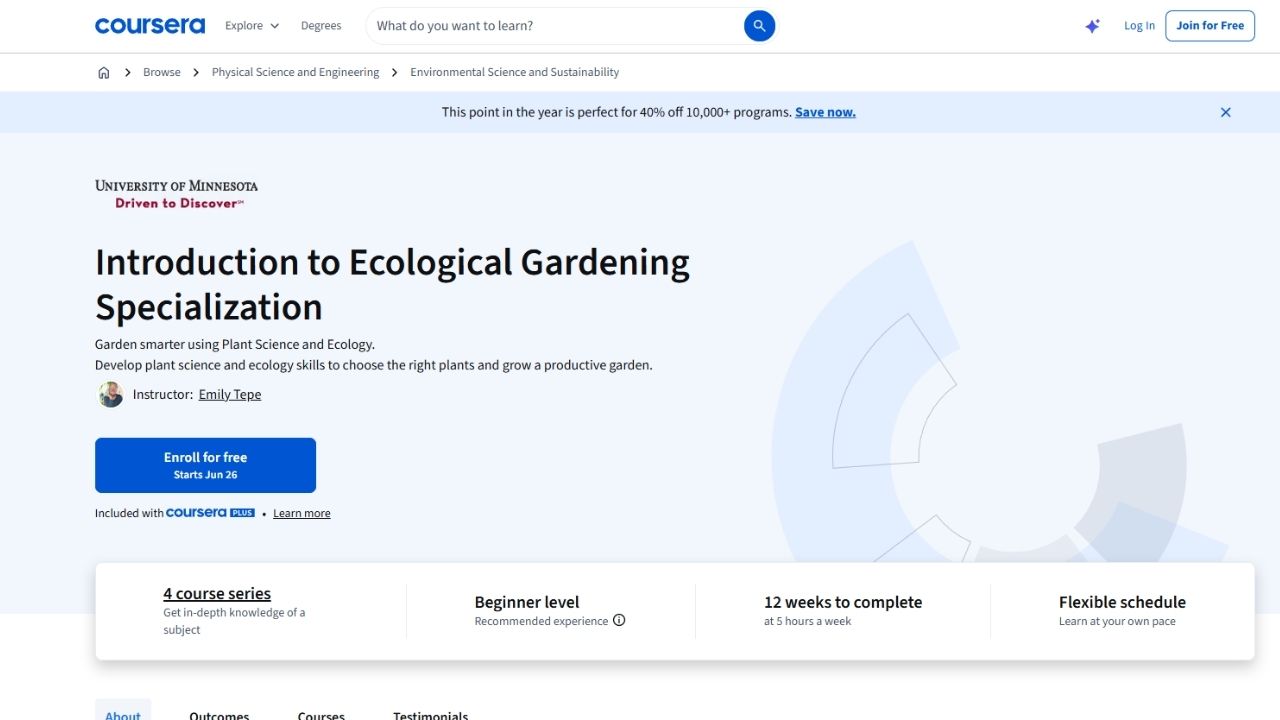
This specialization provides a comprehensive introduction to ecological and sustainable gardening practices. It covers key topics such as soil health, biodiversity, water conservation, permaculture principles, and environmentally responsible growing methods. The program is designed for individuals who want to garden in harmony with nature while reducing environmental impact. It is especially relevant in 2026 as more Canadians seek climate-friendly and regenerative gardening approaches.
Udemy – Aquaponic Gardening
Learn about the fascinating world of Aquaponic Gardening with this comprehensive and engaging online course on Udemy. This tutorial offers a unique and practical learning experience.
Most lectures in this course follow a Video / Presentation Mashup format, presenting video demonstrations alongside PowerPoint slides to keep the concepts clear and concise.
Throughout the course, you’ll be guided through the ins and outs of Aquaponic Gardening, learning how to cultivate fish and vegetables harmoniously.
Additionally, you’ll discover a range of essential resources to support your growth in this field, including the following:
- “The Aquaponic Source” for all your gardening needs
- “The Aquaponic Gardening Community,” a vibrant online hub of like-minded gardeners ready to assist and learn together,
- The “Aquaponic Gardening Book”
- The “Aquaponics Association,” a reputable resource promoting aquaponics and organizing the annual Aquaponics Association Conference
As you near the end of the course, you’ll find a series of articles and blog posts that cater specifically to budding aquaponic gardeners eager to explore this innovative growing technique further.
Access the course materials here.
Udemy – Gardening, House Plants, Succulents for Beginners
This Udemy course is designed to turn your garden into the envy of the neighborhood and fill your home with beautiful, easy-to-care-for greenery.
Here, you’ll discover valuable insights into gardening for beginners, gaining ideas about simple and low-maintenance plants that will elevate your outdoor space to new heights.
Learn the art of tending to these indoor beauties as they thrive and add a touch of natural elegance to your living space. From selecting the right house plants to providing essential care, this course empowers you to create an indoor sanctuary that radiates beauty and tranquility.
You will also delve into the captivating world of succulents – five exquisite varieties tailored for beginners. Embrace their unique charm and resilience as you uncover the secrets to their successful growth and care.
This course is designed for individuals who are aspiring gardeners or have a passion for plants.
Discover the course at this link.
University of Guelph – Horticulture Diploma
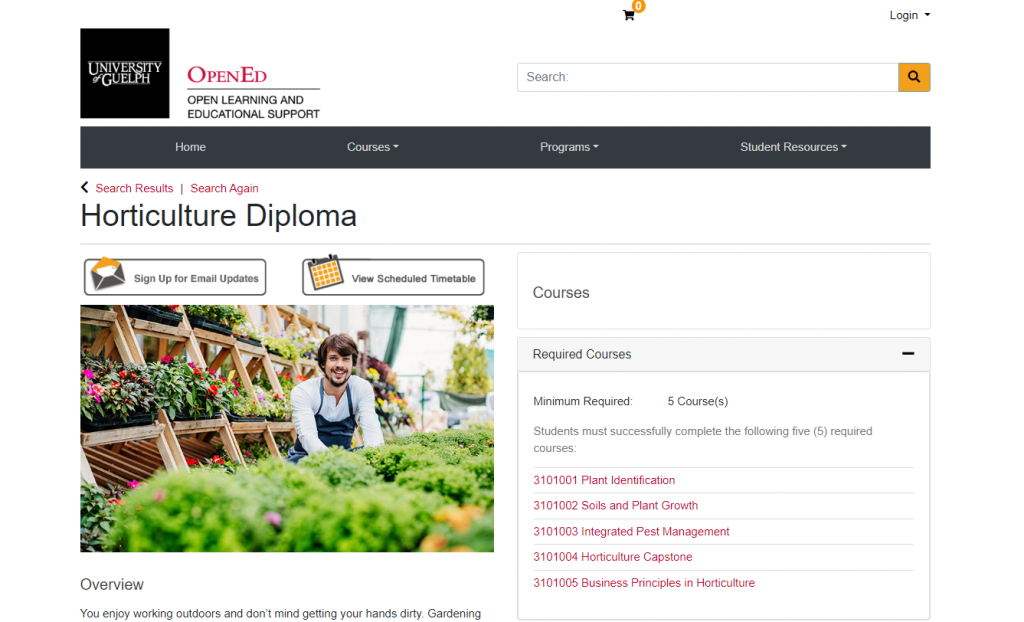
This Horticulture Diploma program from the University of Guelph is the perfect opportunity to enhance your horticulture skills and make your garden dreams a reality.
This comprehensive program provides you with the knowledge and expertise to excel in the field, guided by industry experts who bring valuable insights into the courses.
Once you complete the University of Guelph’s Horticulture Diploma program, you can elevate your horticulture skills and knowledge, creating a fulfilling and dynamic career in the industry or simply nurturing your love for gardening and plant growth.
Check out the course here.
Prairie Horticulture Certificate
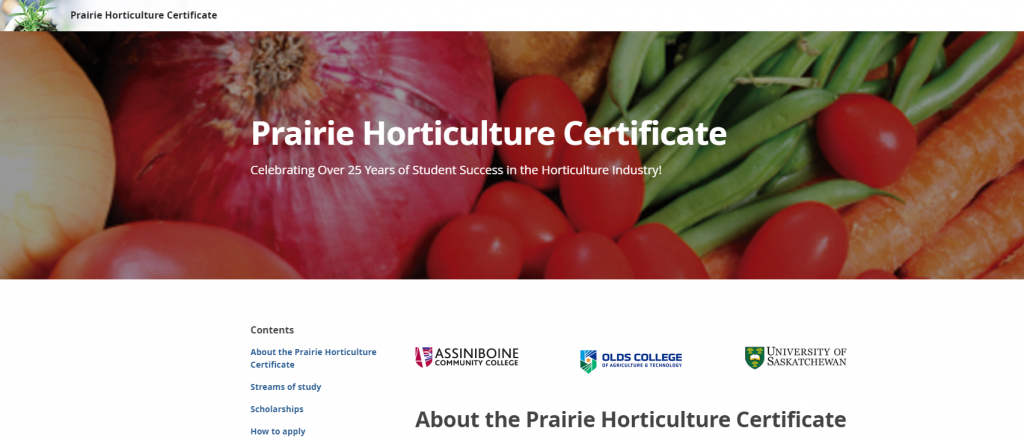
Developed collaboratively by three esteemed educational institutions in Western Canada – Assiniboine Community College, Olds College of Agriculture & Technology, and the University of Saskatchewan – the Prairie Horticulture Certificate (PHC) is designed with professionals in mind.
This certificate program equips you with all the tools and knowledge needed to thrive in the horticulture industry, whether you aspire to start your own business or advance your existing career.
Divided into three terms per year – fall, winter, and spring – the PHC offers an enriching learning experience throughout the seasons. The summer months, typically the busy season for horticultural professionals and enthusiasts, are designated as a break from classes, giving you ample time to immerse yourself in hands-on experiences and practical applications of your newfound knowledge.
Explore the course by clicking here.
Gaia College – Organic Horticulture Specialist Online
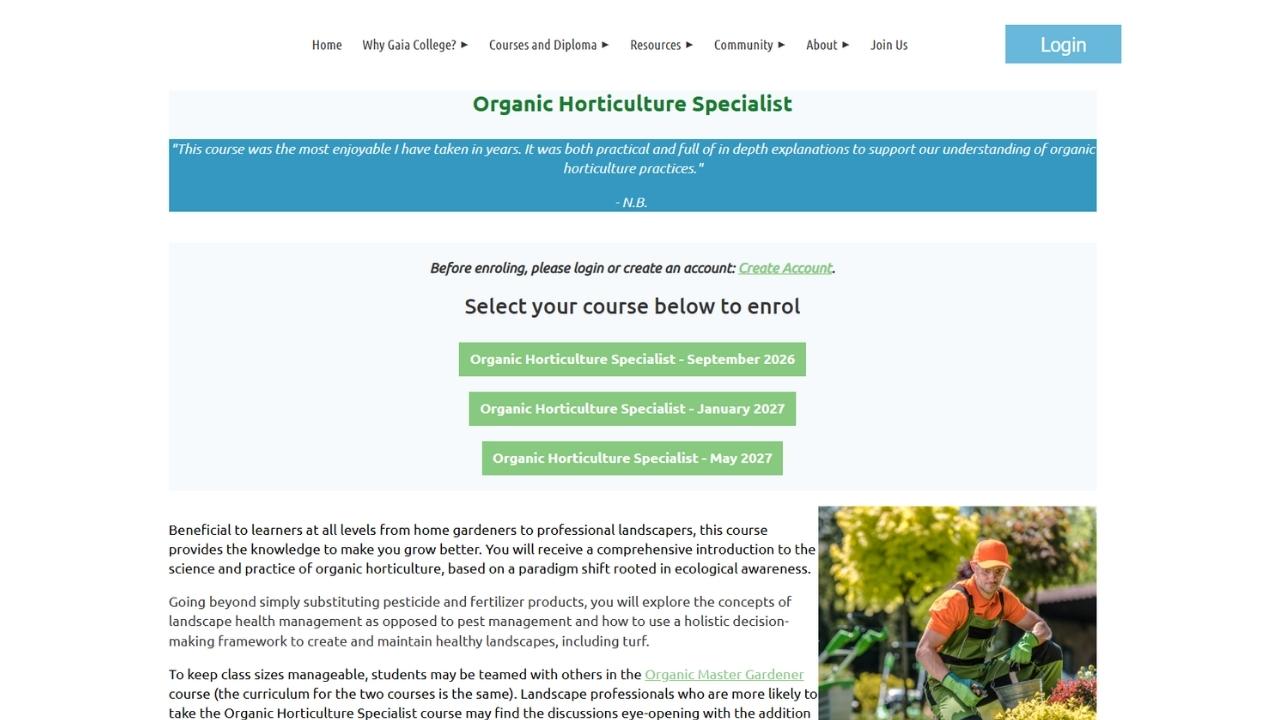
Gaia College’s Organic Horticulture Specialist Online program offers focused training in organic and ecological growing practices. It covers soil science, organic pest and disease management, composting, biodiversity, and sustainable landscape design. The program is well-suited for individuals who want to garden without synthetic chemicals and build healthy, resilient growing systems. It provides a strong foundation for both home gardeners and those interested in professional organic horticulture work.
Additional Helpful Information for Canadians in 2026
2026 Horticulture & Gardening Career Snapshot (Canada)
| Role | Entry Level (0–2 years) | Mid-Level (3–5 years) | Senior / Business Owner | Notes |
|---|---|---|---|---|
| Horticulture Technician / Gardener | $42,000 – $55,000 | $58,000 – $72,000 | $78,000 – $95,000+ | Common in public & private sectors |
| Landscape Designer / Horticulturist | $48,000 – $62,000 | $68,000 – $85,000 | $95,000 – $130,000+ | Strong demand in urban design |
| Urban Farmer / Market Gardener | $40,000 – $55,000 | $60,000 – $80,000 | $90,000 – $140,000+ | Growing sector (local food) |
| Greenhouse / Nursery Manager | $50,000 – $65,000 | $70,000 – $90,000 | $100,000 – $135,000+ | Good stability |
| Ecological / Organic Horticulturist | $45,000 – $60,000 | $65,000 – $82,000 | $90,000 – $120,000+ | High demand due to sustainability trends |
| Self-Employed Gardener / Consultant | $45,000 – $65,000 | $75,000 – $100,000 | $110,000 – $160,000+ | Highest earning potential |
National Average (Mid-Level): $60,000 – $78,000 Highest earning potential: Self-employed ecological landscapers, urban farmers, and those running their own gardening or landscaping businesses.
Career Paths After Taking These Courses
| Goal | Recommended Starting Course(s) | Time | Outcome |
|---|---|---|---|
| Start a home or community garden | Coursera Ecological Gardening or Udemy Gardening for Beginners | 1–3 months | Personal skills + confidence |
| Work in landscaping or public gardens | University of Guelph Horticulture Diploma | 6–18 months | Professional credential + job-ready skills |
| Focus on organic & sustainable growing | Gaia College Organic Horticulture Specialist | 4–8 months | Strong foundation in ecological practices |
| Start an urban farm or market garden | Coursera Ecological Gardening + practical experience | 6–12 months | Skills to launch small-scale farming |
| Specialize in aquaponics | Udemy Aquaponic Gardening | 2–4 months | Niche but growing skill set |
| Start a gardening or landscaping business | Any professional program + business knowledge | 6–18 months | Self-employed or small business owner |
Key Trends in Canadian Horticulture (2026)
- Ecological & Regenerative Gardening — Strong and growing demand for climate-resilient, low-input, and biodiversity-friendly practices.
- Urban Agriculture — Increasing interest in community gardens, rooftop gardens, and small-scale urban farming.
- Organic & Chemical-Free Growing — More homeowners and municipalities are moving away from synthetic pesticides and fertilizers.
- Aquaponics & Controlled Environment Agriculture — Niche but expanding areas, especially in colder Canadian climates.
- Native Plants & Pollinator Gardens — Popular due to environmental awareness and municipal incentives in many cities.
Quick 2026 Decision Guide
| Your Goal | Recommended Course(s) |
|---|---|
| Want to garden more sustainably & ecologically | Coursera – Ecological Gardening Specialization |
| Interested in organic growing methods | Gaia College – Organic Horticulture Specialist |
| Want to try aquaponics (fish + plants) | Udemy – Aquaponic Gardening |
| Want a recognized Canadian diploma | University of Guelph – Horticulture Diploma |
| Live in Western Canada (Prairies) | Prairie Horticulture Certificate |
| Just starting out with houseplants & basics | Udemy – Gardening, House Plants, Succulents for Beginners |
Practical Tips for Canadians in 2026
- Consider your climate zone — Canada has very different growing conditions (e.g., short seasons in the Prairies vs. milder BC or Atlantic climates). Choose courses that address your region.
- Focus on soil health — Healthy soil is the foundation of successful ecological gardening. Many top courses now emphasize this.
- Native plants matter — Using native species supports local ecosystems and often requires less water and maintenance.
- Check local regulations — Some municipalities have rules about front-yard gardens, beekeeping, or rainwater collection.
- Start small — Many successful urban farmers and landscapers began with small home gardens before scaling up.
- Build a portfolio — If you want to work professionally, document your projects with photos (especially before-and-after transformations).
Funding Options
- Canada Training Credit — Up to $250 per year tax credit for eligible training.
- Provincial workforce grants — Some provinces offer funding for agriculture, green jobs, or small business training.
- Employer sponsorship — Landscaping companies, nurseries, and municipalities sometimes pay for staff training.
- Community grants — Some cities offer small grants for community garden projects or urban agriculture initiatives.
Conclusion
All the courses on the list offer valuable insights into horticulture and are beneficial for both beginners and enthusiasts.
Our top recommendation is Coursera’s Ecological Gardening Specialization for its strong focus on sustainable and environmentally responsible practices, which aligns well with current trends in 2026. Udemy’s Aquaponic Gardening remains an excellent choice for those interested in innovative growing systems.
Discover the secrets of successful horticulture and embark on a rewarding journey of plant cultivation by enrolling in these courses today!