Key Takeaways
- The fastest realistic route is a short certificate at $5,000 to $12,000 over weeks to months, such as the George Brown or Vancouver Community College makeup programs, followed by 3 to 6 months of portfolio building; GLOW College's option is a 6-month, 400-hour diploma with no cost listed.
- No licence is required in most provinces, including Ontario and Alberta; Manitoba makes trade certification compulsory through Apprenticeship Manitoba, while Saskatchewan's esthetician trade is a voluntary designation under the Saskatchewan Apprenticeship and Trade Certification Commission.
- Equitable Stage Makeup and Hair from the University of Michigan runs 3 weeks at 10 hours a week as a try-first screen; it does not qualify you for Manitoba or Saskatchewan certification or any college credential.
- Job Bank lists a $20 median hourly wage for NOC 63211, with British Columbia at $22.15, Alberta at $21.63, Ontario at $19 and Manitoba at $16.20.
- Fiona's verdict: worth it for hands-on creatives who test the craft on Coursera first, then pay college tuition only after a portfolio proves the fit.
A makeup artist applies cosmetics to enhance a client's appearance, working in bridal, fashion, film and television, or retail, and Job Bank groups the role under NOC 63211, Estheticians, electrologists and related occupations.
Most provinces, Ontario and Alberta included, require no licence, so classes and a portfolio carry the weight a credential would elsewhere. The shortest realistic route is a short certificate at $5,000 to $12,000 over weeks to months, plus 3 to 6 months of portfolio work, and a 3-week Coursera course can be used as a low-commitment screen before paying for college tuition.
What Are The Ways To Become A Makeup Artist In Canada?
The ways to become a makeup artist in Canada split into four families: an online Coursera screen, a short Udemy technique course, a private career college diploma, or a college certificate. Most provinces require no licence, so the credential you pick is about portfolio and credibility, not permission.
| Route | Time | Cost (CAD) | What You Get | Recognised By | Best For |
|---|---|---|---|---|---|
| Equitable Stage Makeup and Hair | 3 weeks at 10 hours a week | Not listed | Shareable certificate | University of Michigan | Testing stage and film interest before tuition |
| Makeup Artistry Basic to Masterclass , Online Makeup Course | 7h 6m total | Not listed | Certificate of completion | Hajar Beauty Academy | Technique practice with no schedule |
| #1 Approved Advanced Makeup Artistry Diploma | 6 months (400 hours) | Not listed | Diploma | GLOW College; diploma approved under Ontario Career Colleges Act, 2005 | A 6-month structured diploma option |
| George Brown College Makeup Artist Certificate | Varies (seven courses) | $11,505.12 | Certificate | George Brown Polytechnic Continuing Education | Students who want George Brown Polytechnic Continuing Education in Ontario |
| Makeup Artistry Certificate | 1 to 2 years part-time, 3-year limit | Not listed | Certificate | Vancouver Community College | Part-time students in British Columbia |
| CMU College Makeup Artist Program | 29 weeks full-time | $23,478 | Certificate or diploma | CMU College | Full-time immersion in Toronto |
| Cosmetic Techniques and Management | Four semesters | Not listed | Ontario College Diploma | Durham College | School leavers wanting a diploma |
| Makeup Artist & Hairstylist Diploma | 4 months | Not listed | Diploma | GD College Calgary | Alberta students adding hairstyling |
For clients who want paying work fastest, I recommend the Coursera screen followed by a short diploma: GD College Calgary lists 4 months and GLOW College 6 months. Choose George Brown Polytechnic Continuing Education in Ontario or Vancouver Community College in British Columbia when a college name matters more than speed.
What Is The Fastest Way To Become A Makeup Artist In Canada?
The fastest way to become a makeup artist in Canada is a short certificate plus 3 to 6 months of portfolio building, with high school as the entry point Job Bank names.
- Finish high school or its equivalent. Job Bank lists completion of high school, college or beauty school programs, or on-the-job training, as the entry point for NOC 63211. Cost: $0.
- Screen the craft first. Equitable Stage Makeup and Hair runs 3 weeks at 10 hours a week through the University of Michigan; no fee is listed in our data, and it grants no Canadian credential.
- Enrol in a short certificate such as the George Brown or Vancouver Community College makeup programs. Expect weeks to months and $5,000 to $12,000; George Brown's seven-course version costs $11,505.12 all-in.
- Build the portfolio. Spend 3 to 6 months on on-the-job or freelance work, the on-the-job route Job Bank says is provided. Cost: $0.
- Set up the business. Register as a sole proprietor with your provincial government and buy a professional liability insurance policy, 1 to 2 weeks; insurance premiums are not listed in our data.
Do You Need A Licence To Work As A Makeup Artist In Canada?
A licence is compulsory in Manitoba, the only province in our data with that rule, while Ontario and Alberta require none and Saskatchewan keeps its trade designation voluntary. Apprenticeship Manitoba runs compulsory trade certification for estheticians and related occupations, and the Saskatchewan Apprenticeship and Trade Certification Commission offers voluntary certification, so where you live decides whether classes are a legal requirement or an industry expectation.
| Province | Required? | Regulator Or Registry | What It Means |
|---|---|---|---|
| Manitoba | Yes, compulsory | Apprenticeship Manitoba | Trade certification for estheticians and related occupations is compulsory; contact Apprenticeship Manitoba before working there |
| Saskatchewan | Voluntary certification available | Saskatchewan Apprenticeship and Trade Certification Commission | Esthetician is a designated voluntary trade; the commission states apprenticeship and certification are not mandatory to work in voluntary trades |
| Ontario | No | None listed | No provincial licence for most beauty services; makeup artistry is unregulated |
| Alberta | No | None listed | ALIS lists the makeup artist occupation as not regulated |
In practical terms, you can accept paying clients in Toronto or Calgary with no licence, and your portfolio does the persuading. In Winnipeg the calculus changes: Apprenticeship Manitoba treats trade certification for estheticians and related occupations as compulsory. Saskatchewan is different again: esthetician is a designated voluntary trade, and the Saskatchewan Apprenticeship and Trade Certification Commission says apprenticeship and certification are not mandatory to work in voluntary trades.
Our data covers four provinces: Manitoba, Saskatchewan, Ontario and Alberta, and most other provinces are unregulated for makeup artistry, so confirm your own province before you plan tuition. No Coursera or Udemy certificate substitutes for a trade credential anywhere; the University of Michigan's 3-week course and Olay's programs teach content, not registration. If a school implies its certificate is legally required to work in Ontario, treat that as marketing: the province imposes no licence at all.
Which Makeup Artistry Classes Are Worth Taking In Canada?
Makeup artistry classes worth taking in 2026 run from a 3-week Coursera screen to a four-semester diploma at Durham College, and the right pick depends on the setting you want: bridal, retail, film or stage. George Brown and CMU College publish full figures, so I price their programs in the costs table below.
Equitable Stage Makeup and Hair
Equitable Stage Makeup and Hair is a 3-week online course at 10 hours a week from the University of Michigan that teaches stage makeup and hair with a shareable certificate.
| Provider | University of Michigan |
|---|---|
| Length | 3 weeks at 10 hours a week |
| Credential | Shareable certificate |
| Format | online |
Fiona's take: This is where I start clients who mention film, theatre or television. Three weeks at 10 hours a week tells you whether the craft holds your attention before George Brown bills $11,505.12. It does not qualify you for Manitoba's compulsory certification or any college credential; it is a screen, not a shortcut.
Skip it if: Skip it if your target market is bridal or retail counters rather than stage and screen.
Start On CourseraIntroduction to Cosmetic Science and Ingredients
Introduction to Cosmetic Science and Ingredients is a 3-month online specialization from Olay, at 10 hours a week, rated 4.7, ending in a career certificate.
| Provider | Olay |
|---|---|
| Length | 3 months at 10 hours a week |
| Rating | 4.7 |
| Credential | Career certificate from Olay |
| Format | online |
Fiona's take: Product knowledge separates counter artists who can explain an ingredient list from ones who cannot. This specialization comes from Olay and carries a 4.7 rating. It teaches formulation, not faces, so pair it with an application course.
Skip it if: Skip it if you only want brush and blending technique.
Start On CourseraCosmetic Product Development
Cosmetic Product Development is an online course from Olay rated 4.7 that carries a shareable certificate; its length is not listed.
| Provider | Olay |
|---|---|
| Rating | 4.7 |
| Credential | Shareable certificate |
| Format | online |
Fiona's take: I recommend this one to artists who picture themselves building or launching cosmetic products. Its 4.7 rating matches the sibling Olay specialization, though you should confirm the time commitment before enrolling since no length is published. It does not teach application.
Skip it if: Skip it if you have no interest in the business side of cosmetics.
Start On CourseraMakeup Artistry Basic to Masterclass , Online Makeup Course
Makeup Artistry Basic to Masterclass from Hajar Beauty Academy is a 7h 6m online course rated 4.7 that ends in a certificate of completion.
| Provider | Hajar Beauty Academy |
|---|---|
| Length | 7h 6m total length |
| Rating | 4.7 |
| Credential | Certificate of completion |
| Format | online |
Fiona's take: Seven hours of instruction covers the basic-to-masterclass arc the title promises, and the 4.7 rating suggests it lands. A certificate of completion is a modest line on a first portfolio, but the practice mileage is the real value. Use it to build reps, then let the portfolio speak.
Skip it if: Skip it if you want in-person correction on your technique.
View On UdemyThe Complete Makeup Artistry Course - Beginner to Pro
The Complete Makeup Artistry Course, Beginner to Pro, from Amy Loring is a 7h 31m online course rated 4.7 with a certificate of completion.
| Provider | Amy Loring |
|---|---|
| Length | 7h 31m total length |
| Rating | 4.7 |
| Credential | Certificate of completion |
| Format | online |
Fiona's take: At 7h 31m this is the longer of the two Udemy options in our data, and it also rates 4.7. It suits self-starting beginners who want structure without a schedule. Treat the certificate as practice mileage, not a credential regulators or colleges recognize.
Skip it if: Skip it if you are in Manitoba, where compulsory certification applies, and need a certification pathway instead.
View On Udemy#1 Approved Advanced Makeup Artistry Diploma
The Advanced Makeup Artistry Diploma from GLOW College is a 6-month, 400-hour hybrid vocational program from a school approved under the Ontario Career Colleges Act, 2005.

| Provider | GLOW College |
|---|---|
| Length | 6-Month (400 Hour Vocational Program) |
| Credential | Diploma (approved under Ontario Career Colleges Act, 2005) |
| Format | hybrid, Ontario |
Fiona's take: The diploma is approved under the Ontario Career Colleges Act, 2005. Six months and 400 hours is faster than CMU College's 29 weeks full-time, though GD College Calgary lists a 4-month diploma in Alberta. Tuition is not published in our data, so request the full figure and kit costs in writing before paying a deposit.
Skip it if: Skip it if you want a college name on your certificate.
See Program DetailsMakeup Artistry Certificate
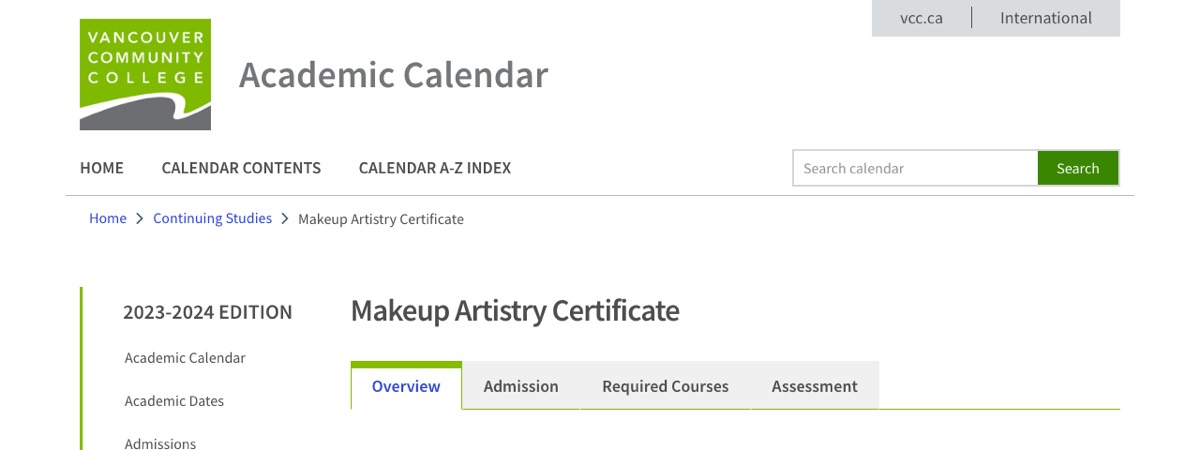
The Makeup Artistry Certificate from Vancouver Community College is an in-person, part-time program that runs one to two years, with a three-year limit for completion.
| Provider | Vancouver Community College |
|---|---|
| Length | Part-time for one to two years. Maximum time for completion is three years. |
| Credential | Certificate |
| Format | in person, British Columbia |
Fiona's take: Vancouver Community College offers this certificate in British Columbia, and the part-time structure suits people keeping a day job. One to two years is slow against GLOW's 6 months, and VCC publishes no fee in our data, so budget questions stay open until you call.
Skip it if: Skip it if you want to finish inside a year.
See Program DetailsCosmetic Techniques and Management
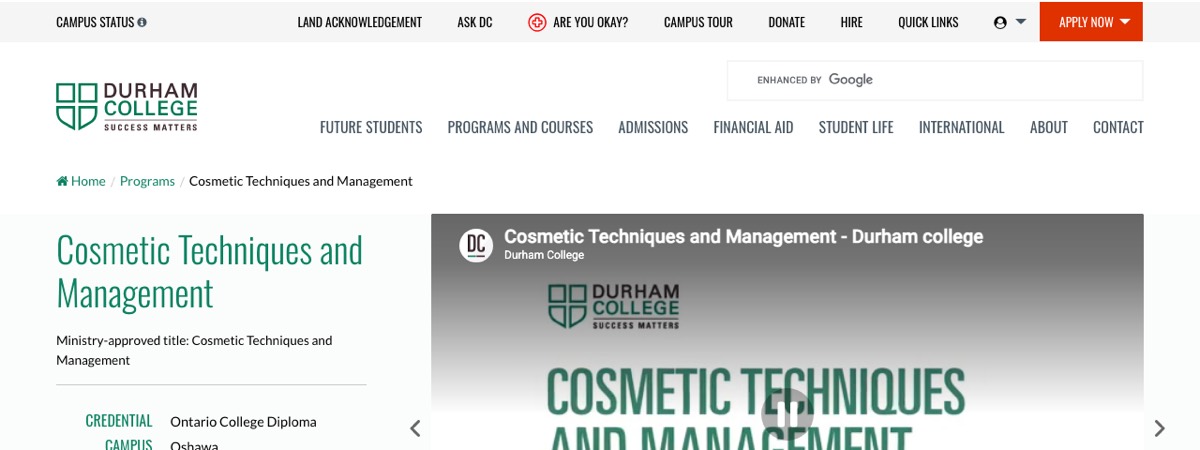
Cosmetic Techniques and Management is a four-semester, in-person program at Durham College ending in an Ontario College Diploma.
| Provider | Durham College |
|---|---|
| Length | Four semesters |
| Credential | Ontario College Diploma |
| Format | in person, Ontario |
Fiona's take: Four semesters is the longest commitment on this page, and it ends in an Ontario College Diploma rather than a continuing-education certificate. That suits school leavers who want diploma-level study. No fee is listed in our data, so compare against George Brown's $11,505.12 before applying.
Skip it if: Skip it if you want to be working on clients within months.
See Program DetailsSpecial Effects Makeup Artistry
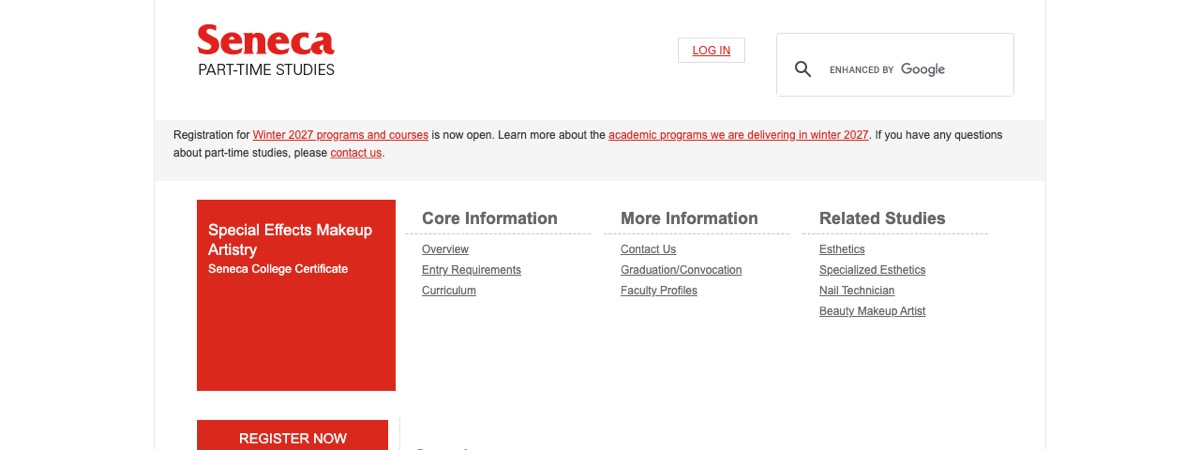
Special Effects Makeup Artistry is a part-time certificate from Seneca Polytechnic offered online, flexibly, in person or hybrid.
| Provider | Seneca Polytechnic |
|---|---|
| Credential | Seneca College Certificate |
| Format | part-time (online/flexible/in-person/hybrid), Ontario |
Fiona's take: Special effects is one of the specialty areas in this field, film and television among them, and Seneca Polytechnic offers this certificate in Ontario. Delivery options across online, in person and hybrid let you keep working while you train. Confirm the current course list and fees directly, since neither appears in our data.
Skip it if: Skip it if blood and prosthetics are not your direction.
See Program DetailsMakeup Artist & Hairstylist Diploma
The Makeup Artist & Hairstylist Diploma from GD College Calgary is a 4-month Alberta program leading to a diploma.
| Provider | GD College Calgary |
|---|---|
| Length | 4 Months |
| Credential | Diploma |
| Format | Alberta |
Fiona's take: The program pairs makeup with hairstyling. Four months is shorter than GLOW College's 6-month diploma, which matters when speed is the goal. Fees are not listed in our data, so ask for the full Alberta breakdown before comparing.
Skip it if: Skip it if makeup alone, without hairstyling, is your plan.
See Program DetailsHow Much Do Makeup Artist Classes Cost In Canada?
Makeup artist classes in Canada cost between $5,000 and $24,000 including kits, for certificates or diplomas of 6 to 12 months. Two schools in our data publish full figures: George Brown at $11,505.12 and CMU College at $23,478 for tuition plus kit.
| Item | Cost (CAD) | Source |
|---|---|---|
| George Brown tuition, seven courses | $6,730.87 | George Brown Polytechnic Continuing Education |
| George Brown supplies and kits | $4,774.25 | George Brown Polytechnic Continuing Education |
| George Brown total program | $11,505.12 | George Brown Polytechnic Continuing Education |
| CMU College tuition, 29 weeks full-time | $16,995 | CMU College |
| CMU College student kit | $6,480 | CMU College |
| CMU College textbooks | $103 | CMU College |
| CMU College tuition plus kit, listed total | $23,478 | CMU College |
| Short certificate, weeks to months | $5,000 to $12,000 | Typical range for short certificates |
| Certificates or diplomas, 6 to 12 months | $5,000 to $24,000 | Including kits |
Two schools publish full figures and the rest do not. George Brown itemises $6,730.87 in tuition and $4,774.25 in supplies for an $11,505.12 total, while CMU College lists $16,995 tuition, a $6,480 kit and $103 textbooks. Vancouver Community College, GLOW College, Durham College, Seneca Polytechnic and GD College Calgary publish no fee in our data, so demand an itemised quote, kit included, before any deposit.
How Much Does A Makeup Artist Earn In Canada?
A makeup artist in Canada earns a median of $20 an hour under NOC 63211, Job Bank's grouping for estheticians, electrologists and related occupations. British Columbia tops our table at $22.15, Alberta follows at $21.63, and Manitoba sits lowest at $16.20.
| Province Or Region | Median Hourly Wage (CAD) |
|---|---|
| Canada, national median | $20 |
| British Columbia | $22.15 |
| Alberta | $21.63 |
| Ontario | $19 |
| Quebec | $20 |
| Manitoba | $16.20 |
| Saskatchewan | $20 |
| New Brunswick | $20 |
| Nova Scotia | $20 |
| Newfoundland and Labrador | $20 |
| Prince Edward Island | $20 |
British Columbia's $22.15 median is the highest figure in our data, followed by Alberta at $21.63. Ontario, home to George Brown, CMU College, Seneca Polytechnic and Durham College, still sits below the national median at $19, and Manitoba trails at $16.20. Job Bank's own summary says job prospects vary across Canada depending on the province or territory.
These medians are Job Bank hourly figures for NOC 63211, the grouping that covers estheticians, electrologists and related occupations, so they describe the whole grouping rather than makeup artists alone. Job Bank says prospects vary across Canada depending on the province or territory, which is why the provincial rows above matter when you choose where to train and where to work.
Is Makeup Artistry Worth It In 2026?
Makeup artistry in 2026 is worth it for hands-on creatives who test before they pay. The math: George Brown's certificate costs $11,505.12 against a $20 national median hourly wage under NOC 63211, so what makes tuition rational is steady work in a higher-wage province such as British Columbia at $22.15, or freelance rates you set yourself.
Regulation decides how optional classes are. In Ontario and Alberta no licence is required, and training and a portfolio are the industry standards for credibility. In Manitoba, Apprenticeship Manitoba makes trade certification compulsory, which turns training from a choice into a requirement; Saskatchewan's esthetician designation stays voluntary under the Saskatchewan Apprenticeship and Trade Certification Commission, so certification is available but not required to work.
My verdict: worth it for people who test first and specialize second. Start with the 3-week University of Michigan course, then pick the program that matches the work you want: GLOW College for a 6-month diploma, GD College Calgary for a 4-month diploma that adds hairstyling, CMU College for 29 weeks of full-time Toronto immersion, VCC for part-time study in British Columbia. If the screen bores you, you just saved five figures.
Makeup Artistry Questions Canadians Ask
Do You Need Certification To Be A Makeup Artist In Canada?
Certification is not required in most provinces, including Ontario and Alberta, where makeup artistry is unregulated and training plus a portfolio are the industry standard for credibility. Manitoba is the exception in our data: Apprenticeship Manitoba makes trade certification for estheticians and related occupations compulsory. Saskatchewan keeps esthetician certification voluntary through the Saskatchewan Apprenticeship and Trade Certification Commission.
How Much Does Makeup Artistry School Cost In Canada?
Makeup artistry school in Canada typically runs $5,000 to $24,000 including kits, for certificates or diplomas lasting 6 to 12 months. George Brown publishes $11,505.12 for its seven-course program, split as $6,730.87 tuition plus $4,774.25 supplies, and CMU College lists $16,995 tuition, a $6,480 student kit and $103 textbooks for 29 weeks full-time.
What Is The Median Wage For Makeup Artists In Canada?
The median wage for NOC 63211, the Job Bank grouping that includes makeup artists, is $20 an hour in Canada. British Columbia lists $22.15 and Alberta $21.63 above that line, while Ontario sits at $19 and Manitoba at $16.20. Quebec, Saskatchewan, New Brunswick, Nova Scotia, Newfoundland and Labrador and Prince Edward Island all list $20.
How Long Does It Take To Become A Makeup Artist?
Becoming a makeup artist takes weeks to months through a short certificate, or 6 to 12 months for a full diploma, plus portfolio time afterwards. GLOW College's Advanced Makeup Artistry Diploma runs 6 months over 400 hours, CMU College's program runs 29 weeks full-time, and most plans should budget 3 to 6 months of portfolio building on top.
Is Makeup Artistry Regulated In Ontario?
Makeup artistry in Ontario is unregulated from a provincial licensing perspective: Ontario does not require a provincial licence for most beauty services, makeup included. Voluntary professional training is still what clients and employers look for, which is why George Brown, GLOW College, Seneca Polytechnic and Durham College all run programs aimed at Ontarians.
What NOC Code Is Used For Makeup Artists On Job Bank?
NOC 63211, Estheticians, electrologists and related occupations, is the code Job Bank uses, and it includes makeup artists in salon and retail settings. The code's $20 median hourly wage covers the whole grouping, not makeup artists alone, so treat it as a benchmark rather than a promise for any single job offer.
Can I Work As A Freelance Makeup Artist Without Formal Training?
Freelance makeup artistry without formal training is legal in most provinces, including Ontario and Alberta, where the work is unregulated. Clients and employers still prefer trained artists with portfolios, so I tell new freelancers to screen their commitment first, with a 3-week course like the University of Michigan's, before paying $5,000 to $12,000 for a certificate.
What's The Bottom Line On Makeup Artistry Classes In Canada?
- No licence is required in most provinces, including Ontario and Alberta; Manitoba makes trade certification compulsory through Apprenticeship Manitoba, and Saskatchewan offers voluntary certification through the Saskatchewan Apprenticeship and Trade Certification Commission.
- Published prices: George Brown's seven-course certificate totals $11,505.12, and CMU College's 29-week program lists $16,995 tuition plus a $6,480 kit.
- Job Bank's NOC 63211 median is $20 an hour, spanning $16.20 in Manitoba to $22.15 in British Columbia.
- Test first: Equitable Stage Makeup and Hair takes 3 weeks at 10 hours a week and earns a shareable certificate, not a trade certification or a college diploma.






