Key Takeaways
- The fastest realistic route is a province-approved online course and exam: 4 to 8 hours in one sitting for $25 to $55 with national providers like SafeCheck, Probe It and TrainCan, and the certificate downloads immediately.
- A certificate is mandatory in Ontario (Ministry of Health), BC (BCCDC FOODSAFE), Alberta (Section 31 of the Food Regulation) and for set proportions of staff in Quebec under MAPAQ; elsewhere rules vary, so check your provincial health authority.
- The Coursera try-first pick is Global Food Systems, Safety, and Metabolism, a 4-hour course from Macmillan Learning; it does not qualify as a provincial food handler certificate and does not replace FOODSAFE or MAPAQ training.
- Certificates are typically valid 5 years in most provinces, and a MAPAQ certificate in Quebec lasts a lifetime; renewal means retaking a recognised course and exam at the same price, except in BC, where FOODSAFE can be renewed with a refresher course.
- Fiona's verdict: pay for the approved course the day a food service job is real, and use Coursera only to test whether the field suits you first.
A food handler certificate is a credential showing you can store, prepare and serve food without spreading foodborne illness. Most Canadian provinces require it, or recommend it, for food service workers.
The realistic route is short: a province-approved online course and exam, 4 to 8 hours of your time and $25 to $60, or $69 for BC's FOODSAFE Level 1 and $95 to $130 for ITHQ's MAPAQ course in Quebec. This page compares every route, including the Coursera course I suggest testing the field with first.
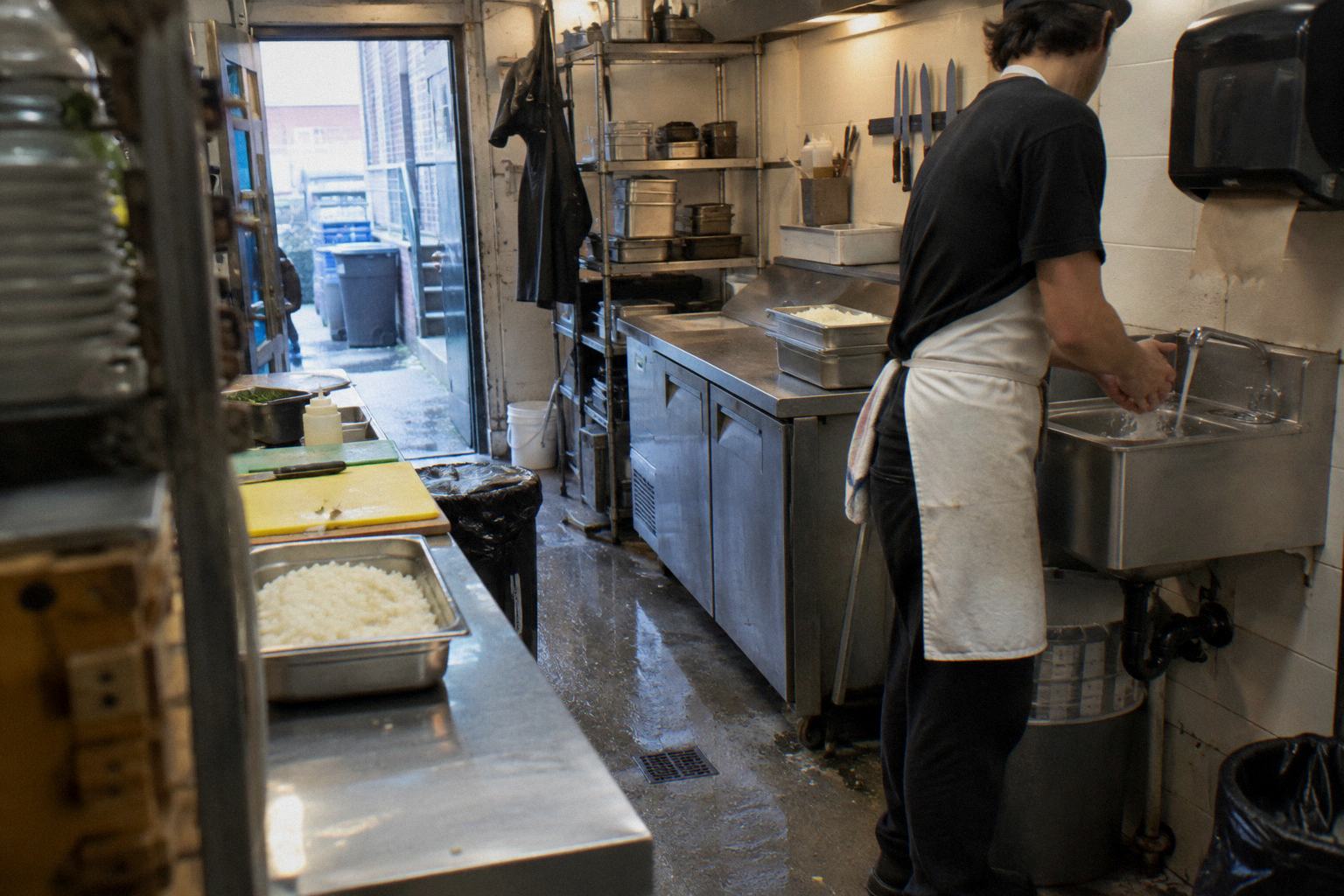
What Are The Ways To Get A Food Handler Certificate In Canada?
Getting a food handler certificate in Canada comes down to one choice: a province-approved course and exam, or an unaccredited introduction like Coursera to test your interest first. Provincial approval is what makes a certificate count with health inspectors.
| Route | Time | Cost (CAD) | What You Get | Recognised By | Best For |
|---|---|---|---|---|---|
| Global Food Systems, Safety, and Metabolism | 4 hours | Not listed | Coursera certificate of completion, background knowledge only | No provincial regulator | Testing interest before paying |
| Ontario approved online providers | 4-8 hours | $25-$60 | Food Handler Certificate | Ontario Ministry of Health / public health units | Ontario restaurant, cafe and cafeteria staff |
| BC FOODSAFE Level 1 | 5-8 hours | $69-$120 | FOODSAFE Level 1 Certificate | BCCDC / Health Authorities | BC operators and food service workers |
| Alberta approved courses (Probe It) | 4-8 hours | $25-$50 | Food Handler Certificate | Government of Alberta, Section 31 Food Regulation | Alberta food service workers |
| Quebec MAPAQ or equivalents (TrainCan BASICS.fst, CIFS) | 6-12 hours | $25-$130 | MAPAQ-recognised food handler certificate | MAPAQ | Quebec staff and the person in charge of hygiene |
| National approved providers (SafeCheck, Probe It, TrainCan) | 4-8 hours | $25-$55 | Food Handler Certificate, valid 5 years | Multiple provinces | Workers who move between provinces |
For most clients I recommend the national approved providers, FOODSAFE Level 1 if you work in BC, and a MAPAQ-recognised course in Quebec, keeping the Coursera option for people who have not yet decided that food service is their field.
What Is The Fastest Way To Get A Food Handler Certificate In Canada?
The fastest way to a food handler certificate is a same-day online course and exam through a provider approved in your province. Most people finish the whole thing in one sitting of 4 to 6 hours of modules plus a short exam.
- Confirm your provider is on your province's approved list, such as the Ontario Ministry of Health page or Alberta's Section 31 course list, before you pay anything.
- Sign up with an approved online provider such as Probe It or SafeCheck; signup is immediate and the course costs $25 to $50.
- Complete the self-paced online modules, about 4 to 6 hours, with no additional fee.
- Pass the online exam: the typical pass mark is 70%, and providers such as Probe It allow unlimited retakes.
- Download and print your certificate immediately at no extra cost; it is typically valid for 5 years.
Is A Food Handler Certificate Mandatory In Canada?
A food handler certificate is mandatory in Ontario, British Columbia and Alberta, and mandatory for set proportions of staff in Quebec. Elsewhere in Canada rules vary, so check your provincial health authority before you start a job. There is no national licence; the rule is provincial.
| Province | Required? | Regulator Or Registry | What It Means |
|---|---|---|---|
| Ontario | Yes | Ministry of Health / local public health units | Training must come from public health units or Ministry-approved providers |
| British Columbia | Yes | BC Centre for Disease Control / FOODSAFE | Every operator of a food service establishment must hold FOODSAFE or an equivalent certificate |
| Alberta | Yes, in most cases | Government of Alberta, Section 31 Food Regulation | Only courses on the Minister's approved list meet the requirement |
| Quebec | Yes, for proportions of staff | MAPAQ | The person in charge of hygiene and salubrite, plus a set number of food-contact employees, must be trained |
| Other provinces and territories | Varies | Provincial health authorities | Often at least one certified food handler must be on site; check your provincial health authority |
Regulation in Canada is provincial, so the certificate that satisfies a Toronto inspector is the one Ontario recognises, not merely whichever provider tops a search page. Ontario trains through local public health units and approved commercial providers, Alberta publishes its Section 31 approved course list, and BC accepts FOODSAFE or its equivalent. Buy from the list that matches where you will actually work.
Certificates often transfer between provinces when the local authority recognises them as equivalent, but BC keeps a strict equivalency list, so an out-of-province certificate may not satisfy a BC inspector. My advice to clients who move: verify with the health authority in the new province before assuming anything.
Which Food Handler Courses Are Worth Taking?
Food handler courses worth taking split into two groups: accredited courses that end in a provincial certificate, and unaccredited introductions from Coursera and Udemy that build knowledge but satisfy no inspector. Colleges also run training, including Conestoga's FOOD1185 live remote course, and approved programs at Algonquin College in-class in Ottawa, SAIT's FSAN 255 and 225, and NAIT's CULA1101 and CULG901 in Alberta.
Global Food Systems, Safety, and Metabolism
Global Food Systems, Safety, and Metabolism is a 4-hour online course from Macmillan Learning on Coursera that covers food systems and safety as background knowledge and issues a Coursera certificate of completion.
| Provider | Macmillan Learning on Coursera |
|---|---|
| Length | 4 hours |
| Credential | Coursera certificate of completion |
| Format | online |
Fiona's take: This is the course I tell undecided clients to try before spending money on an accredited provider. It builds the vocabulary you will meet again in FOODSAFE or MAPAQ training. It does not qualify you as a food handler in any province and does not replace FOODSAFE or MAPAQ requirements, so treat it as a taste of the field, not a credential.
Skip it if: Skip it if an employer or health inspector has asked for a certificate this week; you need an approved provincial course instead.
Background knowledge only; not an approved provincial food handler certificate.
Start On CourseraHACCP, Food Safety, Quality Management | Accredited Diploma
HACCP, Food Safety, Quality Management | Accredited Diploma is a Udemy course with 2 hours 11 minutes of video, rated 4.3 from 691 ratings, covering HACCP-based safety and quality systems.
| Provider | Udemy |
|---|---|
| Length | 2h 11m of video |
| Rating | 4.3 (691 ratings) |
| Credential | Udemy certificate |
| Format | online |
Fiona's take: HACCP is the planning system behind commercial kitchens and food processing, so this suits people eyeing supervisory or quality roles later. It is not a provincial food handler certificate, and an inspector will not accept it in place of one.
Skip it if: Skip it if you only need the entry-level certificate; a $25 to $55 approved course does that job for less.
Not a provincial food handler certificate.
View On UdemyBASICS.fst Employee-Level Food Handler Training
BASICS.fst Employee-Level Food Handler Training is an online food handler course and exam from TrainCan that issues a food handler certificate, including as a recognised MAPAQ equivalent in Quebec.
| Provider | TrainCan |
|---|---|
| Credential | Food handler certificate |
| Format | online |
Fiona's take: TrainCan is one of the national names, listed at $55.00 in Canadian course comparisons, and BASICS.fst is accepted as a MAPAQ equivalent, which makes it a practical pick for Quebec workers who want a cheaper path than ITHQ. Confirm it appears on your own province's approved list before you pay.
Skip it if: Skip it if your province's approved list does not include TrainCan; approval is what makes the certificate count with inspectors.
See Program DetailsFood Handler Certification Course
Food Handler Certification Course is an online lessons-plus-exam course from the Canadian Institute of Food Safety costing $99.95 plus GST/HST that issues a food handler certificate.
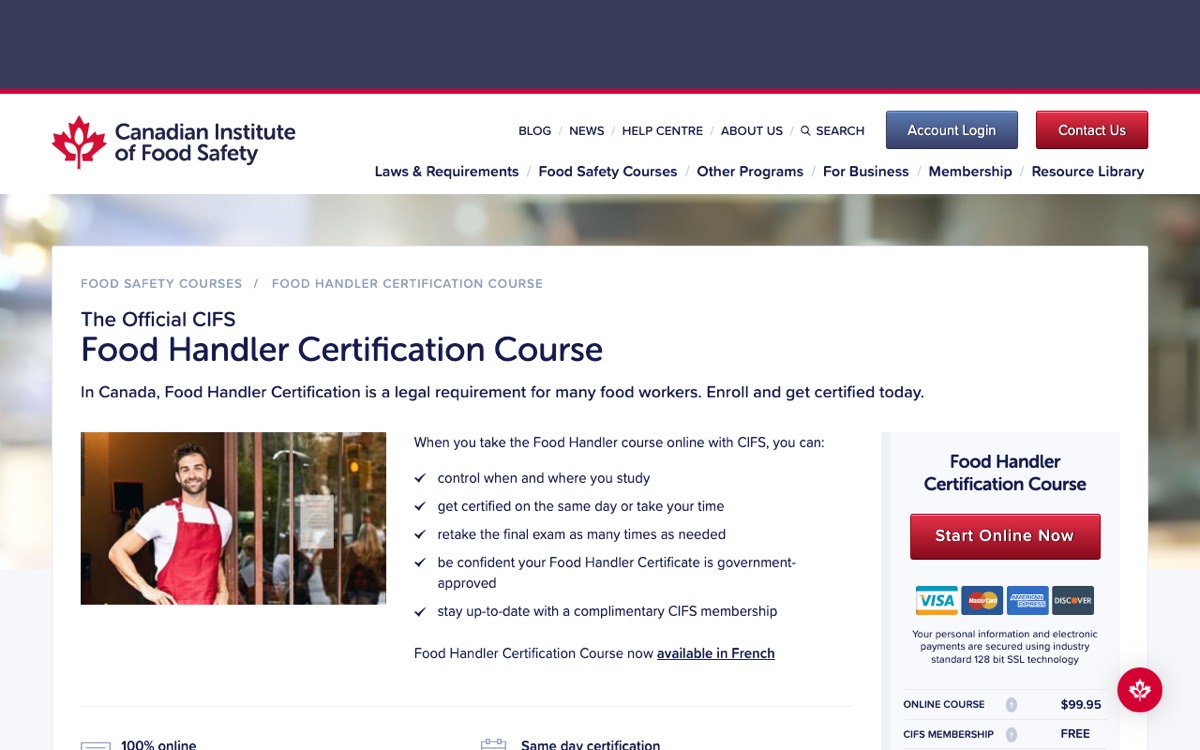
| Provider | Canadian Institute of Food Safety |
|---|---|
| Length | online lessons plus exam |
| Cost (CAD) | $99.95 plus GST/HST |
| Credential | Food handler certificate |
| Format | online |
Fiona's take: CIFS appears on Alberta's Section 31 approved list and among MAPAQ's recognised equivalents in Quebec, so the certificate travels reasonably well. At $99.95 plus tax it sits well above the $25 to $55 national band, so I only point clients there when no approved option in that band is available to them.
Skip it if: Skip it if your province lists an approved provider in the $25 to $60 range.
See Program DetailsFOODSAFE Level 1
FOODSAFE Level 1 is BC's required online food handler program delivered by Open School BC, about 7 hours and $69, issuing the FOODSAFE Level 1 certificate recognised by the BCCDC and the health authorities.
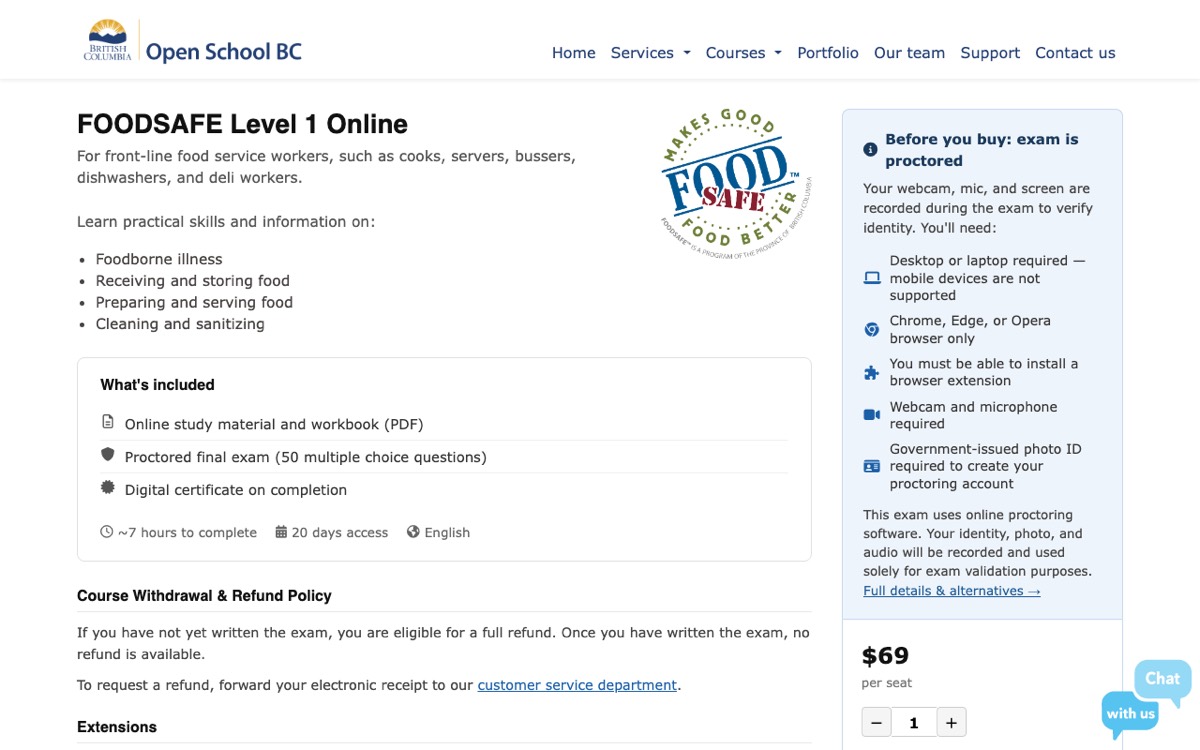
| Provider | Open School BC |
|---|---|
| Cost (CAD) | $69 |
| Credential | FOODSAFE Level 1 certificate |
| Format | online, BC |
Fiona's take: If you work in BC this is the certificate the law names: every operator of a food service establishment must hold FOODSAFE or its equivalent. Since BC keeps a strict equivalency list, I tell BC clients not to gamble on an out-of-province certificate.
Skip it if: Skip it if you are outside BC; other provinces list approved courses for $25 to $60.
See Program DetailsHygiene et salubrite alimentaires, manipulateur d aliments
Hygiene et salubrite alimentaires, manipulateur d'aliments is ITHQ's MAPAQ-recognised food handler course, 6 to 7 hours, delivered online for $95 or in person for $130.
| Provider | ITHQ |
|---|---|
| Cost (CAD) | $95 to 130 |
| Credential | MAPAQ-recognised food handler training |
| Format | online, QC |
Fiona's take: This is the course for clients in Quebec who want an in-person class and exam day rather than a fully online one. ITHQ course costs are eligible for the Employee training tax credit, which takes some sting out of the higher price.
Skip it if: Skip it if speed and price are the priorities; a MAPAQ-recognised equivalent such as TrainCan's BASICS.fst at $55.00 costs less.
See Program DetailsHow Much Does A Food Handler Certificate Cost In Canada?
A food handler certificate costs $25 to $55 through national online providers, with SafeCheck listed at $27.95 and TrainCan at $55.00. BC and Quebec cost more: FOODSAFE Level 1 is $69 through Open School BC, and ITHQ's MAPAQ-recognised course runs $95 online or $130 in person.
| Item | Cost (CAD) | Notes |
|---|---|---|
| Typical online course and exam | $25-$55 | SafeCheck $27.95; TrainCan $55.00; certificate typically valid 5 years |
| Ontario approved online providers | $25-$60 | 4-8 hours, Ministry of Health approved |
| Alberta approved courses (Probe It) | $25-$50 | 4-8 hours, Section 31 approved list |
| BC FOODSAFE Level 1 (Open School BC) | $69 | About 7 hours online |
| Quebec ITHQ MAPAQ course | $95 online, $130 in person | 6-7 hours; eligible for the Employee training tax credit |
| Renewal | Same as the initial course | You retake a recognised course and exam |
The Coursera route has no listed price and no certificate that counts, which is exactly why I frame it as reconnaissance rather than a purchase. The real cost decision is simpler than it looks: pay the $25 to $60 provincial rate unless you are in BC or Quebec, where FOODSAFE and MAPAQ training run higher. Renewal costs the same as the initial course, and MAPAQ certificates in Quebec last a lifetime, so many people pay once.
Is A Food Handler Certificate Worth It In 2026?
A food handler certificate is worth it for almost anyone entering food service in Canada, because the math is lopsided in your favour. A single sitting of 4 to 8 hours and $25 to $60 buys a credential that is mandatory in Ontario, BC and Alberta and required for set proportions of staff in Quebec; elsewhere rules vary, so check your provincial health authority. At $25 to $60 it is the cheapest ticket I know of into paid kitchen work.
What the certificate does not do is equally plain. It does not make you a cook, it does not license a restaurant, and Coursera's 4-hour food systems course does not substitute for it anywhere. Where it pays off is compliance and hiring, and a valid certificate is typically good for 5 years, or a lifetime under MAPAQ in Quebec.
My verdict after seven years of advising career changers: if you have a job offer or an interview in food service, buy the approved course today. If you are only curious, spend an evening on Coursera first and pay for the certificate when a job is real.
Can You Get Funding For A Food Handler Certificate?
Funding for a food handler certificate is limited. Quebec's Employee training tax credit is the one named program; in other provinces, ask your employer whether it covers the course fee.
- Employee training tax credit (Quebec). ITHQ course costs are eligible for the Employee training tax credit; the course itself runs $95 online or $130 in person.
Food Handler Certificate Questions Canadians Ask
How Long Is A Food Handler Certificate Valid In Canada?
A food handler certificate is typically valid for 5 years in most provinces. Quebec is the exception: a MAPAQ certificate lasts a lifetime. When the 5 years run out you retake a recognised course and exam, since there is no separate renewal exam.
Is Online Food Handler Training Accepted In Ontario?
Online food handler training is accepted in Ontario when it comes from a Ministry of Health approved provider or your local public health unit. The Ministry lists programs that have been recognised as meeting its minimum requirements, so check that list before paying any provider.
What Is FOODSAFE Level 1 In BC?
FOODSAFE Level 1 is the food handler training program BC law requires. Under the BC Centre for Disease Control's rules, every operator of a food service establishment must hold a certificate showing completion of FOODSAFE or its equivalent. Open School BC delivers it online in about 7 hours for $69.
Does A Certificate From One Province Work In Another?
A certificate from one province often works in another when the local authority recognises it as equivalent. BC keeps a strict equivalency list, so an out-of-province certificate may not satisfy a BC inspector. My rule for clients: verify with the health authority in the province where you will actually work.
How Much Does Food Handler Certification Cost?
Food handler certification costs $25 to $60 online in Ontario, $25 to $50 in Alberta, $69 for BC's FOODSAFE Level 1 through Open School BC, and $95 to $130 for ITHQ's MAPAQ-recognised course in Quebec. National providers sit at $25 to $55, with SafeCheck listed at $27.95.
Is MAPAQ Training Mandatory In Quebec?
MAPAQ training is mandatory in Quebec for certain people. The person charged with hygiene and salubrite control in the establishment must complete it, along with a certain number of employees who have direct contact with food. Recognised equivalents include TrainCan's BASICS.fst and the Canadian Institute of Food Safety course.
Can I Renew By Taking A Refresher Course?
You can renew with a refresher in BC for FOODSAFE. Elsewhere you usually retake the full course and exam at the same cost as the initial certificate. Since most certificates last 5 years and MAPAQ certificates in Quebec last a lifetime, renewal is not a frequent expense.
Where Can I Find Approved Providers For My Province?
Approved providers are listed on provincial government and health authority websites. Ontario's Ministry of Health page lists recognised programs, Alberta publishes its Section 31 approved course list, and foodsafe.ca covers BC. Start with those lists rather than a search engine ad.
What's The Bottom Line On Food Handler Certificates?
- One sitting of 4 to 8 hours and $25 to $60 buys a food handler certificate that satisfies inspectors if it is on your province's approved list; BC costs $69 and Quebec runs $95 to $130.
- Certification is mandatory in Ontario, BC and Alberta, and for certain staff in Quebec; elsewhere rules vary, so check your provincial health authority. There is no national licence, so buy from your own province's approved list.
- Global Food Systems, Safety, and Metabolism is the 4-hour Coursera try-first option for the undecided, and it does not replace FOODSAFE, MAPAQ or any provincial food handler certificate.
- Certificates are typically valid 5 years; a MAPAQ certificate in Quebec lasts a lifetime, and renewal elsewhere means retaking the course at the same price, except in BC, where a FOODSAFE refresher is allowed.