Key Takeaways
- The fastest realistic route is an 80-120 hour Emergency Medical Responder certificate, such as St. John Ambulance's blended format of 30 hours online plus 70 hours in class over 10 days, then provincial exams; some jurisdictions require completion within 12 months. Ontario's AEMCA certificate fee is not confirmed in current official sources, so check the Ministry of Health fee schedule; BC's initial EMR licence with both exams is $450.00.
- Paramedical occupations are regulated in all provinces except Northwest Territories, Nunavut and Yukon: Ontario's Ministry of Health (CPCS), the Alberta College of Paramedics and BC's EMALB are three of the provincial regulators.
- Coursera's Become an EMT specialization from the University of Colorado System takes 2 months at 10 hours a week and does not qualify you for any provincial licence or registration; use it to test the field before committing tuition.
- Job Bank's median wage for NOC 32102 is $38.00 an hour, ranging from $27.31 in Prince Edward Island to $42.17 in Ontario.
- Fiona's verdict: EMR is the shortest training route, typically 80-120 hours, followed by provincial exams and licensing, and it suits career changers; PCP suits students committed to PCP-level paramedic practice and a broader scope than EMR.
An Emergency Medical Technician (EMT) is a worker in paramedical occupations, NOC 32102, who administers pre-hospital emergency care to people with injuries or medical illnesses and transports them to hospital. Canada has no national EMT certificate: credentials are provincial, and the two entry levels are the Emergency Medical Responder (EMR) certificate and the Primary Care Paramedic (PCP) diploma.
The shortest realistic route is an 80-120 hour EMR certificate, then provincial exams; some jurisdictions require completion within 12 months. If you are unsure about the field, start with the University of Colorado's EMT series on Coursera first; it is theory only and grants no Canadian licence.
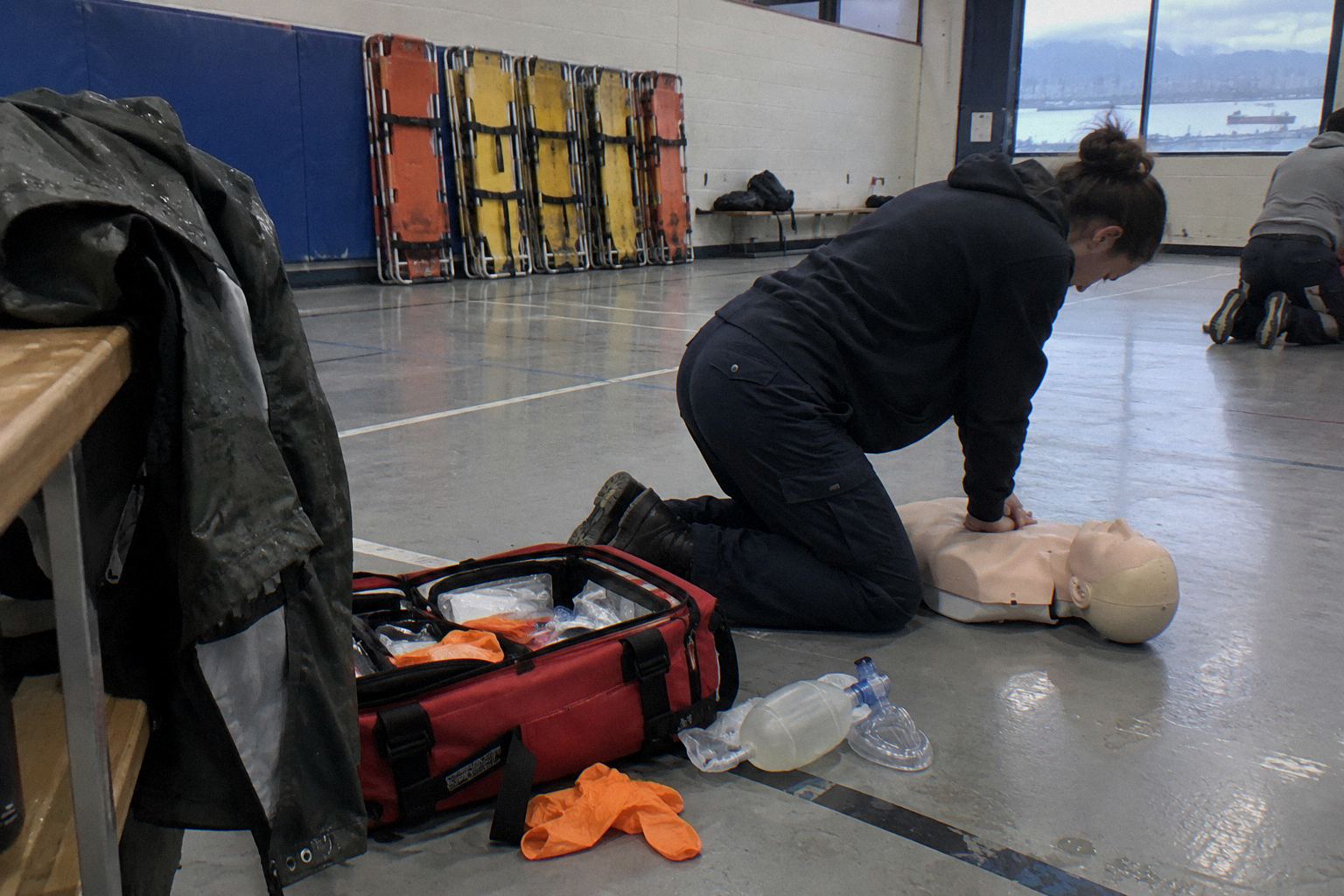
What Are The Ways To Become An EMT In Canada?
The ways to become an EMT in Canada run from a 2-month online Coursera series to a 4-year degree, and only approved provincial EMR/PCP/paramedic pathways can lead to licensing eligibility; standalone Coursera/Udemy courses do not.
| Route | Time | Cost (CAD) | What You Get | Recognised By | Best For |
|---|---|---|---|---|---|
| Become an EMT | 2 months at 10 hours a week | Not listed | Career certificate from University of Colorado System | Not recognised for provincial licensing | Testing the field before college tuition |
| Emergency Medical Responder (EMR) certificate, St. John Ambulance | 80-120 hours (1-2 weeks blended) | Not listed | Certificate of Achievement and licensing exam eligibility; SJA certificate valid for 3 years | Provincial regulators, e.g. Alberta College of Paramedics, EMALB in BC | Fastest route to licensed first responder work |
| Emergency Medical Responder Certificate, Northwestern Polytechnic | 15 weeks | Not listed | Certificate | Not listed; an Alberta College of Paramedics practice permit is required to practise | Alberta students who need a hybrid schedule |
| Primary Care Paramedicine (PCP), Justice Institute of British Columbia | 12 months | $8,600 | Certificate | British Columbia (EMALB licence still required) | BC residents wanting PCP in one year |
| Paramedic diploma, Humber College | 4 semesters | $4,650.25 per two semesters, domestic | Diploma | Ontario Ministry of Health (AEMCA exam) | Ontario residents aiming at full paramedic practice |
| Paramedic diploma, Conestoga College | 2 years | Not listed | Ontario College Diploma | Ontario Ministry of Health (AEMCA exam) | Ontario students comparing colleges |
| Formation en soins préhospitaliers d'urgence, DEC, Cégep de Sainte-Foy | 3 years | Not listed | DEC (Diploma of College Studies) | Not listed | Quebec students in the CEGEP system |
| Bachelor of Applied Health Science, Paramedic, Medicine Hat College | 4 years | Not listed | Bachelor's degree | Alberta (practice permit still required) | Students who want degree-level training |
I recommend the St. John Ambulance or Northwestern Polytechnic EMR route for career changers: EMR is the shortest training route, typically 80-120 hours, followed by provincial exams and licensing. The Humber, Conestoga or JIBC PCP programs suit students committed to PCP-level paramedic practice and a broader scope than EMR.
What Is The Fastest Way To Become An EMT In Canada?
The fastest way to become an EMT in Canada is the Emergency Medical Responder route: 80-120 hours of approved training, then your provincial exams. Here is the sequence I walk clients through.
- Confirm the prerequisites: a high school diploma or equivalent plus CPR and First Aid certification. Timing varies.
- Complete an approved EMR program. St. John Ambulance's blended course is 30 hours online plus 70 hours in class over 10 days; Northwestern Polytechnic offers a 15-week hybrid version in Alberta.
- Pass the provincial licensing exams, written, jurisprudence and practical. Some jurisdictions require completion within 12 months of finishing your program.
- Apply for the licence or permit itself: BC's EMALB charges $450.00 for an initial EMR licence when both written and practical examinations are required, and $50.00 to renew; Alberta issues practice permits through the Alberta College of Paramedics.
- Meet Ontario's extra conditions if you work there: a Ministry of Health certificate such as the AEMCA (check the current Ministry of Health fee schedule), employment by a certified ambulance service, and authorization from a regional base hospital program medical director.
- Decide on upgrading later: a 2-year Ontario PCP diploma, JIBC's 12-month $8,600 certificate, or the 4-year Medicine Hat degree.
Do You Need A Licence To Work As An EMT In Canada?
A licence or registration is mandatory: CICIC lists paramedical occupations as regulated in all provinces except Northwest Territories, Nunavut and Yukon. Ontario, Alberta and British Columbia each run their own regulator, and none of the three accepts an online certificate as a licence.
| Province | Required? | Regulator Or Registry | What It Means |
|---|---|---|---|
| Ontario | Yes | Ministry of Health, Certification and Patient Care Standards (CPCS) | A Ministry certificate such as the AEMCA (check the current Ministry of Health fee schedule), employment by a certified ambulance service, and base hospital medical director authorization to perform controlled acts |
| Alberta | Yes | Alberta College of Paramedics | An active practice permit is required for every EMR, PCP and ACP who practises or uses the title paramedic |
| British Columbia | Yes | Emergency Medical Assistants Licensing Board (EMALB) | The Emergency Health Services Act requires EMALB licensing; initial EMR fee is $450.00 with both exams, renewal $50.00 |
In Ontario the Ministry of Health, through Certification and Patient Care Standards, issues the AEMCA certificate; the exact fee is not confirmed in current official sources, so check the Ministry of Health fee schedule on the exam applications page before budgeting. A certificate alone is not enough: to perform controlled acts and other advanced medical procedures you must also be employed by a certified ambulance service and authorized by the medical director of an Ontario regional base hospital program.
Alberta and British Columbia frame the same rule around permits and licences. The Alberta College of Paramedics requires an active practice permit for every Emergency Medical Responder, Primary Care Paramedic and Advanced Care Paramedic who practises or uses the title paramedic. BC's Emergency Health Services Act requires emergency medical assistants to be licensed by the Emergency Medical Assistants Licensing Board.
None of this is satisfied by online study. The University of Colorado System's courses on Coursera do not issue a licence, registration or practice permit in any province, and neither do Udemy certificates of completion. They are theory preparation, useful before an EMR program, not substitutes for one.
Which EMT Courses Are Worth Taking?
EMT courses worth taking split into three tiers: university online theory on Coursera, quick Udemy introductions, and college and provider programs. Only approved provincial EMR/PCP/paramedic pathways can lead to licensing eligibility; standalone Coursera/Udemy courses do not.
Become an EMT
Become an EMT is a 2-month online specialization from the University of Colorado System, about 10 hours a week across six courses, ending in a career certificate.
| Provider | University of Colorado System |
|---|---|
| Length | 2 months at 10 hours a week (6 course series) |
| Rating | from 2,654 reviews across courses (avg 4.8+ on individual courses) |
| Credential | Career certificate from University of Colorado System |
| Format | online |
Fiona's take: This is where I send people before they commit tuition. It averages 4.8 or better on individual courses across 2,654 reviews and covers the full theory arc. It does not qualify you for a licence, registration or practice permit in any Canadian province.
Skip it if: Skip it if you need to be licensed to work this year, because no Canadian regulator recognises it as a credential.
Start On CourseraEMT Foundations
EMT Foundations is a 14-hour online course from the University of Colorado System that introduces the core theory of emergency medical care.
| Provider | University of Colorado System |
|---|---|
| Length | 14 hours |
| Rating | 4.8 |
| Credential | Course certificate |
| Format | online |
Fiona's take: Fourteen hours is a short University of Colorado introduction to the field, and it carries a 4.8 rating. Treat it as reconnaissance before the six-course series or an in-person EMR program.
Skip it if: Skip it if you already know you want the full specialization and would rather start there.
Start On CourseraTrauma Emergencies and Care
Trauma Emergencies and Care is a 12-hour online course from the University of Colorado System focused on trauma assessment and management.
| Provider | University of Colorado System |
|---|---|
| Length | 12 hours |
| Credential | Course certificate |
| Format | online |
Fiona's take: Trauma is the core of EMT work, and this course isolates it in 12 focused hours. Like every online course here, it grants no Canadian credential.
Skip it if: Skip it if you want one all-in-one course rather than topic modules.
Start On CourseraEmergency Medical Technician (EMT)
Emergency Medical Technician (EMT) is an on-demand online course from instructor Rohit k on Udemy that ends with a certificate of completion.
| Provider | Rohit k |
|---|---|
| Credential | Certificate of completion |
| Format | online |
Fiona's take: Udemy lists no length and no rating for this course, which makes it hard to weigh against the university options above. A Udemy certificate of completion meets no Canadian regulator's requirements.
Skip it if: Skip it if you want a stated time commitment and verified ratings before enrolling.
View On UdemyDiploma in Emergency Medical Technician Studies
Diploma in Emergency Medical Technician Studies is a 19.5-hour on-demand video course from HeartbeatsZ Academy, a UK provider on Udemy, with a 3.7 rating.
| Provider | HeartbeatsZ Academy, UK |
|---|---|
| Length | 19.5 hours on-demand video |
| Rating | 3.7 |
| Credential | Certificate of completion |
| Format | online |
Fiona's take: The 3.7 rating is the weakest on this page. The provider is UK-based, and the course is theory viewing only; it is not part of any Canadian provincial pathway.
Skip it if: Skip it if your target is a Canadian licence, because it is not part of any provincial pathway.
View On UdemyParamedic
Paramedic at Medicine Hat College is a 4-year in-person Bachelor of Applied Health Science program in Alberta.
| Provider | Medicine Hat College |
|---|---|
| Length | 4 years |
| Credential | Bachelor of Applied Health Science - Paramedic |
| Format | in person, Alberta |
Fiona's take: This is the longest route here and the only degree, suited to students who want four years of in-person depth. Graduates still need an active practice permit from the Alberta College of Paramedics before working.
Skip it if: Skip it if you want licensed work quickly, because four years is the slowest path on this page.
See Program DetailsPrimary Care Paramedicine (PCP)
Primary Care Paramedicine (PCP) at the Justice Institute of British Columbia is a 12-month in-person certificate program costing $8,600.
| Provider | Justice Institute of British Columbia |
|---|---|
| Length | 12 Months |
| Cost (CAD) | $8,600 |
| Credential | Certificate |
| Format | in person, British Columbia |
Fiona's take: This is the shortest full PCP credential on the page and the only one with a published total price. For BC residents, $8,600 over 12 months is a clean benchmark. An EMALB licence is still required to work.
Skip it if: Skip it if you live outside British Columbia and want a program tied to your own regulator.
See Program DetailsParamedic
Paramedic at Humber College is a 4-semester in-person diploma program in Ontario costing $4,650.25 per two semesters for domestic students.
| Provider | Humber College |
|---|---|
| Length | 4 semesters |
| Cost (CAD) | domestic: $4,650.25 for two semesters |
| Credential | Diploma |
| Format | in person, Ontario |
Fiona's take: Four semesters is the standard Ontario timeline, and the published domestic figure makes budgeting straightforward. Ontario graduates then sit the Ministry of Health's AEMCA exam.
Skip it if: Skip it if you only need EMR-level work, since four semesters is a full paramedic commitment.
See Program DetailsParamedic
Paramedic at Conestoga College is a 2-year in-person program leading to an Ontario College Diploma.
| Provider | Conestoga College |
|---|---|
| Length | 2 years |
| Credential | Ontario College Diploma |
| Format | in person, Ontario |
Fiona's take: Conestoga offers the same Ontario College Diploma route with no published fee, so request tuition directly. Program standards for PCP training are set province-wide by the Ministry of Colleges, Universities, Research Excellence and Security.
Skip it if: Skip it if you want a published price up front, and compare with Humber or JIBC instead.
See Program DetailsFormation en soins préhospitaliers d'urgence - DEC
Formation en soins préhospitaliers d'urgence is a 3-year in-person DEC program at Cégep de Sainte-Foy and other CEGEPs in Quebec.
| Provider | Cégep de Sainte-Foy (and other CEGEPs) |
|---|---|
| Length | 3 years |
| Credential | DEC (Diploma of College Studies) |
| Format | in person, Quebec |
Fiona's take: Quebec trains this field through the three-year DEC, rooted in the CEGEP system. Fees are not listed, so budget directly with the CEGEP.
Skip it if: Skip it if you are outside Quebec, since the DEC belongs to that province's system.
See Program DetailsEmergency Medical Responder Certificate
The Emergency Medical Responder Certificate at Northwestern Polytechnic is a 15-week hybrid program in Alberta.
| Provider | Northwestern Polytechnic |
|---|---|
| Length | 15 Weeks |
| Credential | Certificate |
| Format | hybrid, Alberta |
Fiona's take: The hybrid format suits people who cannot block out 10 straight days for an intensive. This is a 15-week hybrid EMR certificate in Alberta, and an Alberta College of Paramedics practice permit is required to practise as an EMR there.
Skip it if: Skip it if speed is your priority, because 15 weeks is longer than a 10-day intensive.
See Program DetailsHow Much Does EMT Training Cost In Canada?
EMT training costs in Canada fall into two parts, program tuition and government licence fees, and only some of both are published. Some licence fees are published: BC EMALB fees of $450.00 initial with both exams and $50.00 renewal; Ontario's AEMCA fee is not confirmed in current official sources, so check the Ministry of Health fee schedule. Tuition is the real variable.
| Cost Item | Cost (CAD) | Where |
|---|---|---|
| AEMCA original certificate | Check the current Ministry of Health fee schedule | Ontario Ministry of Health, CPCS |
| EMR initial licence (both written and practical exams) | $450.00 | British Columbia, EMALB |
| EMA licence renewal | $50.00 | British Columbia, EMALB |
| Primary Care Paramedicine certificate tuition | $8,600 | Justice Institute of British Columbia, 12 months |
| Paramedic diploma, domestic, two semesters | $4,650.25 | Humber College, Ontario |
| EMR, PCP, DEC and degree tuition | Not listed | St. John Ambulance, Conestoga, Medicine Hat, Northwestern Polytechnic, Cégep de Sainte-Foy |
Licence fees are the knowable part of the bill. BC's EMALB charges $450.00 for an initial EMR licence when both written and practical examinations are required, with renewal at $50.00. Ontario's AEMCA fee is not confirmed in current official sources; the Ministry of Health's exam applications page explains payment methods, so check the current fee schedule there. Those fees sit on top of tuition, not instead of it.
Tuition is where programs differ sharply. JIBC publishes $8,600 for its 12-month PCP certificate and Humber publishes $4,650.25 per two semesters for domestic students, while fees are not listed for St. John Ambulance, Conestoga, Medicine Hat College, Northwestern Polytechnic and Cégep de Sainte-Foy, so ask each for a current fee sheet. Budget for recertification as well: the St. John Ambulance emergency medical certificate is valid for 3 years.
How Much Does An EMT Earn In Canada?
An EMT in Canada earns a median of $38.00 an hour, Job Bank reports for NOC 32102, workers in paramedical occupations. Provincial medians range from $27.31 to $42.17.
| Province | Median Hourly Wage (CAD) |
|---|---|
| Canada | $38.00 |
| Ontario | $42.17 |
| Manitoba | $40.00 |
| Alberta | $35.70 |
| Quebec | $35.00 |
| British Columbia | $34.00 |
| Saskatchewan | $32.50 |
| New Brunswick | $32.00 |
| Nova Scotia | $31.00 |
| Newfoundland and Labrador | $29.04 |
| Prince Edward Island | $27.31 |
Job Bank's outlook for NOC 32102 varies by province, and the national picture carries a strong risk of shortage for 2024-2033. That demand signal sits behind the wage table above, and it matters as much as any single hourly figure when you choose where to train. Ontario's median of $42.17 an hour leads the provinces listed, while Prince Edward Island sits at $27.31.
These figures cover workers in paramedical occupations overall, from EMRs through advanced care paramedics, so pay for a newly licensed EMR may sit below the median at first. Compare provinces before committing: Manitoba's $40.00 an hour outpaces British Columbia's $34.00 and Alberta's $35.70.
Is An Emergency Medical Technician Certificate Worth It In 2026?
An emergency medical technician certificate is worth it in 2026 for one reason above all: Job Bank flags a strong risk of shortage in paramedical occupations nationally for 2024-2033. Pay backs the case too, with a $38.00 national median for NOC 32102 and $42.17 in Ontario. Shortage risk plus a licensed credential is what I look for when a client wants durable employment.
The certificate is a ladder rather than a dead end. EMR is the shortest training route, typically 80-120 hours, followed by provincial exams and licensing; the PCP diploma broadens your scope of practice after a 1-2 year college program, and the Medicine Hat degree adds four years of depth. Recertification is part of the deal: the St. John Ambulance emergency medical certificate is valid for 3 years.
My verdict: worth it for people who can handle shift work and the responsibility of pre-hospital care, and a poor fit for anyone hoping an online certificate alone opens the ambulance door. No Coursera or Udemy certificate registers you with a Canadian regulator. The online tier tests your interest; the college/provincial pathway can lead to licensing eligibility, with registration or other provincial requirements still required.
Emergency Medical Technician Questions Canadians Ask
How Do You Become An EMT In Ontario?
Ontario routes you through the Primary Care Paramedic diploma: complete an approved PCP program at an Ontario college, typically 2 years at schools like Humber or Conestoga, then pass the AEMCA exam administered by the Ministry of Health. Check the current Ministry of Health fee schedule for the AEMCA fee, since the exact amount is not confirmed in current official sources. You must also be employed by a certified ambulance service and authorized by a regional base hospital program medical director.
What Is The Difference Between EMR And PCP In Canada?
EMR and PCP differ in depth and time. The Emergency Medical Responder is an entry-level first responder certification you can finish in 80-120 hours. The Primary Care Paramedic is a higher level requiring a 1-2 year college diploma and carrying a broader scope of practice, such as the 2-year Ontario diploma or JIBC's 12-month certificate in British Columbia.
Do EMTs Need A Licence In Every Canadian Province?
EMTs, meaning workers in paramedical occupations, need registration almost everywhere: CICIC lists the field as regulated in all provinces except Northwest Territories, Nunavut and Yukon. The regulator changes by province, from the Ministry of Health's CPCS in Ontario to the Alberta College of Paramedics and BC's EMALB. Confirm your own province's body before you enrol anywhere.
What Is The Median Wage For Paramedics In Canada?
Median pay for paramedics, NOC 32102 on Job Bank, is $38.00 an hour in Canada. Provinces range from $42.17 in Ontario and $40.00 in Manitoba down to $27.31 in Prince Edward Island. BC sits at $34.00, Alberta at $35.70 and Quebec at $35.00. Job Bank also flags a strong risk of shortage nationally for 2024-2033.
How Long Does EMT Training Take In Canada?
EMT training time depends on the level you choose. EMR programs typically run 80-120 hours: St. John Ambulance's blended format is 30 hours online plus 70 hours in class over 10 days, while Northwestern Polytechnic spreads it over 15 weeks. PCP diplomas usually take 2 years in Ontario, 12 months at the Justice Institute of British Columbia, or 3 years as a DEC in Quebec.
Is There A National EMT Certification In Canada?
National EMT certification does not exist in Canada; certification is provincial. What crosses borders is the Canadian Organization of Paramedic Regulators (COPR), which provides national exams used by many provinces. You still register with your own provincial regulator, such as EMALB in BC or the Alberta College of Paramedics, which issues the practice permit.
What Exams Are Required After EMT Training?
Exams after EMT training are set at the provincial entry-to-practice level: the AEMCA in Ontario or COPR exams in provinces such as Alberta and BC. Formats include written, jurisprudence and practical components, and some jurisdictions require completion within 12 months of finishing your program. BC charges $450.00 for the EMR licence when both written and practical examinations are required.
Can Firefighters Become EMT Certified?
Firefighters can become EMT certified, and many fire departments require or provide EMR or PCP training as part of the job. The certification follows the same provincial routes as any other applicant: an approved program, then the provincial exam and registration with bodies like the Ministry of Health in Ontario or the Alberta College of Paramedics.
What's The Bottom Line On EMT Certification In Canada?
- EMT certification in Canada is provincial, not national: Ontario's Ministry of Health (CPCS) issues the AEMCA, the Alberta College of Paramedics issues practice permits, and EMALB licenses emergency medical assistants in BC.
- The fastest licensed route is an 80-120 hour EMR certificate, such as St. John Ambulance's 30 hours online plus 70 hours in class over 10 days, followed by provincial exams; some jurisdictions require completion within 12 months.
- Test the field first with Become an EMT from the University of Colorado System: 2 months at 10 hours a week, and it does not grant any Canadian licence.
- Median pay for NOC 32102 is $38.00 an hour on Job Bank, with a strong risk of shortage nationally through 2024-2033.
- Budget for the licence as well as tuition: check the current Ministry of Health fee schedule for Ontario's AEMCA, and expect $450.00 for BC's initial EMR licence with both exams, $50.00 to renew.






