Key Takeaways
- The fastest realistic route is a registered hairstylist apprenticeship: about 2 years, roughly 3,500 hours in Ontario (3,020 on the job plus 480 in school), with in-school fees of roughly $600 to $3,800 per level.
- A licence is mandatory in Ontario (Skilled Trades Ontario), Manitoba (Apprenticeship Manitoba), Saskatchewan (Saskatchewan Apprenticeship and Trade Certification Commission), Alberta (Alberta Apprenticeship and Industry Training) and Nova Scotia (NSRBA / CANS); it is voluntary in Newfoundland and Labrador, Prince Edward Island, New Brunswick, Quebec, British Columbia, the Yukon, the Northwest Territories and Nunavut.
- Try the field first with the University of Michigan's Equitable Stage Makeup and Hair course on Coursera, 3 weeks at 10 hours a week. It does not qualify you for any provincial hairstylist certificate or trade registration.
- Job Bank puts the median wage for hairstylists and barbers (NOC 63210) at $19.88 per hour in Canada, from $16.32 in Manitoba to $23.00 in British Columbia.
- Fiona's verdict: the apprenticeship route suits anyone who can find a sponsoring salon, because you are paid while you train and the in-school portion is short. Full-time private programs such as Delmar College's 1050-hour Hairstyling Diploma suit those who prefer a fast classroom start.
A hairstylist or barber cuts, colours and styles hair in salons, barber shops and, for some, film and health care settings. In Canada the standard route in is a registered apprenticeship: about 2 years of paid on-the-job work plus a short in-school technical portion, followed by a provincial exam.
Hairdressing is also a compulsory trade in five provinces, which changes the math. In compulsory provinces, you must meet that province's registration or certification rules. In Ontario, that means a Registered Training Agreement, Provisional Certificate of Qualification or Certificate of Qualification.

What Are The Ways To Become A Hairdresser In Canada?
The two main routes into hairdressing are a registered apprenticeship with a sponsoring salon and a full-time college or private career college program followed by on-the-job training.
| Route | Time | Cost (CAD) | What You Get | Recognised By | Best For |
|---|---|---|---|---|---|
| Equitable Stage Makeup and Hair plus self-study | 3 weeks at 10 hours a week | Not listed | A short introduction to hair and makeup, not a trade credential | Not a provincial licence or apprenticeship hour | Testing your interest before approaching a salon |
| Apprenticeship (registered with a provincial authority) | ~2 years (e.g. 3,500 hours in Ontario) | In-school fees ~$600-$3,800 per level; paid on the job | Certificate of Qualification / Red Seal where available | Provincial apprenticeship authorities; Red Seal in most provinces except Ontario | Working learners who can find a sponsoring employer |
| College or private career college program | 1-2 years | Varies; e.g. Delmar College tuition $10,326 plus kit and books $3,969 | Diploma or certificate, then on-the-job training | Provincial regulators | Students who want a classroom-first start |
I recommend the apprenticeship to anyone who can find a sponsoring salon, because you are paid for the on-the-job hours; the college route suits people who want structured classroom time before entering a shop.
What Is The Fastest Way To Become A Licensed Hairdresser In Canada?
The fastest route is a registered apprenticeship, because you earn wages during the roughly two years it takes and the in-school portion is a small fraction of the total hours.
- Find a sponsoring employer, such as a salon willing to register you, and register as an apprentice with your provincial authority, for example Skilled Trades Ontario. This takes days to weeks and minimal registration fees.
- Complete on-the-job training, 3,020 hours of the 3,500-hour Ontario requirement, plus 480 hours of in-school technical training across 2 levels. This is roughly 2 years.
- Cover the in-school fees, roughly $600 to $3,800 per level depending on the province and provider; EI or loans may apply.
- Pass the certifying exam, $150 plus HST in Ontario, where the first attempt is free for registered apprentices.
- Obtain your Certificate of Qualification immediately upon passing, or the Red Seal where your province offers it.
- Renew as required, $60 plus HST per year in Ontario.
Do You Need A Licence To Do Hair In Canada?
A hairstylist licence is mandatory in Ontario, Manitoba, Saskatchewan, Alberta and Nova Scotia, and voluntary elsewhere in Canada.
| Province | Required? | Regulator Or Registry | What It Means |
|---|---|---|---|
| Ontario | Yes, compulsory | Skilled Trades Ontario | You need a Registered Training Agreement, a Provisional Certificate of Qualification or a Certificate of Qualification to legally practise |
| Manitoba | Yes, compulsory | Apprenticeship Manitoba | Hairstylist is compulsory; check Apprenticeship Manitoba for the required registration or certification pathway |
| Saskatchewan | Yes, compulsory | Saskatchewan Apprenticeship and Trade Certification Commission | A journeyperson or learner's certificate is needed |
| Alberta | Yes, compulsory | Alberta Apprenticeship and Industry Training | Hairstylist (trade 0424) is compulsory |
| Nova Scotia | Yes, compulsory | NSRBA / CANS | Statutory registration is required |
| Newfoundland and Labrador, Prince Edward Island, New Brunswick, Quebec, British Columbia, Yukon, Northwest Territories, Nunavut | No, voluntary | Varies; Red Seal available | Trade certification is available but not compulsory |
Ontario's requirement is concrete: Skilled Trades Ontario puts competence at 3,500 hours, about 2 years, made up of 3,020 on-the-job hours and 480 in-school hours. If you skip that and work on clients without a Registered Training Agreement or certificate, you are practising illegally in that province.
Hairstylist is a Red Seal trade in most provinces and territories, with the pack noting Ontario as the exception, which issues only a provincial certificate. If you plan to move between provinces, ask your apprenticeship office how the Red Seal endorsement transfers.
Which Hairdressing Courses Are Worth Taking In Canada?
A short online course is a reasonable first step before you commit two years to an apprenticeship or five figures to a private program. Here is how the main options compare.
Equitable Stage Makeup and Hair
Equitable Stage Makeup and Hair is a 3-week (10 hours a week) online course from the University of Michigan that ends with a shareable certificate.
| Provider | University of Michigan |
|---|---|
| Length | 3 weeks at 10 hours a week |
| Credential | Shareable certificate |
| Format | online |
Fiona's take: This is my pick for testing the field. It touches real hair work alongside stage makeup and takes three weeks at 10 hours a week, so you will know quickly whether the craft holds your interest. It does not qualify you for any provincial hairstylist registration or apprenticeship hour.
Skip it if: Skip it if you already know you want a salon career; go straight to registering as an apprentice.
Start On CourseraIntroduction to Cosmetic Science and Ingredients
Introduction to Cosmetic Science and Ingredients is a 3-month (10 hours a week) online specialization from Olay that awards a career certificate.
| Provider | Olay |
|---|---|
| Length | 3 months at 10 hours a week |
| Credential | Career certificate from Olay |
| Format | online |
Fiona's take: This one is about product science, not cutting hair. It suits learners interested in cosmetic product science, including haircare formulas. I tell clients it works best as a complement to apprenticeship training, not a substitute.
Skip it if: Skip it if your goal is chair time and clients this year.
Start On CourseraCosmetic Formulation Science
Cosmetic Formulation Science is a 33-hour online course from Olay with a shareable certificate.
| Provider | Olay |
|---|---|
| Length | 33 hours |
| Credential | Shareable certificate |
| Format | online |
Fiona's take: Formulation is a lab skill, so this course points toward product development rather than salon work. It is short enough to sample the science side of the beauty industry without a long commitment.
Skip it if: Skip it if you have no interest in the chemistry behind products.
Start On CourseraQuality Control and Regulatory in Cosmetic Science
Quality Control and Regulatory in Cosmetic Science is a 23-hour online course from Olay with a shareable certificate.
| Provider | Olay |
|---|---|
| Length | 23 hours |
| Credential | Shareable certificate |
| Format | online |
Fiona's take: Useful only for the regulatory and QC corner of cosmetics. For a working hairdresser it is optional; for someone eyeing a brand or manufacturer role it is a quick way to test that path before committing to anything longer.
Skip it if: Skip it if you are purely salon-focused.
Start On CourseraHairstyling
Hairstyling is a 1 hour 55 minute on-demand video course from Esther Lawal on Udemy with a certificate of completion and a 3.8 out of 5 rating from 54 ratings.
| Provider | Esther Lawal |
|---|---|
| Length | 1h 55m total length |
| Rating | 3.8 out of 5 (54 ratings) |
| Credential | Certificate of completion |
| Format | online |
Fiona's take: Nearly two hours of technique videos is a fair way to preview braiding, crochet hairstyles, sewn-in styles and hair extension feathering before a salon interview. It will not count toward any apprenticeship requirement.
Skip it if: Skip it if the mixed rating worries you and you would rather learn in person.
View On UdemyEssential Hairstyling: Braiding, Curling, Blow-Drying
Essential Hairstyling: Braiding, Curling, Blow-Drying is a 33-minute on-demand video course from Rachel Marks on Udemy with a certificate of completion, rated 4.5 out of 5 from 3 ratings.
| Provider | Rachel Marks |
|---|---|
| Length | 33 mins on-demand video |
| Rating | 4.5 out of 5 (3 ratings) |
| Credential | Certificate of completion |
| Format | online |
Fiona's take: Half an hour of braiding and blow-drying basics, ideal as a confidence builder before your first day assisting in a salon. Three ratings is a thin base, so treat it as a taster.
Skip it if: Skip it if you already braid confidently.
View On UdemyHairdressing Mastery: Become a Pro Stylist
Hairdressing Mastery: Become a Pro Stylist is an on-demand video course from Hany nazmy mohamed on Udemy with a certificate of completion, rated 2.7 out of 5 from 5 ratings.
| Provider | Hany nazmy mohamed |
|---|---|
| Rating | 2.7 out of 5 (5 ratings) |
| Credential | Certificate of completion |
| Format | online |
Fiona's take: I would not put client practice or money on a course rated 2.7 from 5 ratings. The title promises professional mastery, but a Udemy certificate carries no weight with any provincial regulator.
Skip it if: Skip it; the Coursera and salon-based options serve you better.
View On UdemyHairstyling - Apprenticeship
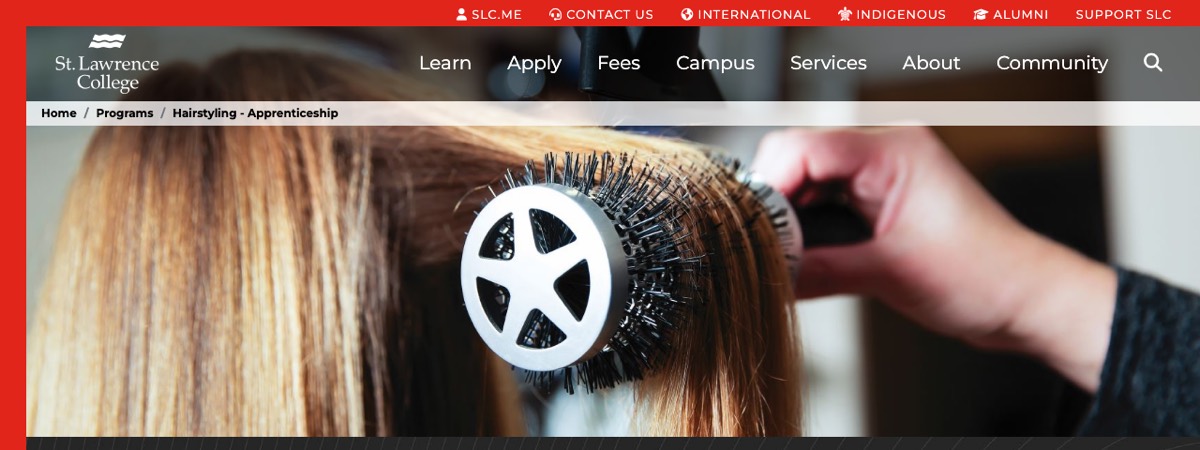
Hairstyling - Apprenticeship is a 2-year, one day per week in-person apprenticeship program at St. Lawrence College in Kingston, Ontario, ending in a Statement of Achievement or College Certificate.
| Provider | St. Lawrence College |
|---|---|
| Length | 2 Years (1 day/week) |
| Credential | Statement of Achievement/College Certificate |
| Format | in person, Ontario |
Fiona's take: This is the real thing: the in-school portion of an Ontario apprenticeship, delivered one 7-hour day per week for each of the two in-school levels. If you are in eastern Ontario with a sponsoring salon, this is the format I would point you to.
Skip it if: Skip it if you are outside commuting range of Kingston or your province runs in-school training differently.
See Program DetailsHairstyling
Hairstyling is a 1-year full-time in-person diploma program at RRC Polytech in Manitoba.
| Provider | RRC Polytech |
|---|---|
| Length | 1 year |
| Credential | Diploma |
| Format | in person, Manitoba |
Fiona's take: RRC Polytech is a 1-year full-time in-person diploma option in Manitoba, and one year full time is faster than the apprenticeship track if you can study without a salon wage. Pair it with salon work after graduation.
Skip it if: Skip it if you need to earn while you train; register with Apprenticeship Manitoba instead.
See Program DetailsHairstylist Program
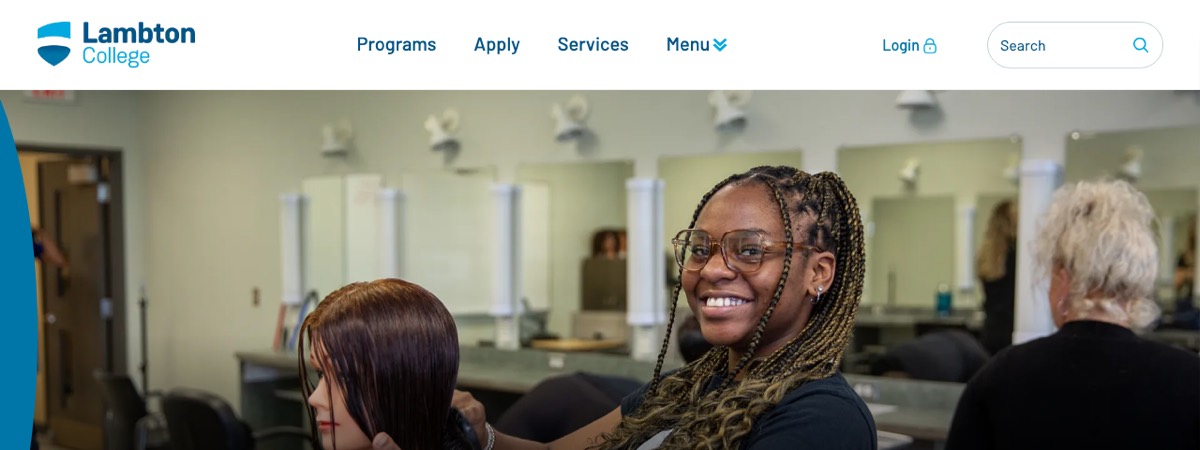
Hairstylist Program is a one-year in-person program at Lambton College in Ontario ending in an Ontario College Diploma.
| Provider | Lambton College |
|---|---|
| Length | One-Year |
| Credential | Ontario College Diploma |
| Format | in person, Ontario |
Fiona's take: It provides 1,500 hours of hairstyling education; confirm with Skilled Trades Ontario how it maps to compulsory trade requirements before you enrol.
Skip it if: Skip it if you are not aiming at Ontario registration.
See Program DetailsHairstyling
Hairstyling is a 1-year full-time in-person diploma program at MITT in Manitoba.
| Provider | MITT |
|---|---|
| Length | 1 Year | Full time |
| Credential | Diploma |
| Format | in person, Manitoba |
Fiona's take: MITT gives Winnipeg students a second one-year diploma option alongside RRC Polytech, useful for comparing start dates and seats. As with any Manitoba program, check how it feeds into Apprenticeship Manitoba's requirements.
Skip it if: Skip it if you are in Ontario, where a different credential map applies.
See Program DetailsHairstyling certificate
Hairstyling certificate is a 1-year in-person program at Lakeland College in Alberta.
| Provider | Lakeland College |
|---|---|
| Length | 1 year |
| Credential | Certificate |
| Format | in person, Alberta |
Fiona's take: Lakeland College is a 1-year in-person Alberta certificate option, in a province where hairstylist (trade 0424) is compulsory under Alberta Apprenticeship and Industry Training. Ask admissions how the certificate feeds the compulsory registration.
Skip it if: Skip it if Alberta is not your province.
See Program Details1050-Hour Hairstyling Diploma
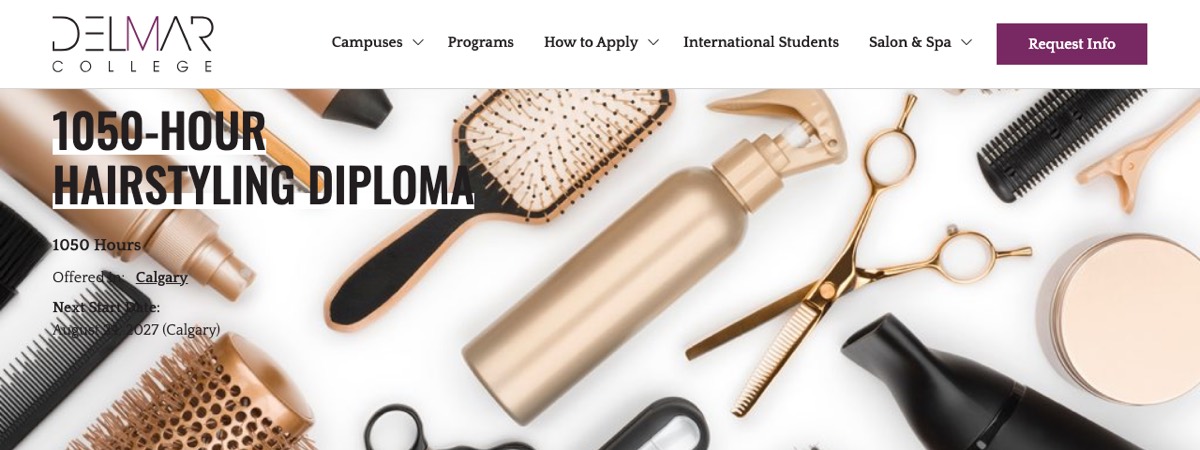
1050-Hour Hairstyling Diploma is an in-person program at Delmar College in Alberta, with tuition of $10,326 plus $3,969 for kit and books.
| Provider | Delmar College |
|---|---|
| Length | 1050 Hours |
| Cost (CAD) | Tuition: $10,326; Kit and Books: $3,969 |
| Credential | Diploma |
| Format | in person, Alberta |
Fiona's take: This is the priced example in this pack, and the numbers are instructive: $10,326 in tuition plus $3,969 for kit and books buys 1,050 hours of training. I tell clients to confirm registration outcomes with Alberta Apprenticeship and Industry Training before committing to that kind of outlay.
Skip it if: Skip it if $10,326 tuition plus $3,969 for kit and books does not fit your budget, or if you would rather earn while learning through an apprenticeship.
See Program DetailsHairstylist (Pre-Employment) Program
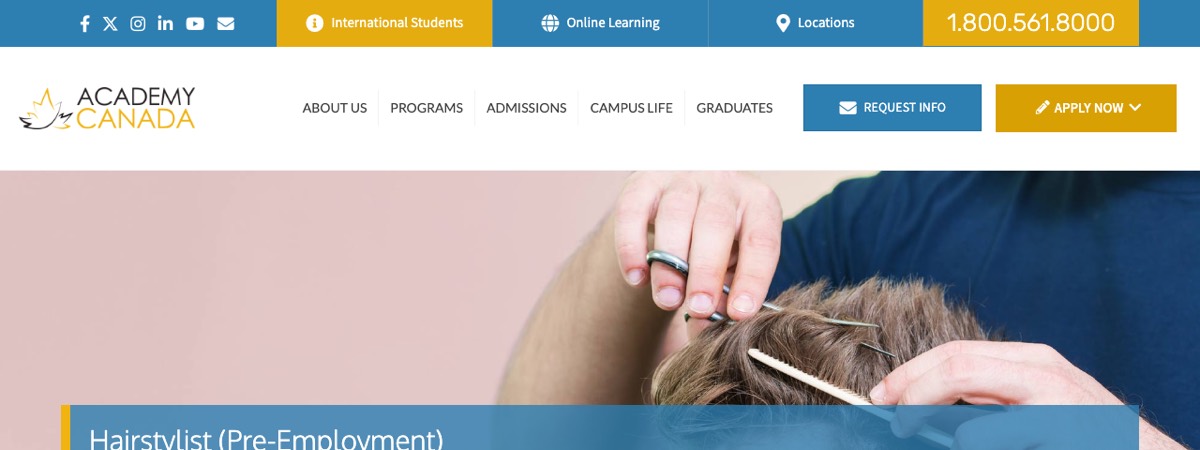
Hairstylist (Pre-Employment) Program is a 34-week in-person program plus a 3-week work term at Academy Canada Career College in Newfoundland and Labrador, ending in a Diploma of Vocational Education.
| Provider | Academy Canada Career College |
|---|---|
| Length | 34 Weeks plus 3 week work term |
| Credential | Diploma of Vocational Education |
| Format | in person, Newfoundland and Labrador |
Fiona's take: The program includes a 3-week work term. In Newfoundland and Labrador, trade certification is voluntary, so confirm with the college and the provincial authority what the credential and work term lead to.
Skip it if: Skip it if you want the paid-apprenticeship model from day one.
See Program DetailsHairstyling
Hairstyling is a 9-month hybrid program at Cappa College in Ontario ending in a Cappa College Diploma in Hairstyling.
| Provider | Cappa College |
|---|---|
| Length | 9 Months |
| Credential | Cappa College Diploma in Hairstyling |
| Format | hybrid, Ontario |
Fiona's take: Nine months hybrid suits people juggling work and study. The diploma is from a private college, so verify how it maps onto Skilled Trades Ontario's compulsory trade requirements before you pay anything.
Skip it if: Skip it if you need a public credential or a clear apprenticeship path.
See Program DetailsHow Much Does It Cost To Become A Hairdresser In Canada?
Apprenticeship cash costs can be relatively low because much of the training is paid on-the-job work.
| Item | Cost (CAD) | Notes |
|---|---|---|
| Ontario certifying exam | $150 + HST | First attempt free for registered apprentices |
| Ontario annual renewal | $60 + HST | Certificate renewal |
| Ontario Trade Equivalency Assessment (TEA) | $235 + HST | For experienced candidates challenging the exam |
| In-school apprenticeship fees | ~$600-$3,800 per level | Varies by province and provider; EI or loans may apply |
| Delmar College 1050-hour Hairstyling Diploma (full-time example) | $10,326 tuition + $3,969 kit and books | Alberta private college, in person |
The apprenticeship route's cash cost is mostly the in-school fees, roughly $600 to $3,800 per level, and you are drawing a wage for the on-the-job 3,020 hours in Ontario's structure. Compare that with the Delmar College full-time route at $10,326 tuition plus $3,969 for kit and books before living costs, and the apprenticeship is the lighter financial lift for most people I advise.
How Much Do Hairdressers Earn In Canada?
Job Bank's latest figures put the national median wage for hairstylists and barbers, NOC 63210, at $19.88 per hour.
| Region | Median Hourly Wage |
|---|---|
| Canada | $19.88 |
| Ontario | $18.00 |
| British Columbia | $23.00 |
| Alberta | $19.23 |
| Saskatchewan | $21.15 |
| Manitoba | $16.32 |
| Quebec | $21.63 |
| New Brunswick | $18.60 |
| Nova Scotia | $19.00 |
| Newfoundland and Labrador | $19.93 |
| Prince Edward Island | $20.00 |
The spread is wide: $16.32 in Manitoba against $23.00 in British Columbia. Job Bank reports median hourly wages only, so actual earnings can vary. Outlook varies by province, so check the Job Bank profile for your region before choosing where to settle.
Is A Hairdressing Apprenticeship Worth It In 2026?
On the numbers alone, yes for the right person. You spend about two years in a paid job, pay in-school fees in the hundreds to low thousands per level rather than five-figure tuition, and finish with a Certificate of Qualification that is legally required in Ontario, Manitoba, Saskatchewan, Alberta and Nova Scotia. That is a hard barrier to entry, and barriers protect licensed workers.
The wage math is humbler: a $19.88 national median, per Job Bank's latest figures for NOC 63210, is not a software salary, and Job Bank reports median hourly wages only, so actual earnings can vary. British Columbia's $23.00 median sits well above Manitoba's $16.32.
My honest test for clients: spend three weeks on the University of Michigan's Equitable Stage Makeup and Hair or a weekend shadowing a salon. If the work still pulls at you, register with your provincial authority and start hunting for a sponsoring employer. If it fades, you have lost little.
Can You Get Funding For A Hairstylist Apprenticeship?
Eligible apprentices in Red Seal jurisdictions may be able to use the Canada Apprentice Loan: up to $4,000 in interest-free loans per period of technical training. EI may also apply during in-school training.
- Canada Apprentice Loan. The pack notes this loan applies to Red Seal trades, and Ontario is noted as the exception for Red Seal, so confirm your eligibility. You can get up to $4,000 in interest-free loans per period of technical training. It is a loan, so it must be repaid.
- Employment Insurance during in-school training. EI can pay 55% of your average weekly earnings, up to $729 a week in 2026, while you attend the in-school portion of your apprenticeship. Confirm eligibility and the waiting periods with Service Canada before you book your level.
Hairdressing Questions Canadians Ask
Do I Need A Licence To Work As A Hairstylist In Ontario?
A licence is legally required in Ontario, because hairstylist is a compulsory trade under Skilled Trades Ontario. You need a Registered Training Agreement, a Provisional Certificate of Qualification or a Certificate of Qualification to work on clients. The exam costs $150 plus HST, and the first attempt is free for registered apprentices.
How Long Does A Hairstylist Apprenticeship Take In Canada?
A hairstylist apprenticeship typically takes about 2 years, or 3,500 to 3,600 hours combining on-the-job and in-school training. Ontario's structure, per Skilled Trades Ontario, is 3,020 on-the-job hours plus 480 in-school hours. Your provincial authority's hour breakdown governs your file.
Is Hairstylist A Red Seal Trade?
Hairstylist is a Red Seal trade in most provinces and territories, with Ontario noted as the exception, which issues only a provincial certificate. The Red Seal endorsement eases moving between provinces where the trade is compulsory, such as Manitoba and Alberta. Ask your apprenticeship office how endorsement works in your case.
What Is The Median Wage For Hairstylists In Canada?
The median wage for hairstylists and barbers, NOC 63210, is $19.88 per hour nationally in the latest Job Bank data. Provincially the median ranges from $16.32 in Manitoba to $23.00 in British Columbia. Job Bank reports median hourly wages only, so actual earnings can vary.
Can I Challenge The Hairstylist Exam Without An Apprenticeship?
Yes, through a Trade Equivalency Assessment if you have equivalent experience. In Ontario the assessment costs $235 plus HST, and passing it lets you sit the $150 plus HST exam. This route suits people trained outside Canada or with substantial undocumented salon experience.
Are There Government Loans Or Grants For Hairstylist Apprentices?
The Canada Apprentice Loan offers up to $4,000 in interest-free loans per period of technical training for eligible apprentices in Red Seal trades, and it must be repaid like any loan. Ontario is noted as the exception for Red Seal, so confirm eligibility. Employment Insurance may also pay 55% of your average weekly earnings, up to $729 a week in 2026, during in-school training.
What Education Is Needed To Start A Hairstylist Apprenticeship?
You usually need Grade 12 or equivalent, plus a sponsoring employer willing to sign your training agreement. The registration step with your provincial authority, such as Skilled Trades Ontario or Apprenticeship Manitoba, takes days to weeks and minimal fees. Your sponsor's shop becomes your classroom for the next two years.
How Do I Find Hairdressing Apprenticeship Jobs In Canada?
Hairdressing apprenticeship jobs come through Job Bank postings, provincial apprenticeship offices and direct approaches to salons for sponsorship. I tell clients to walk into shops with a short pitch and ask for the owner, because sponsorship is the one bottleneck in this trade. Contact provincial apprenticeship offices for guidance and approach salons directly for sponsorship.
What's The Bottom Line On Hair Apprenticeship Jobs In Canada?
- A hairstylist apprenticeship in Canada takes about 2 years, structured as 3,020 paid on-the-job hours plus 480 in-school hours in Ontario, with in-school fees of roughly $600 to $3,800 per level.
- The licence is mandatory in Ontario, Manitoba, Saskatchewan, Alberta and Nova Scotia, and voluntary in Newfoundland and Labrador, Prince Edward Island, New Brunswick, Quebec, British Columbia, the Yukon, the Northwest Territories and Nunavut.
- Job Bank's median wage for NOC 63210 is $19.88 per hour nationally, with British Columbia at $23.00 and Manitoba at $16.32.
- Eligible apprentices in Red Seal jurisdictions may be able to use the Canada Apprentice Loan, up to $4,000 in interest-free loans per period of technical training, and it must be repaid; EI may pay up to $729 a week in 2026 during in-school training.
- Test your interest first with the University of Michigan's Equitable Stage Makeup and Hair on Coursera, 3 weeks at 10 hours a week, then register with your provincial authority and find a sponsoring salon.






