Key Takeaways
- The fastest realistic route is a full-time PSW certificate at an Ontario college such as Fleming College, which runs 24 weeks, with tuition typically 3000-8000 CAD across programs.
- Registration is mandatory for continuing care assistants in Nova Scotia (Continuing Care Assistant Registry) and for health care aides in Alberta (CLHA); it is voluntary in Ontario (HSCPOA) and required by publicly funded employers in British Columbia.
- A Coursera option to test the field first is Nursing Assistant Fundamentals from MedCerts, a 12-week online program at 2 hours a week, but it does not qualify you for any provincial registry or PSW certificate.
- Nursing assistants fall under NOC 33102 Nurse aides, orderlies and patient service associates and earn a median of 24.00 CAD per hour in Canada, from 18.00 CAD in Newfoundland and Labrador to 27.89 CAD in British Columbia, according to Job Bank.
- Fiona's verdict: this path suits someone who wants paid health care work in under a year, and BC residents should check the Health Career Access Program first because the province pays tuition and a living allowance.
A nursing assistant, also called a personal support worker (PSW), health care assistant (HCA) or continuing care assistant, provides basic personal care under nurse supervision in hospitals, long-term care and home settings, and the occupation is classified as NOC 33102 Nurse aides, orderlies and patient service associates.
The fastest realistic route is a full-time college certificate of about 24 to 33 weeks, costing roughly 3,000 to 8,000 CAD, followed by a Vulnerable Sector Check, First Aid and CPR, and in some provinces registry registration. Before you spend that money, I recommend a short online Coursera course to confirm the work suits you.
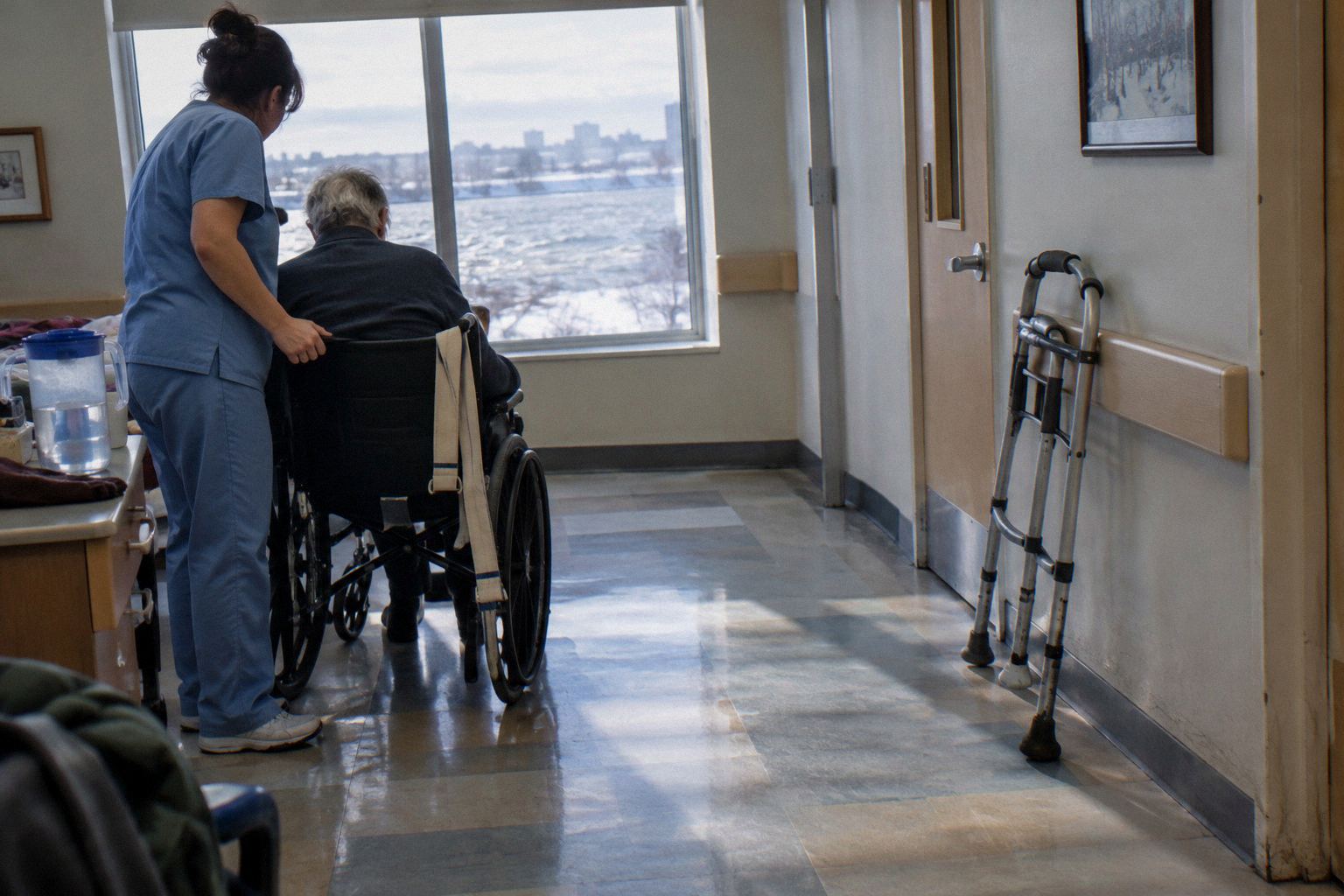
What Are The Ways To Become A Nursing Assistant In Canada?
There are two main routes to working as a nursing assistant in Canada: a paid college certificate program, or the BC government's funded Health Career Access Program.
| Route | Time | Cost (CAD) | What You Get | Recognised By | Best For |
|---|---|---|---|---|---|
| Nursing Assistant Fundamentals with MedCerts first to test the field | 12 weeks at 2 hours a week | Not listed | A career certificate from MedCerts (does not qualify you for any provincial registry) | Career certificate from MedCerts; not listed as a recognised PSW/HCA route in this pack | Testing the field before committing money |
| PSW/HCA certificate program (e.g. Fleming College accelerated) | 24-33 weeks full-time | 3,000-8,000 | College or NACC certificate | Provincial employers and registries | Most new entrants outside BC |
| Health Career Access Program (BC) | 6-8 months | 0 (tuition plus a weekly living allowance) | Recognized HCA certificate plus registry registration | BC government and employers | BC residents who want funded training |
BC readers should check whether they qualify for the Health Career Access Program; for everyone else I recommend a college certificate such as Fleming College's 24-week accelerated PSW program.
What Is The Fastest Way To Become A Nursing Assistant In Canada?
The fastest route from zero to employable is an accelerated certificate plus your required checks, and it can be done in roughly six months.
- Complete a recognized PSW or HCA certificate, for example a 700-hour NACC program or a 745-804 hour BC program, which takes about 24 to 26 weeks full-time and costs 3,460 to 8,000 CAD.
- Obtain the required checks: a Vulnerable Sector Check, First Aid and CPR, immunizations and a mask fit, which takes 2 to 4 weeks and costs about 100 to 300 CAD.
- Register where applicable: voluntary in Ontario, required for publicly funded employers in BC, mandatory for CCAs in Nova Scotia, and mandatory for all HCAs in Alberta. This takes 1 to 4 weeks and costs 0 to 100 CAD.
- Apply for jobs through Job Bank or directly with employers such as long-term care homes and home care agencies.
- In Ontario, some accelerated options such as Fleming College's PSW condense the curriculum into 24 weeks, the shortest college route in the pack.
The certificate itself takes 24 to 26 weeks and the checks and any registration add only a few weeks more, which is why I call this one of the quickest health care credentials in Canada.
Do You Need A Licence Or Registration To Work As A Nursing Assistant In Canada?
There is no single national licence for nursing assistants, and registration requirements vary sharply by province, so check your own province before you enrol.
| Province | Required? | Regulator Or Registry | What It Means |
|---|---|---|---|
| Ontario | No, voluntary (employers may require it for long-term care hires after Jan 1 2026) | Health and Supportive Care Providers Oversight Authority (HSCPOA) | Registration is currently voluntary for PSWs, though many employers ask for it |
| British Columbia | Required by publicly funded employers | BC Care Aide & Community Health Worker Registry | The registry was created in 2010 to safeguard vulnerable individuals |
| Nova Scotia | Yes | Nova Scotia Continuing Care Assistant Registry | Mandatory registration for all continuing care assistants was established in April 2021 |
| Alberta | Yes, since Feb 2026 | College of Licensed Practical Nurses and Health Care Aides of Alberta (CLHA) | All health care aides in Alberta, whichever setting they work in, must be registered with the CLHA |
| Other provinces and territories | No | None | The occupation is unregulated and oversight varies between jurisdictions |
The registry picture matters for your choice of program. In Alberta, every health care aide must be registered with the CLHA, so confirm CLHA registration requirements before you enrol. In Nova Scotia, the Continuing Care Assistant Registry has been mandatory since April 2021.
Ontario sits in the middle: HSCPOA registration is voluntary today, but long-term care employers may require it for hires after January 1, 2026, so I tell Ontario clients to treat registration as part of the plan rather than an optional extra.
Which Nursing Assistant Courses Are Worth Taking?
Below are the courses I compare with clients: Coursera courses for testing the field, then Ontario college and provider programs that actually qualify you to work.
Nursing Assistant Fundamentals
Nursing Assistant Fundamentals is a 12-week online specialization from MedCerts, at about 2 hours a week, ending in a career certificate.
| Provider | MedCerts |
|---|---|
| Length | 12 weeks at 2 hours a week |
| Rating | 4.7 (33 reviews) |
| Credential | career certificate from MedCerts |
| Format | online |
Fiona's take: With a 4.7 rating across 33 reviews, this is the course I suggest when someone wants a structured look at the role before paying college tuition. Twelve weeks at 2 hours a week fits around a job. Be clear about what it is: it does not qualify you for the HSCPOA, the BC registry, the Nova Scotia registry or any college certificate.
Skip it if: Skip it if you have already decided on the career and just need the qualifying college program.
Start On CourseraExploring the Role of the Certified Nursing Assistant
Exploring the Role of the Certified Nursing Assistant is a 4-week online specialization from Cinematic Health, at about 4 hours a week.
| Provider | Cinematic Health |
|---|---|
| Length | 4 weeks at 4 hours a week |
| Rating | 4.8 (18 reviews) |
| Credential | career certificate from Cinematic Health |
| Format | online |
Fiona's take: This is the shortest Coursera specialization here and it carries a 4.8 rating from 18 reviews. I recommend it for the person who wants an honest look at daily duties in under a month. Like every Coursera option on this page, it does not lead to provincial registration.
Skip it if: Skip it if you want the deeper, longer grounding that the MedCerts specialization offers.
Start On CourseraIntroduction to Becoming a CNA
Introduction to Becoming a CNA is a 6-hour online course from Cinematic Health ending in a shareable certificate.
| Provider | Cinematic Health |
|---|---|
| Length | 6 hours to complete |
| Credential | shareable certificate |
| Format | online |
Fiona's take: Six hours is a single weekend, which makes this the lowest-commitment way I know to test interest in the field. It will not tell you whether you can handle the physical and emotional demands of a 12-hour shift, but it will tell you whether the subject matter holds your attention at all.
Skip it if: Skip it if you already know you want the career; go straight to a college certificate.
Start On CourseraCertified Nursing Assistant (CNA) Training Diploma
Certified Nursing Assistant (CNA) Training Diploma is an online Udemy course from Fadwa Baria.
| Provider | Fadwa Baria |
|---|---|
| Format | online |
Fiona's take: These Udemy courses are not listed in the pack as recognised PSW/HCA certificate routes, so treat this only as background theory. It can help you preview terminology before a college program, but I would not build a plan around it.
Skip it if: Skip it if your goal is a credential an employer recognises.
View On UdemyHome Health Aide, Nurse Aide, Caregiver Certification Course
Home Health Aide, Nurse Aide, Caregiver Certification Course is an online Udemy course from Dr. Udochi Precious Anosike.
| Provider | Dr. Udochi Precious Anosike |
|---|---|
| Rating | 4.5 out of 5 (390 ratings for related) |
| Format | online |
Fiona's take: A related rating in the pack is 4.5 out of 5, and the home care angle is genuinely useful because much PSW work happens in clients' homes. Still, this course is not listed in the pack as a recognised PSW/HCA certificate route, so pair it with, or defer it in favour of, a recognized program.
Skip it if: Skip it if you are aiming at long-term care facilities rather than home care.
View On UdemyNurse Aide Certification Course (CNA Program)
Nurse Aide Certification Course (CNA Program) is an online Udemy course from Dr. Udochi Precious Anosike.
| Provider | Dr. Udochi Precious Anosike |
|---|---|
| Rating | 4.4 out of 5 (96 ratings) |
| Format | online |
Fiona's take: It rates 4.4 out of 5 across 96 ratings. As with the other Udemy options, this is theory and vocabulary support, not a certification in the Canadian sense, despite the title. Use it as a supplement during a college program if the lectures help you study.
Skip it if: Skip it if you expect the title to mean a Canadian-recognised credential.
View On UdemyPersonal Support Worker (Accelerated)
Personal Support Worker (Accelerated) is a 24-week in person or hybrid program from Fleming College ending in an Ontario College Certificate, with placement.
| Provider | Fleming College |
|---|---|
| Length | 24 weeks |
| Cost (CAD) | not shown (government funded tuition) |
| Credential | Ontario College Certificate |
| Format | in person/hybrid with placement, Ontario |
Fiona's take: Fleming condenses the PSW curriculum into 24 weeks, the fastest college route I point Ontario clients to. Tuition is not shown because it is government funded, which makes the cost conversation with the admissions office worth having early. The accelerated pace demands full attention, so plan your schedule around it.
Skip it if: Skip it if you cannot commit full-time for six months; a one-year program spreads the load.
See Program DetailsPersonal Support Worker
Personal Support Worker is a one-year in person program from Lambton College with placement, costing 4,250.34 CAD for Year 1 of 2026-2027.
| Provider | Lambton College |
|---|---|
| Length | One-Year |
| Cost (CAD) | $4,250.34 (Year 1, 2026-2027) |
| Credential | Ontario College Certificate |
| Format | in person with placement, Ontario |
Fiona's take: Lambton is the benchmark here: a published fee, a one-year format and an Ontario College Certificate. At 4,250.34 CAD it sits inside the 3,000 to 8,000 CAD range typical of PSW tuition, and the published number lets you plan without waiting on an admissions call.
Skip it if: Skip it if the 24-week accelerated format at Fleming or a NACC provider fits your timeline better.
See Program DetailsPersonal Support Worker
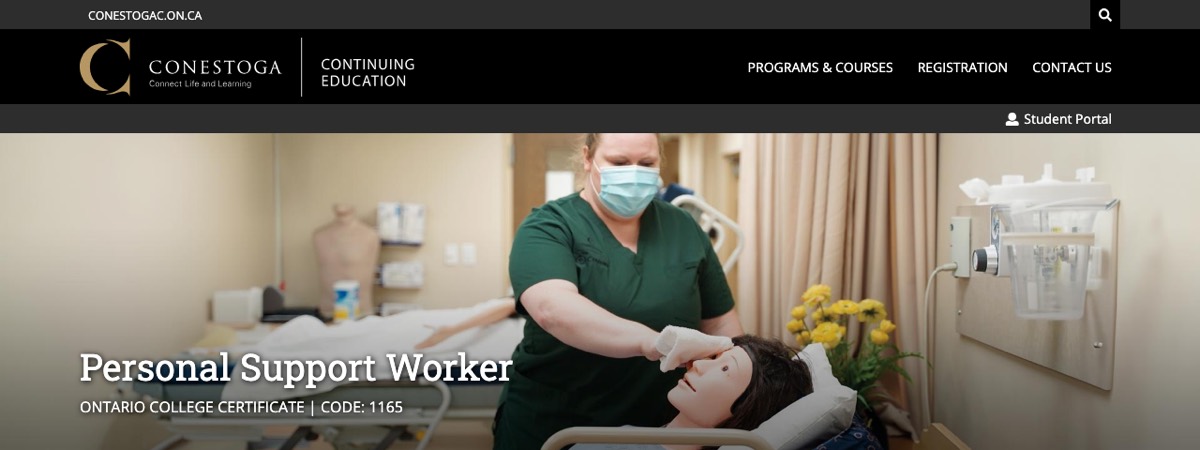
Personal Support Worker is an in person or hybrid program from Conestoga College, with tuition not shown and OSAP eligibility.
| Provider | Conestoga College |
|---|---|
| Cost (CAD) | not shown (OSAP eligible) |
| Format | in person/hybrid, Ontario |
Fiona's take: Conestoga's OSAP eligibility is the practical draw: eligible domestic students can reduce out-of-pocket cost through OSAP and Better Jobs Ontario support. The hybrid delivery also suits people balancing shift work or family care.
Skip it if: Skip it if you want a published fee before applying.
See Program DetailsPersonal Support Worker
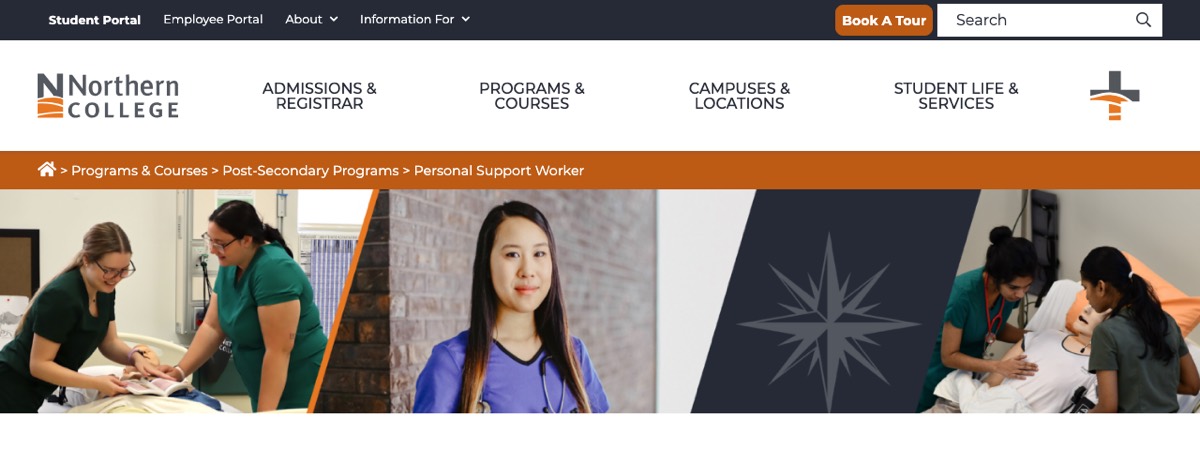
Personal Support Worker is a two-semester, one-year in person program from Northern College.
| Provider | Northern College |
|---|---|
| Length | 2 Semesters (1 Year) |
| Credential | Ontario College Certificate |
| Format | in person, Ontario |
Fiona's take: Northern College suits students who want a two-semester, one-year in-person Ontario program. Two semesters on campus gives you time to absorb clinical skills properly before placement.
Skip it if: Skip it if you need hybrid or online delivery.
See Program DetailsPersonal Support Worker (PSW) Program
Personal Support Worker (PSW) Program is a 25-week, 700-hour hybrid program from Cestar College ending in a NACC Approved Certificate.
| Provider | Cestar College |
|---|---|
| Length | 25 weeks (700 hours) |
| Credential | NACC Approved Certificate |
| Format | hybrid, Ontario |
Fiona's take: At 700 hours across 25 weeks, Cestar is nearly as fast as Fleming and the NACC credential is recognised by provincial employers and registries. Hybrid delivery combines online and in-person learning. This is the route to compare tuition against, currently not shown, before you sign.
Skip it if: Skip it if you prefer a public college name on your certificate.
See Program DetailsPersonal Support Worker (PSW) Program
Personal Support Worker (PSW) Program is a 30-week, 738-hour hybrid or in person program from Willis College ending in a NACC Certificate.
| Provider | Willis College |
|---|---|
| Length | 30 weeks (738 hours) |
| Credential | NACC Certificate |
| Format | hybrid/in person, Ontario |
Fiona's take: Willis runs 738 hours over 30 weeks and awards the NACC certificate. That means sitting the NACC exam at 115 CAD for a first attempt.
Skip it if: Skip it if 25 weeks at Cestar gets you to the same NACC credential sooner.
See Program DetailsHow Much Does Nursing Assistant Training Cost In Canada?
Nursing assistant training in Canada costs between 3,000 and 8,000 CAD in tuition, with exam and check costs on top, and the BC HCAP route costs 0 CAD because the province pays.
| Item | Cost (CAD) |
|---|---|
| Tuition (typical PSW/HCA certificate program) | 3,000-8,000 |
| Tuition (Ontario private college example, Alpha Career College) | 4,860 plus a 230 registration fee |
| Lambton College PSW, Year 1, 2026-2027 | 4,250.34 |
| NACC exam, first attempt | 115 |
| Vulnerable Sector Check, First Aid/CPR, mask fit | 200-300 |
| Registry registration (where applicable) | 0-100 |
The extras are small but real. A Vulnerable Sector Check runs about 20 to 40 CAD plus HST, and Intermediate First Aid and CPR Level C is about 146.60 CAD, per Fleming College's published estimates.
In British Columbia, the Health Career Access Program changes the math entirely: the province pays for your post-secondary education and provides a weekly living allowance, so the HCAP route costs you 0 CAD in tuition. For Ontario domestic students, OSAP, Better Jobs Ontario and employer tuition support may reduce out-of-pocket cost.
How Much Does A Nursing Assistant Earn In Canada?
Nursing assistants earn a median of 24.00 CAD per hour in Canada under NOC 33102 Nurse aides, orderlies and patient service associates, according to Job Bank wage figures.
| Province | Median Hourly (CAD) |
|---|---|
| Canada (median) | 24.00 |
| British Columbia | 27.89 |
| Quebec | 25.10 |
| Ontario | 24.00 |
| Saskatchewan | 23.97 |
| Prince Edward Island | 23.26 |
| Nova Scotia | 23.00 |
| Alberta | 22.55 |
| New Brunswick | 21.50 |
| Manitoba | 20.50 |
| Newfoundland and Labrador | 18.00 |
The spread is wide: British Columbia pays a median of 27.89 CAD while Newfoundland and Labrador pays 18.00 CAD, and Job Bank places the Canadian range for NOC 33102 at 19.00 to 28.84 CAD. Where you work matters almost as much as whether you work.
The outlook is good to very good in most provinces for 2025 to 2027, driven by an aging population. That demand is what makes the short training window pay off: within about six months you can enter an occupation Job Bank rates favourably.
Is A Nursing Assistant Certification Worth It In 2026?
The case for yes is arithmetic. Roughly 24 to 33 weeks of training buys entry to an occupation with a 24.00 CAD national median wage, a good to very good outlook in most provinces for 2025 to 2027, and multiple funding routes including BC's HCAP, which pays tuition plus a weekly living allowance. Few Canadian credentials combine that speed, that cost ceiling and that demand.
The case for caution is the work itself. PSW shifts are physical, emotionally demanding and often involve nights and weekends, and the wage spread from 18.00 CAD in Newfoundland and Labrador to 27.89 CAD in British Columbia means location shapes your return. That is exactly why I recommend a Coursera starter such as Nursing Assistant Fundamentals from MedCerts before you commit tuition.
My verdict: for someone who wants paid health care work inside a year, this can be a short training route. For someone seeking a desk job or a high salary ceiling, look elsewhere.
Can You Get Funding For Nursing Assistant Training In Canada?
Yes, and the funding on offer can take your out-of-pocket cost to zero, depending on where you live.
- Health Career Access Program (HCAP), British Columbia. Through HCAP, the Province of British Columbia will pay for your post-secondary education and provide a weekly living allowance. This is the strongest funding package in the pack, and it comes with a recognized HCA certificate and registry registration.
- OSAP / Better Jobs Ontario. For eligible domestic students in Ontario, OSAP, Better Jobs Ontario and employer tuition support may reduce out-of-pocket cost. Fleming College notes its accelerated PSW tuition is government funded, and Conestoga's PSW program is OSAP eligible.
Nursing Assistant Certification Questions Canadians Ask
How Long Does PSW Training Take In Canada?
PSW training length varies by province: 24 to 26 weeks full-time in Ontario at 700 hours, and 30 to 33 weeks in BC at 745 to 804 hours. Accelerated options such as Fleming College condense the curriculum into 24 weeks, so the fastest routes finish in about six months of class time.
Is PSW Registration Mandatory In Ontario?
PSW registration is not mandatory in Ontario. HSCPOA registration is currently voluntary for PSWs, though employers, especially in long-term care, may require it, and long-term care hires after January 1, 2026 may need it. I tell Ontario clients to register anyway to keep options open.
What Is The Median Wage For Nurse Aides In Canada?
The median wage for nurse aides is 24.00 CAD per hour for NOC 33102 Nurse aides, orderlies and patient service associates, according to Job Bank wage figures. The provincial range runs from 18.00 CAD in Newfoundland and Labrador to 27.89 CAD in British Columbia, so location has a real effect on earnings.
Do I Need A PSW Certificate To Work In Long-Term Care?
A PSW certificate is required in Ontario for most long-term care hires, where programs must meet Ministry standards. In BC, publicly funded employers require registry registration through the BC Care Aide & Community Health Worker Registry. Requirements vary by province, so confirm with the employer before enrolling.
Is There Free PSW Training In Canada?
Free PSW training exists, mainly through BC's Health Career Access Program, where the province pays tuition and provides a weekly living allowance. In Ontario, occasional funded intakes exist, such as the government-funded tuition at Fleming College's accelerated PSW program, plus OSAP and Better Jobs Ontario support for eligible students.
What NOC Code Is Used For Nursing Assistants?
The NOC code for nursing assistants is 33102, Nurse aides, orderlies and patient service associates. Job Bank wage reports and outlook projections for this occupation all key off NOC 33102, which covers hospital, long-term care and home settings.
Can International Students Or Immigrants Become PSWs?
International students and immigrants can become PSWs by completing a recognized Canadian certificate program and meeting language and registration rules. Registry requirements vary, with mandatory registration in Nova Scotia and Alberta and voluntary registration in Ontario, so check the specific registry before choosing a program.
What Is The Job Outlook For PSWs?
The job outlook for PSWs is good to very good in most provinces for 2025 to 2027, driven by an aging population. Combined with a 24.00 CAD national median wage under NOC 33102, the demand side of this career is the strongest argument for the short training investment.
What's The Bottom Line On Nursing Assistant Certification In Canada?
- A full-time PSW certificate takes about 24 to 33 weeks and costs 3,000 to 8,000 CAD in tuition, making this one of the fastest routes into paid health care work in Canada.
- Registration is mandatory in Nova Scotia and Alberta, voluntary in Ontario, and required by publicly funded BC employers, so your province decides your paperwork.
- Test the field first with Nursing Assistant Fundamentals, a 12-week MedCerts specialization on Coursera that does not qualify you for any registry but costs far less time than a college program.
- NOC 33102 pays a median of 24.00 CAD per hour, with BC at 27.89 CAD, and the outlook is good to very good in most provinces through 2027.
- If you live in British Columbia, check whether you qualify for the Health Career Access Program: the province pays tuition and a weekly living allowance.