
The rise of online education has made it easier for Canadians to learn the Japanese language. Online Japanese courses offer flexibility and convenience for those seeking to expand their language skills from the comfort of their homes.
In 2026, interest in learning Japanese remains strong in Canada, driven by travel, business opportunities, cultural interests, and Japan’s growing global influence in technology and pop culture.
In this article, we have curated a selection of the finest online Japanese courses to help you search for a course that suits you.
| Course Name | Students Enrolled | Reviews |
|---|---|---|
| Coursera – Japanese Language 1 | 28,000+ | 6,200+ |
| Udemy – Complete Japanese Course: Learn Japanese for Beginners | 81,000+ | 50,000+ |
| Udemy – Online Japanese Beginner Course (All 12 lessons) | 28,000+ | 15,000+ |
| University of Toronto – Japanese Courses | 20,000+ | 12,000+ |
| Japanese Canadian Cultural Centre – Japanese Language Program for Adults | 35,000+ | 20,000+ |
| Vancouver Island University – Japanese Courses | 18,000+ | 8,000+ |
| University of Victoria – Japanese Courses | 6,500+ | 1,800+ |
Coursera – Japanese Language 1
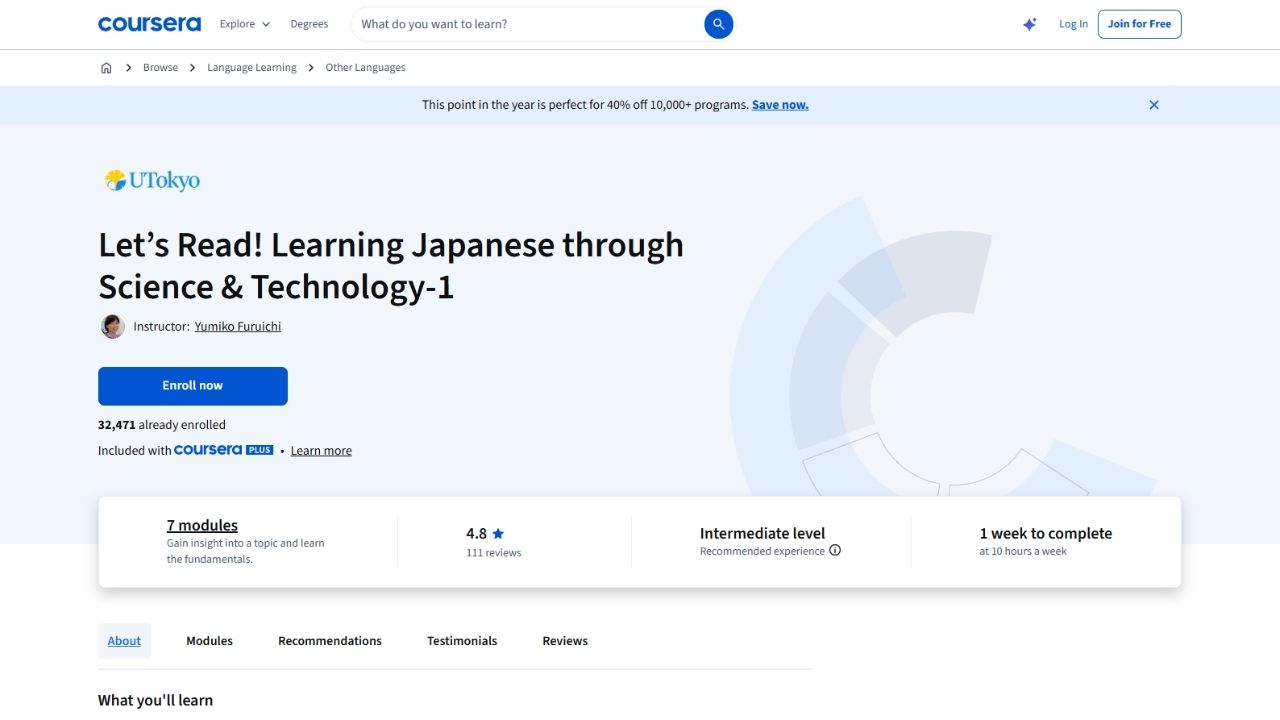
This course on Coursera offers a clear and structured introduction to the Japanese language, making it an excellent choice for complete beginners. It focuses on building foundational skills in speaking, listening, reading, and writing, with a strong emphasis on practical communication. Learners are guided through essential grammar, vocabulary, and the hiragana writing system in a well-paced manner. The course is suitable for those who prefer a more academic and methodical approach to language learning. It is ideal for Canadians who want a reliable, university-style introduction to Japanese with clear learning objectives and progress tracking.
Udemy – Complete Japanese Course: Learn Japanese for Beginners
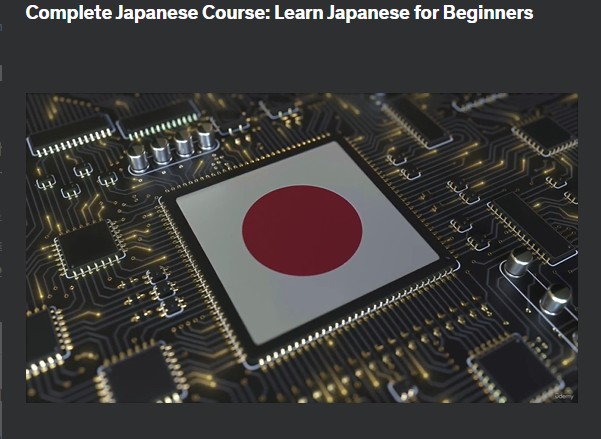
This comprehensive course will take you on a transformative language-learning journey, empowering you to communicate fluently and authentically in real-life situations in Japan.
Throughout this immersive course, you will embark on a fascinating adventure, mastering the intricacies of the Japanese language faster than you ever thought possible. It is designed to equip you with practical skills for everyday interactions.
The course covers many essential topics, including vocabulary, reading and writing, useful phrases, basic sentence structures, and even grammar rules often overlooked in other beginner courses.
This course is the first of a series thoughtfully designed to establish a robust foundation for your Japanese language proficiency. With this solid base, you’ll be able to confidently and proficiently advance your skills as a Japanese speaker.
Regardless of your purpose for learning Japanese, this course caters to all aspiring learners. So, if you’re looking to accelerate your Japanese language journey, Udemy’s Complete Japanese Course for Beginners is the perfect starting point.
Discover the course at this link.
Udemy – Online Japanese Beginner Course (All 12 lessons)
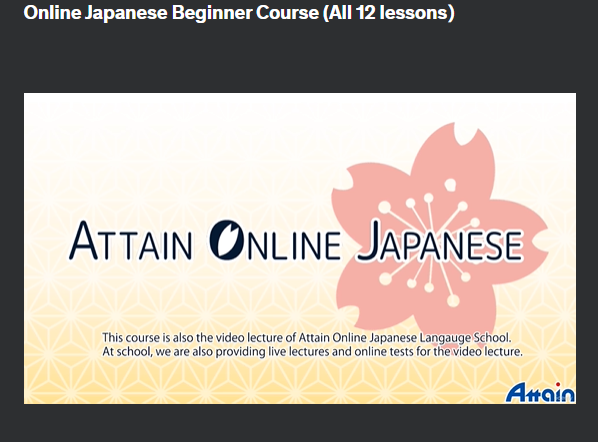
This Udemy course utilizes dynamic video materials to guide you through Japanese pronunciation and writing intricacies. From mastering the elegant hiragana and katakana scripts to delving into the nuances of daily greetings and expressions used in everyday life, you’ll swiftly gain confidence in communicating with native Japanese speakers.
One of the highlights of this course is the inclusion of a PDF file textbook, enabling you to practice writing hiragana and katakana as many times as you desire. This resource ensures you develop a strong foundation in reading and writing Japanese characters, a fundamental aspect of language learning.
Each lesson is thoughtfully crafted to cover various topics, including pronunciation nuances such as long vowels, nasal consonants, double consonants, contracted sounds, and accents. The clarity of the course’s narration, complemented by English subtitles, empowers even those new to Japanese to immerse themselves in the materials freely.
This course accommodates all foreign learners seeking to unravel the secrets of the Japanese language. With its flexibility and adaptability, the course caters to learners of all backgrounds and levels, making it suitable for beginners and advanced students.
Explore the course by clicking here.
University of Toronto – Japanese Courses
The University of Toronto’s Japanese language courses caters to diverse aspirations and proficiency levels, making them accessible to both seasoned learners and curious beginners.
The courses will meticulously guide you through the essentials of Japanese grammar and vocabulary, enabling you to break language barriers and connect with locals on a profound level. These courses are tailored to help you embrace the beauty of the Japanese language and communicate when you travel in Japan.
From mastering the art of reading and writing in Japanese to developing conversational fluency, these comprehensive courses equip you with the necessary skills to navigate diverse scenarios in both professional and social settings.
Beyond practical language skills, UoT’s courses invite you to explore the cultural nuances that shape Japan’s identity. Experience the joy of learning traditional Japanese customs and modern trends, creating unforgettable travel memories, or connecting with your family’s Japanese heritage.
UoT is committed to providing a supportive and engaging learning environment to ensure that you’ll thrive as you embrace the beauty of the Japanese language.
Access the course materials here.
Japanese Canadian Cultural Centre – Japanese Language Program for Adults
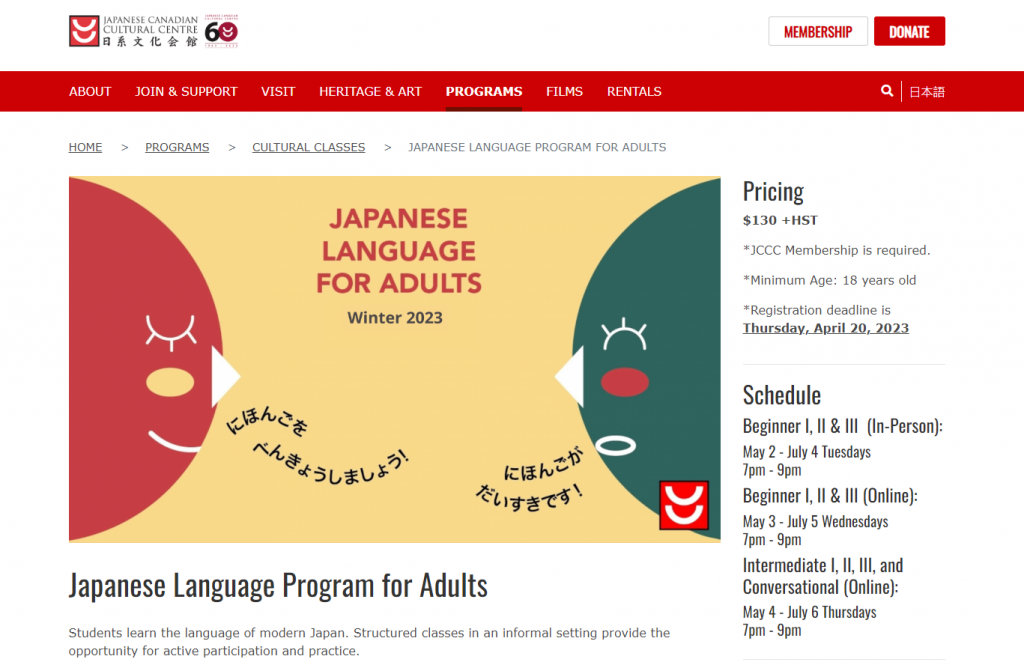
Japanese Canadian Cultural Centre’s Japanese Language Program for Adults offers a range of levels to suit your needs and aspirations.
The Beginner I course is the perfect starting point for those studying Japanese for the first time. You will learn basic functional conversation strategies, essential vocabulary, and an introduction to the Hiragana writing system.
Building on the foundation established in Beginner I, the Beginner II course continues to focus on practical communication for everyday life. Additionally, you’ll delve deeper into basic grammar and become acquainted with the Katakana system.
For those who have completed Beginner II or have basic knowledge of Hiragana and Katakana, Beginner III is your next step. This level emphasizes practical communication skills such as asking permission, refusing, and expressing preferences while exercising your grasp of Hiragana and Katakana.
As you progress to the Intermediate levels, you’ll strike a balance between active communication and mastery of reading, writing, and grammar. You’ll build on your knowledge of Hiragana and Katakana, and some Kanji will be introduced. The focus remains on honing your language skills to engage confidently with native speakers.
If you wish to maintain and improve your knowledge through oral communication skills, Conversational Japanese is the class for you. This course is open to those who have completed Intermediate III or have an equivalent level and offers a supportive environment to enhance your conversational fluency.
Find the course details right here.
Vancouver Island University – Japanese Courses
Vancouver Island University offers various Japanese language courses to accommodate students with varying proficiency levels and interests.
For absolute beginners, JAPA 100 and JAPA 111 introduce the fundamentals of modern Japanese and spoken communication skills, respectively. These courses are perfect for students without previous language knowledge and reinforce theory with practical aural-oral practice.
Continuing to JAPA 101 and JAPA 112 will build on the knowledge gained in the introductory courses, which will allow students to deeply understand the Japanese language and further enhance their oral communication skills.
As students progress to intermediate levels, JAPA 200 and JAPA 201 focus on increasing reading, writing, and speaking proficiency. More complex grammar, vocabulary, and kanji characters are introduced, providing a solid foundation for more advanced language use.
Beyond language proficiency, Vancouver Island University also offers insights into the culture and society of Japan through JAPA 211 and JAPA 212. These courses explore various aspects of Japan’s history, art, literature, customs, cinema, and more, providing a comprehensive understanding of the country’s rich cultural heritage.
Get started with the course by following this link.
University of Victoria – Japanese Courses
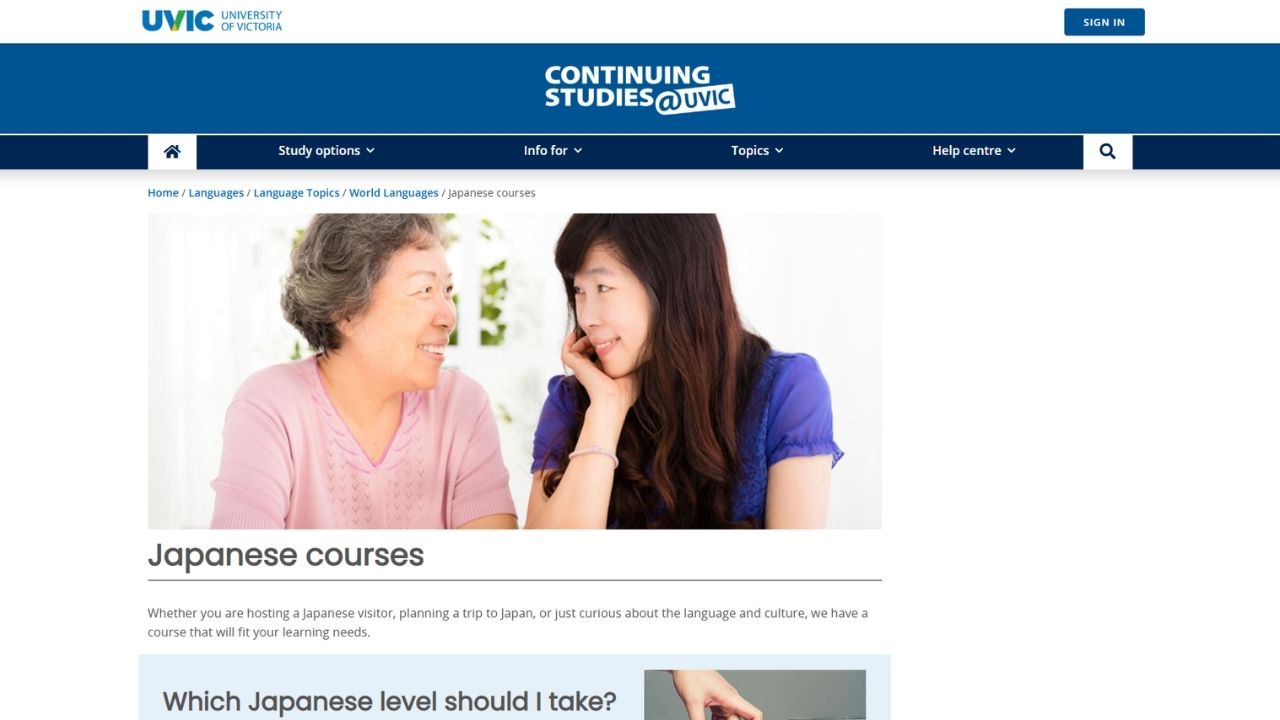
The University of Victoria’s Continuing Studies offers a variety of Japanese language courses designed for adult learners. These courses cater to different proficiency levels, from complete beginners to intermediate students. The programs focus on developing practical communication skills in speaking, listening, reading, and writing, while also introducing students to Japanese culture and customs. The flexible format makes these courses accessible for working professionals and individuals across Canada who prefer structured, instructor-supported learning.
Additional Helpful Information for Canadians in 2026
JLPT Certification: The Most Important Japanese Language Qualification
The Japanese Language Proficiency Test (JLPT) is the globally recognized certification for Japanese language ability. Most employers and institutions in Japan and Canada recognize it.
| JLPT Level | Description | Recommended Study Time (from zero) | Best For |
|---|---|---|---|
| N5 | Basic Japanese | 3–6 months | Absolute beginners |
| N4 | Elementary Japanese | 6–9 months | Basic daily conversations |
| N3 | Intermediate Japanese | 12–18 months | Everyday life + simple work |
| N2 | Pre-Advanced | 18–30 months | Work and study in Japan |
| N1 | Advanced | 30+ months | Professional or academic use |
Tip: Most Canadian employers value N2 or N3 for roles involving Japanese language skills.
Career Benefits of Learning Japanese in Canada
Learning Japanese can open doors to various opportunities in Canada:
| Career Area | Why Japanese Helps | Salary Potential |
|---|---|---|
| International Business & Trade | Canada-Japan trade relations are strong | $75,000 – $110,000+ |
| Tourism & Hospitality | Growing number of Japanese tourists | $50,000 – $75,000 |
| Translation & Interpretation | High demand for English ↔ Japanese | $65,000 – $95,000 |
| Tech & Gaming Industry | Many Japanese companies have Canadian offices | $80,000 – $120,000+ |
| Education & Teaching | Teaching English in Japan or Japanese in Canada | $55,000 – $85,000 |
| Government & Diplomacy | Roles involving Japan-Canada relations | $70,000 – $100,000+ |
Recommended Learning Path for Canadians
| Stage | Goal | Recommended Approach | Time Estimate |
|---|---|---|---|
| 1 | Build strong foundations | Coursera Japanese Language 1 + Udemy Complete Japanese Course | 4–6 months |
| 2 | Reach conversational level | Japanese Canadian Cultural Centre or UVic courses | 6–10 months |
| 3 | Prepare for JLPT N5 / N4 | Consistent practice + JLPT-specific materials | 3–6 months |
| 4 | Reach intermediate (N3/N2) | University of Toronto or self-study + immersion | 12–18 months |
| 5 | Achieve fluency | Living in Japan, language exchange, or advanced courses | 2+ years |
Common Challenges for English Speakers & How to Overcome Them
Japanese is considered one of the more difficult languages for English speakers. Here are the main challenges:
- Three writing systems (Hiragana, Katakana, and Kanji) — Start with Hiragana and Katakana first.
- Grammar structure is very different from English — Focus on sentence patterns rather than translating word-for-word.
- Politeness levels (formal vs casual speech) — Learn basic polite forms early.
- Lack of immersion in Canada — Use Japanese media (anime, dramas, music, podcasts) daily.
Pro Tip: Many successful learners combine structured courses with daily immersion (watching Japanese shows with subtitles, using language exchange apps like HelloTalk or Tandem).
Free & Low-Cost Resources to Supplement Your Studies
While the courses above are excellent, these free or affordable tools can accelerate your progress:
| Resource | Type | Best For | Cost |
|---|---|---|---|
| Anki | Flashcards | Kanji & Vocabulary | Free |
| HelloTalk / Tandem | Language Exchange | Speaking practice | Free |
| Tae Kim’s Guide | Grammar | Clear grammar explanations | Free |
| NHK World Japanese Lessons | Video lessons | Beginner-friendly content | Free |
| Wanikani | Kanji | Learning Kanji effectively | Free + Paid |
| JapanesePod101 | Audio lessons | Listening & speaking | Free + Paid |
Quick Decision Guide: Which Course Should You Choose?
| Your Situation | Best Course Recommendation | Reason |
|---|---|---|
| Complete beginner wanting structure | Coursera – Japanese Language 1 | Clear progression and good explanations |
| Want maximum value for money | Udemy – Complete Japanese Course for Beginners | Affordable with lots of content |
| Prefer Canadian instructors & community | Japanese Canadian Cultural Centre or UVic | Local support and cultural connection |
| Want university-level quality | University of Toronto Japanese Courses | Academic standard and recognition |
| Want flexibility and self-paced learning | Udemy courses or Coursera | Study anytime, anywhere |
| Interested in JLPT preparation | Combine Coursera + structured grammar resources | Balanced foundation for certification |
Conclusion
All the Japanese language courses listed above offer valuable opportunities for Canadian learners.
While each course has unique advantages, we highly recommend Coursera’s Japanese Language 1 for its structured and accessible approach to learning Japanese from the beginning.
Our second pick is Udemy’s Complete Japanese Course: Learn Japanese for Beginners, as it provides strong practical value and focuses on real-life communication skills.
Ultimately, your choice of course will depend on your goals, learning style, and current level. Whichever course you choose, you will gain valuable language skills and a deeper appreciation for Japanese culture and society.