Key Takeaways
- The fastest realistic route to the trade credential is paid kitchen work plus the challenge exam for the Red Seal Cook: roughly 3 or more years of full-time hours, then, in the Ontario example, a $235 + HST Trade Equivalency Assessment and a $150 + HST exam sitting; chef roles come with experience after that.
- No licence is required to work as a cook in Ontario, British Columbia or Alberta: certification is voluntary through Skilled Trades Ontario, SkilledTradesBC and Alberta's Apprenticeship and Industry Training (AIT), and the Red Seal Cook Endorsement adds national mobility.
- The Science of Gastronomy from The Hong Kong University of Science and Technology is a 2-week online course at 10 hours a week; it does not qualify you for Red Seal Cook certification or any trade credential, but it tests your interest at no listed tuition cost.
- Chefs are reported under NOC 62200, separate from the Cook trade (NOC 63200), and earn a median of $23.00 per hour in Canada according to Job Bank wage data, from $19.00 in New Brunswick and Nova Scotia to $24.00 in Quebec.
- Fiona's verdict: this path suits hands-on learners who want to earn while they train; start with a short Coursera course, then move to paid kitchen work or a diploma such as SAIT's Culinary Arts program, and grow into chef roles with experience.
A chef plans and directs food preparation and cooking activities, and prepares and cooks meals and specialty foods. The trade credential in this field belongs to the Cook trade, not to a chef licence: cook certification is voluntary in Ontario, British Columbia and Alberta, and chef roles come with kitchen experience.
The fastest realistic route to the credential is paid kitchen work followed by the Red Seal Cook challenge exam: roughly three or more years of full-time hours, then, in the Ontario example, a $235 + HST assessment and a $150 + HST exam. A short online course lets you test the field before you commit tuition money.
What Are The Ways To Become A Chef In Canada?
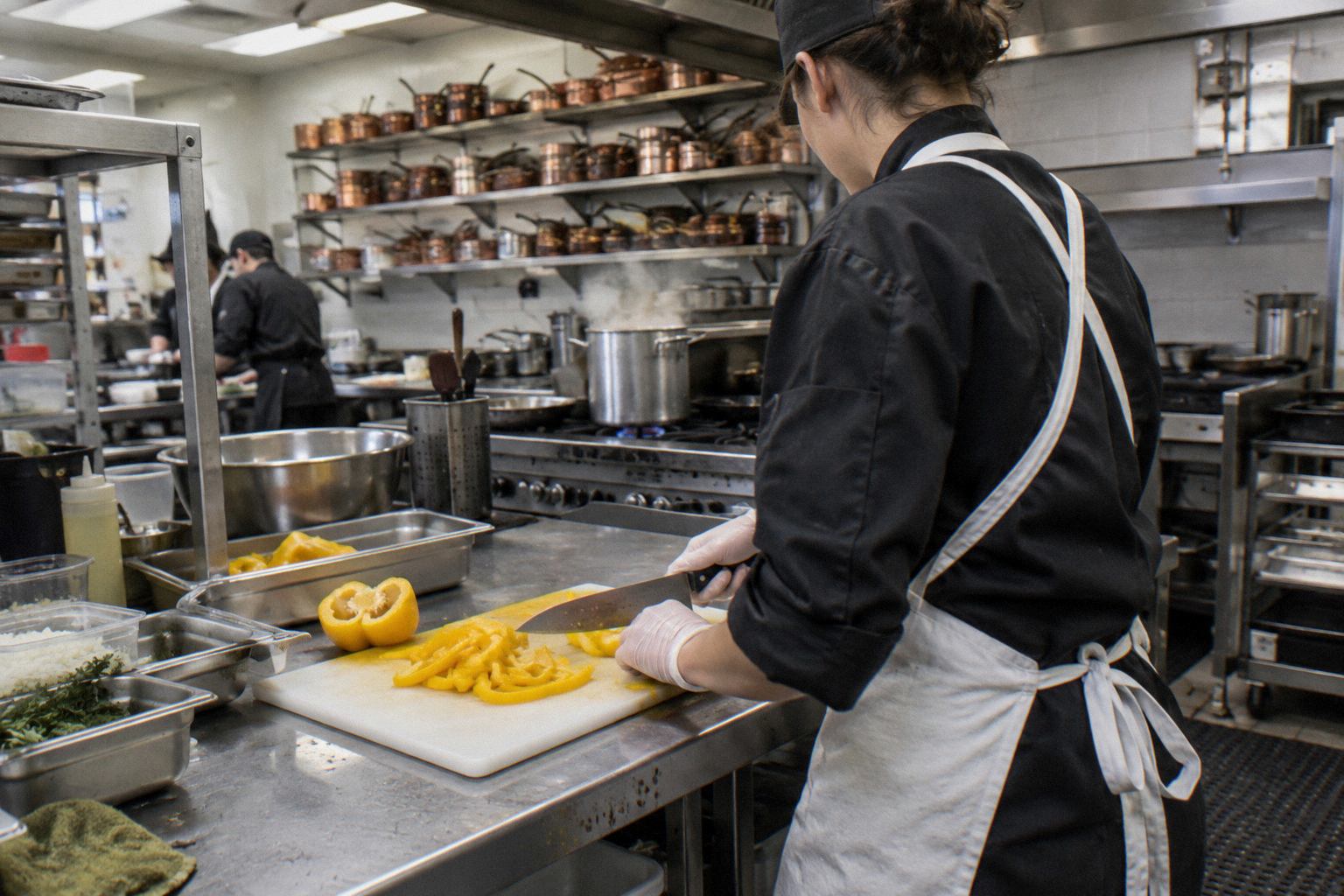
Becoming a chef in Canada runs through three main routes, and the trade credentials in all of them belong to the Cook trade; chef roles follow with kitchen experience. The routes differ sharply in time, cost and whether you get paid along the way, and a short online course can be a try-first step.
| Route | Time | Cost (CAD) | What You Get | Recognised By | Best For |
|---|---|---|---|---|---|
| The Science of Gastronomy as a try-first step | 2 weeks at 10 hours a week | Not listed | Shareable certificate, not trade certification | Not listed | Testing whether a kitchen career actually appeals to you |
| Apprenticeship | 3 years (5000 hours on-the-job + technical training blocks) | Varies by province and institution; technical training fees apply; on-the-job work is paid | Certificate of Qualification + Red Seal Endorsement | Provincial and territorial apprenticeship authorities and the Canadian Council of Directors of Apprenticeship (CCDA) | Earning while you learn the trade |
| Culinary diploma then experience | 2 years diploma + work experience | Varies, e.g. SAIT Culinary Arts diploma; Red Deer Polytechnic Year 1 is $6,840 (estimate) | Diploma + possible Red Seal via challenge | Provincial authorities and the Red Seal program | School-first learners who want structured training |
| Challenge exam (trade qualifier) | Accumulate required hours (typically 5000 to 9000), then exam | Varies by province; $235 assessment + $150 exam in the Ontario example | Certificate of Qualification + Red Seal Endorsement | Provincial apprenticeship authorities and the Red Seal program | Experienced cooks already working in kitchens |
I recommend the apprenticeship route for most clients because the on-the-job portion is paid, and the Coursera first step for anyone who has never worked a dinner rush and is unsure the trade suits them.
What Is The Fastest Way To Become A Chef In Canada?
The fastest way to become a chef in Canada runs through the Cook trade: the challenge exam path for trade qualifiers, because every hour is paid work and there is no tuition bill up front. Chef roles come with the experience those hours create.
- Get hired in a kitchen and log full-time hours. The Red Seal Cook trade profile asks for typically 5000 to 9000 hours, so plan on 3 or more years of paid work at no tuition cost.
- Apply to your provincial apprenticeship authority to challenge the exam as a trade qualifier. Processing takes roughly 4 to 12 weeks.
- Pay the assessment step in provinces that require it. In Ontario, the Trade Equivalency Assessment costs $235 + HST.
- Sit the Red Seal Cook exam, which has 150 questions, and score at least 70% to pass. In Ontario the exam fee is $150 + HST, and apprentices who completed their program on or after January 1, 2025 get the first attempt free.
- Receive your Certificate of Qualification and Red Seal Endorsement, recognised by provincial apprenticeship authorities and the Canadian Council of Directors of Apprenticeship. Chef roles come with experience after that.
Do You Need Red Seal Cook Certification To Work In Canada?
Red Seal Cook certification is not required to work in the provinces our research covers. The credential belongs to the Cook trade, not to a chef licence, and chef roles come with kitchen experience. Certification is voluntary, which means you can legally work in the trade without it.
| Province | Required? | Regulator Or Registry | What It Means |
|---|---|---|---|
| Ontario | No, voluntary | Skilled Trades Ontario | Cook (415A) is a voluntary trade: you can legally work in it without certification |
| British Columbia | No, voluntary | SkilledTradesBC | Trade certification for cooks is available through SkilledTradesBC but is not mandatory for employment |
| Alberta | No, voluntary | Apprenticeship and Industry Training (AIT) | You do not have to be certified if you are self-employed or work for an employer satisfied with your skills and knowledge |
The Red Seal Endorsement is still worth pursuing once you have the hours. The Canadian Council of Directors of Apprenticeship (CCDA) recognises the Red Seal Occupational Standard for the Cook trade, and the endorsement moves with you across provinces instead of stopping at a border.
Keep the two occupations straight when you plan. The Red Seal standard lists Cook under NOC 63200, while Job Bank reports chefs separately under NOC 62200; you train and certify as a cook, then grow into chef roles with experience. Employers still expect real knife skills, food safety habits and the stamina of a service shift: certification is optional paperwork, competence is not.
Which Chef Classes And Culinary Courses Are Worth Taking?
Chef classes split into three tiers: short online courses with no Coursera tuition listed in this comparison and Udemy prices not shown (often on sale), some college certificates such as Okanagan's that include apprenticeship credit, and two-year diplomas that cost real tuition money.
The Science of Gastronomy
The Science of Gastronomy is a 2-week (10 hours a week) online course from The Hong Kong University of Science and Technology with a 4.6 rating from 794 reviews.
| Provider | The Hong Kong University of Science and Technology |
|---|---|
| Length | 2 weeks at 10 hours a week |
| Rating | 4.6 (794 reviews) |
| Credential | Shareable certificate |
| Format | online |
Fiona's take: This is the course I point clients to first, because it explains why cooking works, from heat transfer to taste perception, at no listed tuition cost beyond the platform's model. It will not teach you to hold a knife or survive a Friday service, and it does not qualify you for any trade certification. What it does is confirm, in two weeks, whether the subject genuinely interests you before you spend tuition money.
Skip it if: Skip it if you already work in a kitchen and need hands-on skills or an apprenticeship pathway instead of theory.
Start On CourseraFood Sustainability, Mindful Eating, and Healthy Cooking Specialization
Food Sustainability, Mindful Eating, and Healthy Cooking Specialization is a 4-week (10 hours a week) online specialization from Stanford Online rated 4.8 from 626 reviews.
| Provider | Stanford Online |
|---|---|
| Length | 4 weeks at 10 hours a week |
| Rating | 4.8 (626 reviews) |
| Credential | Career certificate from Stanford Online |
| Format | online |
Fiona's take: This Stanford Online specialization awards a career certificate from Stanford Online, and its four weeks lean toward food sustainability and mindful eating rather than restaurant technique. Its focus is mindful, sustainable food choices that support health, not line-cook skills. It is still not trade training and carries no Red Seal weight.
Skip it if: Skip it if your goal is classic restaurant kitchen work; a knife-skills course or the apprenticeship route serves you better.
Start On CourseraStanford Introduction to Food and Health
Stanford Introduction to Food and Health is a 1 to 4 week online course from Stanford University rated 4.7.
| Provider | Stanford University |
|---|---|
| Length | 1-4 weeks |
| Rating | 4.7 (not exact count shown) |
| Credential | Shareable certificate |
| Format | online |
Fiona's take: Stanford University's entry course is one of the shorter online options on this list for sampling food science and healthy cooking fundamentals. I recommend it for career changers who want a quick, credible first credential before deciding on a 50-week certificate or a 2-year diploma. Like the other Coursera options, it is interest and knowledge, not a trade qualification.
Skip it if: Skip it if you have already completed any cooking course, because the introductory material will overlap.
Start On CourseraEssential Cooking Skills
Essential Cooking Skills is a 1.5-hour online video course from Viorel Copolovici on Udemy, rated 4.7 from 4,467 ratings, with cost not shown (often on sale around $17 USD).
| Provider | Viorel Copolovici |
|---|---|
| Length | 1.5 total hours |
| Cost (CAD) | not shown (often on sale ~$17 USD) |
| Rating | 4.7 (4,467 ratings) |
| Credential | Udemy certificate of completion |
| Format | online |
Fiona's take: For a weekend cook deciding whether restaurant work could be fun, 1.5 hours of basic technique is a fast, low-commitment test. It is a Udemy certificate of completion, which carries no weight with Skilled Trades Ontario, SkilledTradesBC or any apprenticeship authority. Use it to practise knife grips and basic methods at home, not as a career credential.
Skip it if: Skip it if you already cook regularly and would learn more from an in-person program such as Okanagan College's certificate.
View On UdemyCooking 101: Kitchen Basics to Advanced
Cooking 101: Kitchen Basics to Advanced is a 5-hour online course from James Makinson on Udemy, rated 4.8 from 1,262 ratings, with cost not shown (often on sale).
| Provider | James Makinson |
|---|---|
| Length | 5 total hours |
| Cost (CAD) | not shown (often on sale) |
| Rating | 4.8 (1,262 ratings) |
| Credential | Udemy certificate of completion |
| Format | online |
Fiona's take: Five total hours of progressing from kitchen basics to more advanced material makes this a decent bridge before a college certificate, especially for someone who has never worked professionally. It is still a Udemy certificate of completion and does not lead to Professional Cook levels or any apprenticeship credit. Pair it with actual kitchen work if you want anything to show an executive chef.
Skip it if: Skip it if you are ready to enrol in a college program; you will cover this material in week one there.
View On UdemyCulinary Arts Certificate
Culinary Arts Certificate from Okanagan College is a 50-week (1,500 hour) in-person program in BC.

| Provider | Okanagan College |
|---|---|
| Length | 50 weeks (1,500 hour) |
| Credential | Certificate; Apprenticeship credit for Professional Cook Level 1 and 2 |
| Format | in person, BC |
Fiona's take: This BC certificate stands out because it carries apprenticeship credit for Professional Cook Level 1 and Level 2, a genuine head start on the certification ladder. Fifty weeks is a serious commitment, but it lands you partway to journeyperson status instead of starting from zero. I recommend it for students who can attend in BC and want apprenticeship credit for Professional Cook Level 1 and 2.
Skip it if: Skip it if you cannot attend in person in the Okanagan, or if you already hold Professional Cook Level 1 through work experience.
See Program DetailsCulinary Arts Diploma
Culinary Arts Diploma from Red Deer Polytechnic is a 2-year in-person program in Alberta, with domestic tuition estimated at $6,840 in Year 1 and $5,130 in Year 2, plus additional fees.
| Provider | Red Deer Polytechnic |
|---|---|
| Length | 2 Years |
| Cost (CAD) | Domestic Year 1 $6,840; Year 2 $5,130 (estimate, additional fees apply) |
| Credential | Diploma |
| Format | in person, AB |
Fiona's take: Red Deer Polytechnic's pricing, with domestic tuition of $6,840 in Year 1 and $5,130 in Year 2, is among the clearest in this list, and Alberta's apprenticeship system sits behind it. The estimate basis means you should confirm current fees before applying, but the structure of a two-year diploma plus work experience leading to a possible Red Seal challenge is sound. It suits Albertans who want the full school-first experience.
Skip it if: Skip it if total tuition is your binding constraint; the apprenticeship route avoids a five-figure bill.
See Program DetailsCulinary Arts - Certificate
Culinary Arts - Certificate from Selkirk College is a 14-month in-person program in BC, with international 2026/27 tuition and fees around $21,710.
| Provider | Selkirk College |
|---|---|
| Length | 14 Months |
| Cost (CAD) | International 2026/27 ~$21,710 (tuition + fees) |
| Credential | Certificate |
| Format | in person, BC |
Fiona's take: Selkirk's published figure of roughly $21,710 for international students in 2026/27 makes the international cost of a 14-month certificate plain, which is useful when comparing BC options. Domestic pricing is not listed here, so Canadian students should ask the college directly. Fourteen months is a middle path: longer than Okanagan's certificate run of training, shorter than a two-year diploma.
Skip it if: Skip it if you are a domestic student who needs a confirmed tuition figure before applying, since only the international estimate is published.
See Program DetailsCulinary Management (Co-op) Diploma
Culinary Management (Co-op) Diploma from Conestoga College is a 2-year in-person and hybrid program with co-op terms in Ontario, leading to an Ontario College Diploma.
| Provider | Conestoga College |
|---|---|
| Length | 2 years |
| Credential | Ontario College Diploma |
| Format | in person/hybrid (co-op), ON |
Fiona's take: It is a 2-year in-person/hybrid co-op Ontario College Diploma, and the diploma can precede a Red Seal Cook challenge once the required hours accumulate. It is not a Certificate of Qualification: cook certification through Skilled Trades Ontario remains a separate, voluntary step. I recommend it for Ontario students who want management-track training rather than pure line-cook skills.
Skip it if: Skip it if you want the fastest entry to a kitchen; direct employment plus a challenge exam gets you there sooner.
See Program DetailsCulinary Arts Diploma
Culinary Arts Diploma from Vancouver Community College is a 17-month in-person program in BC.
| Provider | Vancouver Community College |
|---|---|
| Length | 17 months |
| Credential | Diploma |
| Format | in person, BC |
Fiona's take: Seventeen months at VCC gets you an in-person diploma in BC. VCC does not publish tuition in the material we reviewed, so request the current fee schedule. The diploma can precede a Red Seal Cook challenge once you accumulate the required hours.
Skip it if: Skip it if you are outside Vancouver and cannot relocate for under two years.
See Program DetailsCulinary Arts
Culinary Arts from Lethbridge Polytechnic is a 2-year in-person diploma program in Alberta.

| Provider | Lethbridge Polytechnic |
|---|---|
| Length | 2 years |
| Credential | Diploma |
| Format | in person, AB |
Fiona's take: Lethbridge Polytechnic gives southern Albertans a diploma option closer to home than Calgary's SAIT, with the same province behind it: Alberta's Apprenticeship and Industry Training system and its voluntary cook certification. Tuition is not listed in the material we reviewed, so confirm costs with the institution. Two years of school-first training suits students who want depth before their first paid shift.
Skip it if: Skip it if you would rather be paid to learn; the apprenticeship route in Alberta lets the employer carry the training.
See Program DetailsCulinary Arts Diploma
Culinary Arts Diploma from LaSalle College Vancouver is a 12 to 18 month (4 to 6 quarters, 1001 hours) hybrid program in BC.

| Provider | LaSalle College Vancouver |
|---|---|
| Length | 12-18 months (4-6 quarters, 1001 hours) |
| Credential | Diploma |
| Format | hybrid, BC |
Fiona's take: LaSalle's hybrid 12 to 18 month format (4 to 6 quarters, 1001 hours) may suit students comparing schedule options alongside full-time in-person programs. Tuition is not listed in the material we reviewed, so ask the college for current figures. The diploma itself does not confer Red Seal status; you still need the hours and the exam.
Skip it if: Skip it if you want the apprenticeship credit for Professional Cook Level 1 and 2 that Okanagan College provides.
See Program DetailsHow Much Does Chef Training Cost In Canada?
Chef training costs run from no listed tuition for the Coursera courses and Udemy prices not shown, to five figures for college diplomas. Apprenticeship includes paid on-the-job work, but technical training fees apply and costs vary by province and institution.
| Item | Amount (CAD) | Notes |
|---|---|---|
| Coursera courses (e.g. The Science of Gastronomy) | Not listed | 2 weeks at 10 hours a week; no trade value |
| Udemy courses (e.g. Essential Cooking Skills) | Not shown (often on sale around $17 USD) | 1.5 to 5 total hours |
| Red Seal Cook exam, Ontario example | $150 + HST per attempt | First attempt free for apprentices who completed their program on or after January 1, 2025 |
| Trade Equivalency Assessment, Ontario | $235 + HST | Assessment step before challenging |
| Apprenticeship technical training | Varies by province and institution | On-the-job portion is paid |
| Red Deer Polytechnic Culinary Arts Diploma | Year 1 $6,840; Year 2 $5,130 | Domestic estimate; additional fees apply |
| Selkirk College Culinary Arts - Certificate | About $21,710 | International 2026/27 tuition plus fees |
| SAIT Culinary Arts diploma | Not listed | 2-year program; request current fees |
The Ontario fee pair of $235 + HST and $150 + HST is the clearest published challenge-exam pricing we found, and the post-2025 first-attempt exemption for eligible apprentices lowers it further. Other provinces set their own assessment and exam fees, so check your provincial apprenticeship authority before budgeting.
Diploma tuition is the big variable. Red Deer Polytechnic's domestic estimate of $6,840 plus $5,130 sits well below Selkirk College's international figure of about $21,710, which shows how much the domestic and international streams differ. Always request the current fee schedule; several institutions in this comparison do not publish tuition in the material we reviewed.
How Much Does A Chef Earn In Canada?
Chefs in Canada earn a median of $23.00 per hour, according to Job Bank wage data for NOC 62200 (latest update November 19, 2025), with a national spread from $16.03 at the low end to $32.69 at the high end.
| Province | Median Hourly (NOC 62200) |
|---|---|
| Canada | $23.00 |
| Ontario | $22.00 |
| British Columbia | $23.75 |
| Alberta | $23.00 |
| Quebec | $24.00 |
| Saskatchewan | $20.19 |
| Manitoba | $21.25 |
| New Brunswick | $19.00 |
| Nova Scotia | $19.00 |
| Newfoundland and Labrador | $22.00 |
Quebec leads the provinces listed at $24.00 per hour, with British Columbia close behind at $23.75, while New Brunswick and Nova Scotia sit at $19.00. That gap between the top and bottom provinces compounds quickly over full-time work, and it is the kind of arithmetic that should inform where you train and where you stay.
Job Bank lists a national range from $16.03 to $32.69 per hour for NOC 62200 in the same November 19, 2025 update. Keep the occupations separate: these figures cover chefs, while the Red Seal standard lists the Cook trade under NOC 63200, so chef wages and cook wages are different data sets. The apprenticeship route at least pays you for the on-the-job hours while you build experience.
Is Becoming A Chef Worth It In 2026?
Becoming a chef is worth it in 2026 if you value paid training and hands-on work, because cook certification is voluntary in Ontario, British Columbia and Alberta, which means you can start earning in the trade without first buying a credential. No tuition bill stands between you and your first kitchen job in those provinces.
The Red Seal Cook challenge route is the sharpest value on paper: paid hours for 3 or more years, then $235 + HST plus $150 + HST in the Ontario example, and you hold a Certificate of Qualification with a Red Seal Endorsement that the CCDA recognises across provincial lines. Against that, a two-year diploma costing $6,840 in Year 1 and $5,130 in Year 2 in domestic tuition at Red Deer Polytechnic makes sense mainly for students who need classroom structure.
The honest counterweight is the wage ceiling. A median of $23.00 per hour for chefs under NOC 62200, in the latest Job Bank data, is a modest return on years of physical work, so I tell clients to use short Coursera options such as The Science of Gastronomy as a screening step before committing to tuition or a multi-year route; platform costs are not listed in the material we reviewed.
Can You Get Funding For Chef Training?
Funding for chef training exists mainly through the federal apprenticeship system for the Cook trade, and one option listed is a loan, which means repayment, not a grant.
- Canada Apprentice Loan. The Canada Apprentice Loan is the funding option listed in the material we reviewed, alongside tax deductions and credits for apprentices and tradespersons. It is a loan, so confirm current loan terms, including repayment, before relying on it.
Chef Training Questions Canadians Ask
How Long Does It Take To Become A Chef In Canada?
Becoming a chef typically starts with cook training: about 3 years through the apprenticeship route, which combines 5000 hours on the job with technical training blocks. A culinary diploma takes 2 years plus work experience, and the challenge route depends on how quickly you accumulate the required hours. Chef roles come with experience; there is no exam that hands you the title directly.
Is Red Seal Certification Mandatory To Work As A Cook In Canada?
Red Seal certification is not mandatory for cook employment in the provinces we reviewed. Skilled Trades Ontario lists Cook (415A) as a voluntary trade, SkilledTradesBC offers certification but does not require it, and Alberta's Apprenticeship and Industry Training does not require certification for suitable experienced workers. The endorsement's value is national mobility and credibility, not legal permission to cook.
What Does The Red Seal Cook Exam Cost?
The Red Seal Cook exam cost varies by province. In Ontario, the exam is $150 + HST per attempt, and the Trade Equivalency Assessment that precedes it is $235 + HST. Apprentices who completed their program on or after January 1, 2025 get the first attempt free. Confirm current fees with your provincial apprenticeship authority before booking.
What NOC Code Is Used For Chefs In Canada?
The NOC code for chefs in Canada is 62200. Job Bank wage reporting for NOC 62200 shows a median of $23.00 per hour nationally, with provincial medians from $19.00 in New Brunswick and Nova Scotia to $24.00 in Quebec. The Cook trade is listed separately under NOC 63200 on the Red Seal standard, so keep the two codes apart.
How Do I Become A Chef In Ontario?
Becoming a chef in Ontario starts with completing secondary school, then choosing either a cook apprenticeship or a culinary diploma such as Conestoga College's Culinary Management (Co-op) Diploma. You can legally work as a cook without certification because Cook (415A) is a voluntary trade under Skilled Trades Ontario. Many cooks later challenge the exam for the Red Seal, and chef roles follow with experience.
What Are SAIT Culinary Courses?
SAIT culinary courses centre on a 2-year Culinary Arts diploma with hands-on training in foundational cooking, patisserie and management. Graduates receive a SAIT Culinary Arts diploma, which can precede a Red Seal Cook challenge once the required work hours accumulate. Tuition is not listed in the material we reviewed, so request the current fee schedule from SAIT directly.
What Is The Median Wage For Chefs In Canada?
The median wage for chefs in Canada is $23.00 per hour, according to Job Bank wage data for NOC 62200, latest update November 19, 2025. The national range runs from $16.03 at the low end to $32.69 at the high end. Provincial medians include $22.00 in Ontario, $23.75 in British Columbia, $23.00 in Alberta and $24.00 in Quebec.
What's The Bottom Line On Becoming A Chef In Canada?
- Cook certification is voluntary in Ontario, British Columbia and Alberta, so paid kitchen work can start immediately with no tuition bill in front of it.
- The trade credential here is the Red Seal Cook, listed under NOC 63200; the challenge route builds on 3 or more years of paid hours, then $235 + HST plus $150 + HST in the Ontario example, and costs vary by province.
- Chefs are reported separately under NOC 62200 and earn a median of $23.00 per hour in Canada, from $19.00 in New Brunswick and Nova Scotia to $24.00 in Quebec, according to Job Bank wage data.
- Start with The Science of Gastronomy for a two-week, 10-hours-a-week test of your interest; it does not qualify you for any trade certification, but it protects you from spending tuition money on the wrong career.
- If you want classroom structure, the diplomas worth comparing are SAIT Culinary Arts, Red Deer Polytechnic at an estimated $6,840 plus $5,130 domestic, Vancouver Community College's 17-month diploma, and Conestoga's co-op option in Ontario.






