Key Takeaways
- The fastest credential route is the one-year Certificate in Introductory Agriculture at the University of Saskatchewan, offered online or on its main campus, though Job Bank says a university degree is usually required for agricultural representative and specialist roles (NOC 21112).
- Most agriculture roles are not subject to mandatory licensing, but requirements can apply by province or activity, such as pesticide applicator certification and Quebec's professional agronomist order.
- Coursera's Supply Chain of Agriculture from the University of Illinois Urbana-Champaign takes about 1 week at 10 hours a week and earns a course certificate, but it does not substitute for a college diploma or a university degree.
- Agricultural representatives, consultants and specialists (NOC 21112) earn a median of $40.00 per hour in Canada, from $25.72 at the low end to $55.29 at the high end, with British Columbia at a $42.34 median and Quebec at $41.25, per Job Bank wage figures.
- Fiona's verdict: start with a short Coursera course to test your interest, then take the USask certificate or an Olds College diploma if you want a Canadian credential, and the 4-year degree if you are aiming at NOC 21112 specialist roles.
An agricultural representative, consultant or specialist advises farmers on cultivation, fertilization, harvesting, soil composition, disease prevention, crop rotation and marketing, working for businesses, governments or themselves. Getting there in Canada means choosing between a 1-year certificate, a 2-year diploma or a 4-year degree.
The shortest realistic route is the 1-year Certificate in Introductory Agriculture at the University of Saskatchewan, which you can take online straight from high school. Job Bank says NOC 21112 specialist roles usually require a university degree, so I tell clients to use Coursera first, then pick the credential that matches the job they actually want.
What Are The Ways To Study Agriculture In Canada?
Agriculture training in Canada runs from one-week online courses to four-year degrees, and the route you pick should match the job you want.
| Route | Time | Cost (CAD) | What You Get | Recognised By | Best For |
|---|---|---|---|---|---|
| Supply Chain of Agriculture | 1 week at 10 hours a week | Not listed | Coursera Course Certificate | Not listed | Testing the field before committing |
| Coursera courses (Agriculture, Economics and Nature, Land, Agriculture, and Alternative Investing) | 6 weeks, or 2 months at 10 hours a week | Not listed | Course and Specialization certificates | Not listed | Building theory before committing |
| Certificate (USask Introductory Agriculture, Lakeland College General Agriculture) | 1 year | Not listed | Certificate | University of Saskatchewan, Lakeland College | A base credential in one year |
| College diploma (Olds College, University of Manitoba, Guelph Ridgetown, UFV) | 2 years | Not listed | Diploma | Olds College and other Canadian colleges | Hands-on farm management careers |
| University degree (B.Sc. Agriculture, KPU Sustainable Agriculture) | 4 years | Not listed | Bachelor's degree | Job Bank and employers | NOC 21112 specialist and consultant roles |
I recommend the Coursera route for anyone unsure about the field, the USask or Lakeland certificate for a fast Canadian credential, and the 4-year degree for anyone set on NOC 21112 specialist roles.
What Is The Fastest Way To Start A Career In Agriculture In Canada?
The fastest credential path from high school is the one-year Certificate in Introductory Agriculture at the University of Saskatchewan, and you can start even sooner with a short online course.
- Finish high school with Biology 30, Chemistry 30 or Physics 30, the required science classes for the USask certificate.
- Spend one week on Coursera's Supply Chain of Agriculture at 10 hours a week to test whether the field holds your interest before you spend tuition money.
- Enrol in the one-year Certificate in Introductory Agriculture at the University of Saskatchewan, offered online or at the USask main campus, full- or part-time, directly from high school.
- Expect USask tuition of $876.90 per 3 credit unit class for Canadian students, plus student fees of $1,331.66 per year.
- Apply for entry-level roles, or keep working while you ladder into a 2-year diploma or a 4-year degree, since Job Bank says a university degree is usually required for NOC 21112 specialist roles.
Do You Need A Licence To Work In Agriculture In Canada?
Most agriculture roles are not subject to mandatory licensing, but requirements can apply by province or activity, such as pesticide applicator certification and Quebec's professional agronomist order.
Agricultural representatives, consultants and specialists (NOC 21112) are generally not a licensed occupation, so for most roles there is no exam to pass and no licence to renew. Employers hire on the strength of your education and experience, whether that is an Olds College diploma, a USask certificate or a B.Sc. in Agriculture. But the general rule has exceptions: pesticide applicator certification is required by province, and Quebec requires membership in the professional agronomist order.
With no single national standard, employers lean heavily on credentials they recognise, and Job Bank notes that this occupation usually requires a university degree. A Coursera certificate does not replace any provincial requirement that may apply to specific activities or professional titles. It is a way to learn the theory first, not a shortcut around provincial rules.
Which Agriculture Courses Are Worth Taking?
These are the courses I compare with clients, from one-week Coursera introductions to two-year Canadian diplomas.
Supply Chain of Agriculture
Supply Chain of Agriculture is a 1-week online course at 10 hours a week from the University of Illinois Urbana-Champaign that earns a Coursera Course Certificate.
| Provider | University of Illinois Urbana-Champaign |
|---|---|
| Length | 1 week at 10 hours a week |
| Rating | 4.8 (48 reviews) |
| Credential | Course Certificate |
| Format | online |
Fiona's take: With a 4.8 rating from 48 reviews, it is the most efficient first step I list for anyone curious about agriculture. It covers how farm output moves through the supply chain, which is business-side knowledge that complements field skills. No Canadian institutional or employer recognition is listed for this certificate, so treat it as an interest test and check the course page for audit or certificate pricing.
Skip it if: Skip it if you already work in agriculture and want a recognised Canadian credential, because this certificate will not do that job.
Start On CourseraAgriculture, Economics and Nature
Agriculture, Economics and Nature is a 6-week online course from the University of Western Australia that earns a Course Certificate.
| Provider | University of Western Australia |
|---|---|
| Length | 6 weeks |
| Rating | 4.7 (547 ratings) |
| Credential | Course Certificate |
| Format | online |
Fiona's take: It carries a 4.7 rating from 547 ratings, the largest review base among the online options here. The economics framing suits Canadians thinking about advisory work, since NOC 21112 roles blend agronomy with marketing and business advice. Six weeks is enough time to learn the theory without pausing your life.
Skip it if: Skip it if your interest is hands-on field work rather than the economics and policy side of farming.
Start On CourseraLand, Agriculture, and Alternative Investing
Land, Agriculture, and Alternative Investing is a 2-month Specialization at 10 hours a week from the University of Illinois Urbana-Champaign that earns a Specialization Certificate.
| Provider | University of Illinois Urbana-Champaign |
|---|---|
| Length | 2 months at 10 hours a week |
| Credential | Specialization Certificate |
| Format | online |
Fiona's take: This is the deepest of the Coursera options, aimed at how farmland and agriculture fit as investments. I suggest it for Canadians eyeing the agri-finance side of the field. Two months at 10 hours a week is a real commitment, so be sure the interest is there first.
Skip it if: Skip it if you want production agronomy, because this Specialization is about investing, not growing.
Start On CourseraAgriculture Business Management Masterclass
Agriculture Business Management Masterclass is a 5.5-hour on-demand video course from Udemy that earns a Certificate of Completion.
| Provider | Udemy |
|---|---|
| Length | 5.5 hours |
| Rating | 4.5 (1,200+ ratings) |
| Credential | Certificate of Completion |
| Format | online |
Fiona's take: It is rated 4.5 from 1,200+ ratings and covers the management side of running an ag operation. I point clients to it when they want a fast overview of farm business planning between bigger commitments. No Canadian institutional or employer recognition is listed for this certificate, so its value is the content, not the paper.
Skip it if: Skip it if you already hold a diploma like Olds College's Agricultural Management, which covers this ground in depth.
View On UdemySustainable Agriculture and Farming
Sustainable Agriculture and Farming is a 3-hour on-demand video course from Udemy that earns a Certificate of Completion.
| Provider | Udemy |
|---|---|
| Length | 3 hours |
| Rating | 4.6 (800+ ratings) |
| Credential | Certificate of Completion |
| Format | online |
Fiona's take: At 4.6 from 800+ ratings, this is a fast primer on sustainable practices. The course focuses on sustainable agriculture, and three hours makes it the shortest option I list. No Canadian institutional or employer recognition is listed for this Certificate of Completion, so judge it on what you learn.
Skip it if: Skip it if you want a credential an employer will recognise, and take the Lakeland or USask certificate instead.
View On UdemyGeneral Agriculture certificate
General Agriculture certificate is a 1-year in-person program at Lakeland College in Alberta that earns a Certificate.
| Provider | Lakeland College |
|---|---|
| Length | 1 year |
| Credential | Certificate |
| Format | in person, Alberta |
Fiona's take: Lakeland gives you a Canadian credential in one year, and its Alberta location puts you in the middle of Prairie agriculture. For clients who want to work in the industry right away rather than ladder toward a degree, this is a strong entry point. It is campus-based, so you need to be able to study in person.
Skip it if: Skip it if you need to study online, since this certificate is delivered in person.
See Program DetailsAgricultural Management Diploma
Agricultural Management Diploma is a 2-year in-person program at Olds College in Alberta that earns a Diploma.
| Provider | Olds College |
|---|---|
| Length | Two Years |
| Credential | Diploma |
| Format | in person, Alberta |
Fiona's take: Olds College teaches the program with classroom time plus hands-on experience on the Olds College Smart Farm, which is exactly the practical training employers ask about. Two years gets you an Olds College diploma. This is my default recommendation for clients serious about farm management careers.
Skip it if: Skip it if you are aiming at NOC 21112 specialist roles, where Job Bank says a university degree is usually required.
See Program DetailsDiploma in Agriculture
Diploma in Agriculture is a 2-year in-person program at the University of Manitoba that earns a Diploma.
| Provider | University of Manitoba |
|---|---|
| Length | 2 years |
| Credential | Diploma |
| Format | in person, Manitoba |
Fiona's take: A university-delivered diploma is a good middle path: university-level teaching without a 4-year commitment. The program is delivered in person in Manitoba. Pair it with entry-level work and you build experience alongside the credential.
Skip it if: Skip it if you are outside Manitoba and want the same credential closer to home, since the program is in person.
See Program DetailsAssociate Diploma in Agriculture
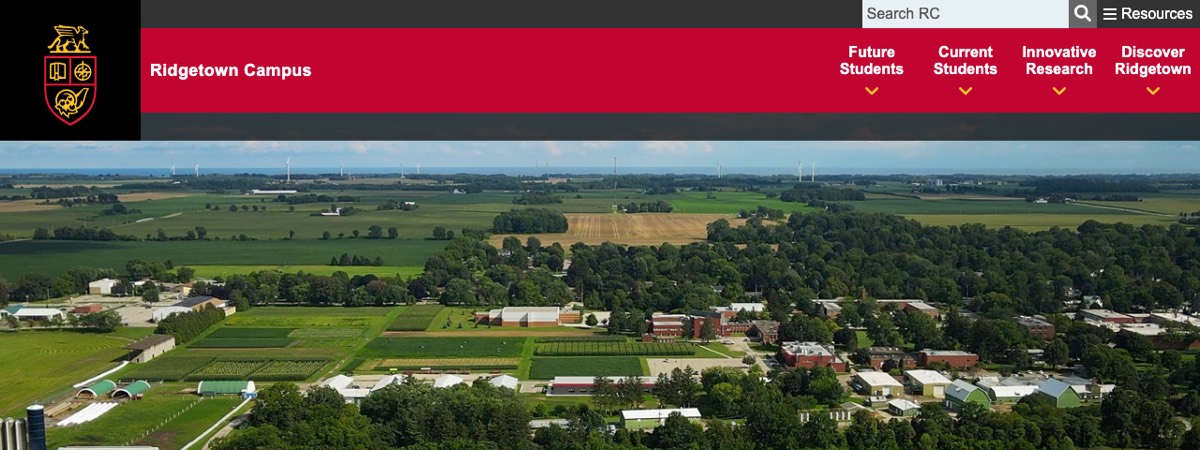
Associate Diploma in Agriculture is a 2-year in-person program at the University of Guelph, Ridgetown Campus in Ontario that earns an Associate Diploma.
| Provider | University of Guelph - Ridgetown Campus |
|---|---|
| Length | 2 years |
| Credential | Associate Diploma |
| Format | in person, Ontario |
Fiona's take: Guelph's Ridgetown Campus offers a two-year associate diploma route for Ontarians. I like it for clients who want a university-brand credential in a small campus setting without a 4-year commitment.
Skip it if: Skip it if you plan to work in Western Canada, where Olds College or Lakeland keep you closer to the Prairie industry.
See Program DetailsAgriculture Technology – diploma
Agriculture Technology, a 2-year in-person program at the University of the Fraser Valley in British Columbia, earns a Diploma.
| Provider | University of the Fraser Valley |
|---|---|
| Length | 2 years |
| Credential | Diploma |
| Format | in person, British Columbia |
Fiona's take: UFV sits in the Fraser Valley, one of Canada's most intensive farming regions, and the program focuses on agriculture technology. For BC clients who want a technology-focused diploma alongside production training, this fits. Two years keeps the door open to further study.
Skip it if: Skip it if pure business management rather than technology is your interest, in which case look at Olds College instead.
See Program DetailsBachelor of Applied Science in Sustainable Agriculture
Bachelor of Applied Science in Sustainable Agriculture is a 4-year in-person program at Kwantlen Polytechnic University in British Columbia that earns a Bachelor of Applied Science.

| Provider | Kwantlen Polytechnic University |
|---|---|
| Length | 4 years |
| Credential | Bachelor of Applied Science |
| Format | in person, British Columbia |
Fiona's take: KPU's degree is the route I suggest to BC clients targeting NOC 21112 roles, since Job Bank says those roles usually require a university degree. Four years is a serious commitment, and the program focuses on sustainable agriculture. A bachelor's degree is what Job Bank describes as usually required for this occupation.
Skip it if: Skip it if you want to start working within two years, in which case a diploma gets you into the industry sooner.
See Program DetailsHow Much Does An Agriculture Course Cost In Canada?
The only published figure I share with certainty is the University of Saskatchewan certificate, which charges per class rather than a flat program fee.
| Item | Cost (CAD) |
|---|---|
| USask Certificate in Introductory Agriculture tuition | $876.90 per 3 credit unit class (Canadian students) |
| USask student fees | $1,331.66 per year |
| College diplomas and degrees (Olds, Guelph Ridgetown, UFV, KPU, Manitoba) | Varies, check the program page |
| Coursera courses and Specializations | Not listed |
The USask certificate charges $876.90 per 3 credit unit class for Canadian students, plus $1,331.66 per year in student fees. Because the program runs one year and can be taken online, it is the credential route I can price most concretely, and clients should budget per class based on their course load.
The other programs in this comparison do not publish a single flat figure I can quote, so check each program page before applying. Coursera prices are not listed here either; check the course page for audit or certificate pricing. That is still why I put Coursera first: you find out whether agriculture interests you before committing to college tuition.
How Much Does An Agricultural Specialist Earn In Canada?
Agricultural representatives, consultants and specialists (NOC 21112) earn a median of $40.00 per hour across Canada, according to Job Bank wage figures.
| Region | Median ($/hour) | Low ($/hour) | High ($/hour) |
|---|---|---|---|
| Canada | 40.00 | 25.72 | 55.29 |
| British Columbia | 42.34 | 26.09 | 59.74 |
| Alberta | 40.01 | 26.90 | 62.67 |
| Saskatchewan | 38.46 | 25.38 | 63.97 |
| Manitoba | 33.65 | 20.00 | 43.75 |
| Ontario | 36.32 | 22.23 | 64.10 |
| Quebec | 41.25 | 25.72 | 52.30 |
| Nova Scotia | 34.46 | 25.93 | 50.37 |
| Prince Edward Island | 35.53 | 22.82 | 54.22 |
Job Bank lists NOC 21112 wages from $25.72 to $55.29 nationally, and it also says this occupation usually requires a university degree. I keep those two facts side by side for clients rather than promising that any one credential buys the top band, because nothing ties wage levels to specific credentials.
The provincial spread is real. British Columbia's median of $42.34 and Quebec's $41.25 sit well above Manitoba's $33.65, so where you work matters almost as much as what you study. Job Bank says the outlook varies by province, so check the provincial report before choosing where to settle.
Is An Agriculture Course Worth It In 2026?
For the right person, yes, and the numbers give a reason to look closely. A $40.00 national median wage for NOC 21112, with highs above $62 in Saskatchewan, Alberta and Ontario, makes the credential routes on this page worth weighing against their cost. Job Bank says the outlook varies by province, so check your own province before committing years to study.
Agriculture is also unusually forgiving of non-traditional paths. Because most roles are not subject to mandatory licensing, a certificate plus real farm experience can open doors that a licence framework would make harder in other fields. You can test the waters with Coursera's Supply Chain of Agriculture for a week, then decide whether a certificate, diploma or degree fits. Remember the exceptions: pesticide applicator certification is required by province, and Quebec requires membership in the professional agronomist order.
Where I tell clients to pause is when they want NOC 21112 specialist roles without the degree. Job Bank is clear that those positions usually require a university credential, so a short course alone will not get you there. Take the degree if that is the target; take the fast routes if you want to be in the industry sooner.
Can You Get Funding For Agriculture Training In Canada?
One federal program in the pack is Agriculture and Agri-Food Canada's Youth Employment and Skills Program (YESP), which I point younger clients to.
- Youth Employment and Skills Program (YESP). YESP provides non-repayable contributions, up to a maximum of $14,000, to agriculture and agri-food employers to hire youth aged 15 to 30. Up to an additional $5,000 per project may be provided to support youth participants who relocate. Note the structure: the money goes to the employer, not to you as tuition, but it makes hiring young Canadians cheaper and can open your first industry placement.
Agriculture Course Questions Canadians Ask
What Education Do I Need For Agriculture Jobs In Canada?
Education for agriculture jobs depends on the role. A university degree is usually required for agricultural representatives, consultants and specialists (NOC 21112), while college diplomas like Olds College's Agricultural Management or certificates like the USask Introductory Agriculture lead to management and operations careers.
What Is The Median Wage For Agriculturists In Canada?
The median wage for agricultural representatives, consultants and specialists (NOC 21112) is $40.00 per hour across Canada, according to Job Bank wage figures. The range runs from $25.72 at the low end to $55.29 at the high end nationally, with provincial medians from $33.65 in Manitoba to $42.34 in British Columbia.
What Are Popular Agriculture Courses In Alberta Or BC?
Examples in this guide from Alberta include the 2-year Agricultural Management Diploma at Olds College, and in BC Kwantlen Polytechnic University offers the 4-year Bachelor of Applied Science in Sustainable Agriculture. Other Alberta and BC options on this page include Lakeland College's General Agriculture certificate and the University of the Fraser Valley's Agriculture Technology diploma.
How Do I Get Hired In Agriculture Jobs In Canada?
Getting hired in agriculture jobs means completing relevant education, whether a degree, diploma or certificate, and gaining hands-on experience through internships or entry-level roles. Check Job Bank for openings in NOC 21112. Many roles value practical farm experience, so I tell clients to work a season while studying.
What Funding Is Available For Agriculture Training?
Funding for agriculture training includes the Youth Employment and Skills Program, which provides up to $14,000 in non-repayable contributions, plus up to $5,000 more for relocation and barriers, to agriculture and agri-food employers hiring youth aged 15 to 30. The contribution goes to the employer rather than to you as tuition.
Can I Take A Free Online Agriculture Course In Canada?
Free online agriculture options are not something I can verify, so I will not promise them. Coursera prices for the courses on this page, including Supply Chain of Agriculture and Agriculture, Economics and Nature, are not listed; check each course page for audit or certificate pricing. The University of Saskatchewan's Certificate in Introductory Agriculture is a paid Canadian credential, but it is offered online so you can study from anywhere in Canada.
Does An Agriculture Apprenticeship Exist In Canada?
A formal registered agriculture apprenticeship is not something I can confirm exists. What I can confirm is that some programs include hands-on experience, such as the Olds College Smart Farm component of the Agricultural Management Diploma. Pairing a credential with entry-level farm work is the closest practical path I recommend.
What's The Bottom Line On Agriculture Courses In Canada?
- Most agriculture roles are not subject to mandatory licensing, but requirements can apply by province or activity, such as pesticide applicator certification and Quebec's professional agronomist order.
- The fastest Canadian credential is the one-year Certificate in Introductory Agriculture at the University of Saskatchewan, at $876.90 per 3 credit unit class plus $1,331.66 in yearly student fees, offered online or on campus.
- Test the field first with Supply Chain of Agriculture, a one-week Coursera course from the University of Illinois Urbana-Champaign rated 4.8 from 48 reviews, before committing tuition to a diploma or degree.
- NOC 21112 pays a median of $40.00 per hour in Canada, with highs of $64.10 in Ontario and $63.97 in Saskatchewan, per Job Bank wage figures.
- My verdict: one week on Coursera, one year on the USask certificate if you want a credential fast, and the 4-year degree if NOC 21112 specialist roles are your target.