
Key Takeaways
- The fastest realistic route is BC's Health Career Access Program (HCAP), which pays your tuition plus a weekly living allowance and runs about 6 to 12 months end to end with no upfront cost.
- A registration or registry requirement depends on the province: Alberta requires registration with the College of Licensed Practical Nurses and Health Care Aides of Alberta (CLHA) effective February 2, 2026, and BC requires registration with the BC Care Aide & Community Health Worker Registry for any public health care setting.
- The try-first option is Foundations for Assisting in Home Care from The State University of New York on Coursera, 6 weeks at 10 hours a week; it does not qualify you for CLHA registration, the BC Registry or any provincial HCA certificate.
- Health care aides fall under NOC 33102 and earn a median of $24.00 per hour in Canada, rising to $27.89 in British Columbia, according to Job Bank.
- Fiona's verdict: if you are unsure about the field, test it with a Coursera course first; if you are committed and in BC, apply to HCAP, and if you are in Alberta, budget for the CLHA exam and permit fees.
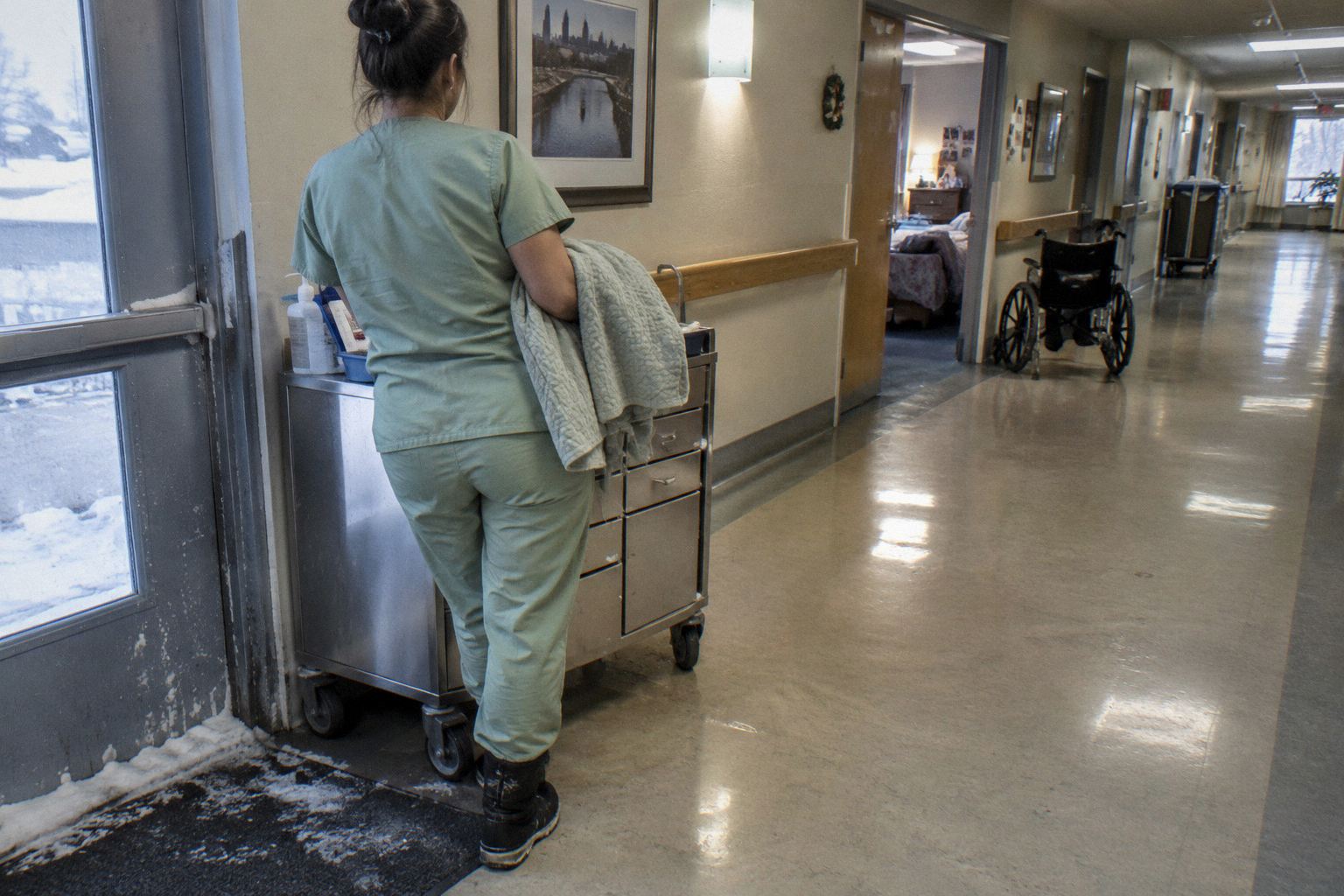
A health care aide (HCA) assists nurses, hospital staff and physicians in the basic care of patients, and works in hospitals, nursing homes, assisted care facilities for the elderly and other health care establishments. In Canada the title, training and registration rules shift by province: BC commonly uses health care assistant, and one Manitoba route combines Health Care Aide and Personal Support Worker.
The shortest realistic route is BC's Health Career Access Program (HCAP), which pays your tuition plus a weekly living allowance and can take you from applicant to registered care aide in under a year. Alberta is stricter since February 2026, when mandatory CLHA registration took effect. Before any of that, a Coursera course is a short online way to test the field, with its cost not listed.
What Are The Ways To Become A Health Care Aide In Canada?
This guide compares four common routes to become a health care aide: a Coursera course to test the field, a BC Registry-recognized HCA program, an Alberta HCA Provincial Curriculum program, and a Manitoba certificate through a college such as RRC Polytech.
| Route | Time | Cost (CAD) | What You Get | Recognised By | Best For |
|---|---|---|---|---|---|
| Foundations for Assisting in Home Care (Coursera, from The State University of New York) | 6 weeks at 10 hours a week | Not listed | Shareable certificate; no provincial credential | No provincial regulator or registry | Testing whether care work suits you |
| Alberta HCA Provincial Curriculum program (e.g. Red Deer Polytechnic) | 15-32 weeks | Varies (e.g. $12950 at one provider); CLHA permit $125, AHRE exam $315 | Alberta HCA certificate after passing the Provincial Alberta HCA Examination | Alberta government / CLHA | Working in Alberta after February 2026 registration rules |
| BC Health Care Assistant program (e.g. Vancouver Community College) | 6-10 months / 31 weeks | Varies; HCAP covers tuition | Post-secondary HCA certificate | BC Care Aide & Community Health Worker Registry | Working in any BC public health care setting |
| Manitoba Health Care Aide certificate (RRC Polytech or WRHA-recognized) | 6-12 months / 1 year | Varies; some paid training available | Health Care Aide and Personal Support Worker Certificate | WRHA / employers | Working in Winnipeg hospitals and care homes |
I recommend HCAP in BC for anyone starting from zero, the Alberta provincial curriculum for Albertans who are already committed, and a Coursera course first for anyone still deciding.
What Is The Fastest Way To Become A Health Care Aide In Canada?
The fastest way is BC's Health Career Access Program (HCAP), because the province pays your tuition and a weekly living allowance while you train toward registry eligibility.
- Apply to the Health Career Access Program (HCAP) in BC, which takes weeks to months and costs you $0 in tuition, with a weekly living allowance paid during training.
- Complete the paid training and work placement, about 6 to 12 months, at no cost to you.
- Register with the BC Care Aide & Community Health Worker Registry upon graduation, which takes days to weeks and is free, with no annual fee.
- Start applying to public health care settings, where registry registration is a condition of employment.
- If you are in Alberta rather than BC, add the Provincial Alberta HCA Examination ($315) and a first CLHA practice permit ($125) after your program, since registration became mandatory on February 2, 2026.
Do You Need A Licence Or Registration To Work As A Health Care Aide?
Registration depends on the province: Alberta made it mandatory on February 2, 2026, BC requires it for publicly funded employers, and Manitoba relies on employer standards.
| Province | Required? | Regulator Or Registry | What It Means |
|---|---|---|---|
| Alberta | Yes, mandatory | College of Licensed Practical Nurses and Health Care Aides of Alberta (CLHA) | Effective February 2, 2026, HCAs are regulated under Alberta's Health Professions Act; first practice permit $125, annual renewal $250 by Nov 30 |
| British Columbia | Yes, for public health care settings | BC Care Aide & Community Health Worker Registry | Applicants must be registered to work as an HCA in any public health care setting; applying and remaining on the Registry is currently free with no annual fee |
| Manitoba | No | None (employer standards apply; WRHA recognizes certificates) | If you were trained outside Manitoba, you may need a Recognition of Prior Learning (RPL) assessment |
The BC Registry and CLHA registration are not the same thing, and neither is automatic. In BC, you graduate from a recognized HCA program and then apply to the Registry; the application is free. In Alberta, you pass the Provincial Alberta HCA Examination, pay $315 for the exam and $125 for your first practice permit, then renew at $250 annually by November 30.
A Coursera course such as Nursing Assistant Fundamentals does not satisfy either body. It will not get you onto the BC Registry or earn you a CLHA practice permit; only a recognized provincial program will do that.
Which Health Care Aide Courses Are Worth Taking?
Health care aide courses here split into test-the-field online options and college or provider certificates; only recognized provincial HCA programs and routes lead to provincial HCA credentials or registry eligibility, so check the BC Registry or WRHA and employer recognition before relying on a specific school.
Foundations for Assisting in Home Care
Foundations for Assisting in Home Care is a 6-week online course at 10 hours a week from The State University of New York that ends in a shareable certificate.
| Provider | The State University of New York |
|---|---|
| Length | 6 weeks at 10 hours a week |
| Rating | 4.8 (687 reviews) |
| Credential | Shareable certificate |
| Format | online |
Fiona's take: This is my pick for testing the field before you spend money on a college program. The 4.8 rating across 687 reviews suggests it delivers real content, and 10 hours a week is close to the rhythm of study in an actual HCA program. It does not qualify you for the BC Registry, CLHA registration or any provincial certificate.
Skip it if: Skip it if you have already worked in care or already know you want the credential, because it adds nothing to your registration file.
Start On CourseraPatient Care Technician Fundamentals
Patient Care Technician Fundamentals is an online 3-course Coursera specialization of roughly 35 hours from MedCerts ending in a career certificate.
| Provider | MedCerts |
|---|---|
| Length | Specialization - 3 course series (approx 35 hours total) |
| Credential | Career certificate |
| Format | online |
Fiona's take: Roughly 35 hours across three courses makes this a compact theory primer covering patient care fundamentals. It suits someone weighing care work against adjacent roles like patient care technician. It does not lead to any Canadian HCA certificate or registry entry.
Skip it if: Skip it if you want home care specifically; the SUNY course maps closer to that setting.
Start On CourseraNursing Assistant Fundamentals
Nursing Assistant Fundamentals is an online 3-course Coursera specialization of roughly 25 hours from CAEL and MedCerts ending in a career certificate.
| Provider | CAEL / MedCerts |
|---|---|
| Length | Specialization - 3 course series (approx 25 hours total) |
| Credential | Career certificate |
| Format | online |
Fiona's take: At about 25 hours total, this is the shorter of the two MedCerts specializations and a quick way to preview nursing-assistant duties before committing to a 6 to 12 month program. Treat it as career exploration, not as training that counts toward registration.
Skip it if: Skip it if you plan to work in BC or Alberta, where only recognized provincial programs create eligibility.
Start On CourseraDiploma in Healthcare Assistant Studies HCA (UK) Accredited
Diploma in Healthcare Assistant Studies HCA (UK) Accredited is an on-demand Udemy course from HeartbeatsZ Academy, UK, ending in a Udemy certificate.
| Provider | HeartbeatsZ Academy, UK |
|---|---|
| Rating | 4.2 (16 ratings) |
| Credential | Udemy certificate |
| Format | online |
Fiona's take: This course awards a Udemy certificate from a UK provider, and I would not count on it as a credential with the BC Registry, CLHA or WRHA; treat it as background learning, not a licensing route. The 4.2 rating across 16 ratings is a thin sample.
Skip it if: Skip it if your goal is registration or certification in Canada, because this Udemy certificate is not shown as accepted by the BC Registry, CLHA or WRHA.
View On UdemyHEALTH AND SOCIAL CARE COURSE FOR CARE WORKERS,SUPPORT STAFF
HEALTH AND SOCIAL CARE COURSE FOR CARE WORKERS, SUPPORT STAFF is a 1.5-hour on-demand video course on Udemy from Aparna Ajay ending in a Udemy certificate.
| Provider | Aparna Ajay |
|---|---|
| Length | 1.5 hours on-demand video |
| Rating | 4.4 (23 ratings) |
| Credential | Udemy certificate |
| Format | online |
Fiona's take: Ninety minutes of video is a taste, not training, and the 4.4 rating across 23 ratings is too small to tell you much. It costs almost nothing in time, so it works as a first look at care vocabulary and roles.
Skip it if: Skip it if you already have any care experience, because it will repeat what you know.
View On UdemyHealth Care Assisting (Certificate)
Health Care Assisting (Certificate) is a two-semester full-time in-person program at Douglas College in BC ending in a certificate.
| Provider | Douglas College |
|---|---|
| Length | Two semesters |
| Cost (CAD) | not shown (use tuition estimator) |
| Credential | Certificate |
| Format | full-time in person, BC |
Fiona's take: Douglas College lists this as a two-semester, full-time in-person certificate in BC, which sits in the middle of the 6 to 10 month range BC quotes for HCA education. Registration requires graduation from a recognized BC HCA program or equivalent, so confirm this program's status with the BC Care Aide & Community Health Worker Registry before you rely on it. Use the tuition estimator for your exact cost, and check HCAP first since it covers tuition.
Skip it if: Skip it if you cannot attend in person, since the delivery is full-time on campus.
See Program DetailsHealth Care Aide and Personal Support Worker Certificate
Health Care Aide and Personal Support Worker Certificate is a 1-year in-person program at RRC Polytech in Manitoba.
| Provider | RRC Polytech |
|---|---|
| Length | 1 year |
| Credential | Certificate |
| Format | in-person, MB |
Fiona's take: This program awards a Health Care Aide and Personal Support Worker Certificate; Manitoba routes like this one are recognized by WRHA and employers. The listed length is 1 year, within the 6 to 12 month span typical of Manitoba programs. Costs vary, and some paid training is available in the province.
Skip it if: Skip it if you are outside commuting range of Winnipeg, since the program is delivered in person.
See Program DetailsHealth Care Assistant (Certificate)
Health Care Assistant (Certificate) is a 31-week full-time program at Vancouver Community College costing $3,155 in tuition, offered class-based and online.
| Provider | Vancouver Community College |
|---|---|
| Length | 8 months / 31 weeks full-time |
| Cost (CAD) | $3,155 tuition |
| Credential | Certificate |
| Format | class-based and online, BC |
Fiona's take: At $3,155 tuition for 8 months, this is one of the few programs with a published price, which I appreciate when comparing options. The mixed class-based and online delivery suits people who need some schedule flexibility. BC registration requires graduation from a recognized BC HCA program or equivalent, so confirm this program's status with the BC Care Aide & Community Health Worker Registry.
Skip it if: Skip it if you can get into HCAP instead, because HCAP covers your tuition entirely.
See Program DetailsHealth Care Assistant Certificate
Health Care Assistant Certificate is a 745-hour full-time program at Okanagan College in BC ending in a certificate.
| Provider | Okanagan College |
|---|---|
| Length | 745-hour program |
| Credential | Certificate |
| Format | full-time, BC |
Fiona's take: The 745-hour length fits the 6 to 10 month window BC describes for HCA education. Confirm current tuition with the college, since it is not published in a single figure, and confirm recognition with the BC Care Aide & Community Health Worker Registry before you rely on it.
Skip it if: Skip it if you want the class-based and online mix at VCC.
See Program DetailsHealth Care Aide Certificate
Health Care Aide Certificate is a 1-year blended program at Red Deer Polytechnic in Alberta, with online theory and in-person labs and clinical.
| Provider | Red Deer Polytechnic |
|---|---|
| Length | 1 Year |
| Credential | Certificate |
| Format | blended (online theory, in-person labs/clinical), AB |
Fiona's take: The blended delivery, online theory with in-person labs and clinical placement, is a practical compromise if you cannot relocate for school. Red Deer Polytechnic lists this program as 1 year, while Alberta provincial-curriculum programs are typically 15 to 32 weeks. After the program you sit the Provincial Alberta HCA Examination; budget for the $315 exam, $125 first practice permit and $250 annual renewal.
Skip it if: Skip it if you want the fastest possible start, since Alberta's exam and registration steps add time that BC's HCAP route does not.
See Program DetailsHealth Care Assistant (HCA) Certificate
Health Care Assistant (HCA) Certificate is a 29-week blended online and face-to-face program at Coast Mountain College in BC costing $2,237.06 in domestic tuition.
| Provider | Coast Mountain College |
|---|---|
| Length | 29 weeks |
| Cost (CAD) | $2,237.06 tuition (domestic) |
| Credential | Certificate |
| Format | blended online/face-to-face, BC |
Fiona's take: At $2,237.06 domestic tuition for 29 weeks, this is the lowest shown tuition among the listed BC offers with a published tuition figure. The blended online and face-to-face delivery is the fit here if part of your coursework needs to be online. Confirm recognition with the BC Care Aide & Community Health Worker Registry before enrolling.
Skip it if: Skip it if you want a fully in-person classroom format, since this program blends online and face-to-face delivery.
See Program DetailsHealth Care Aide Certificate Program
Health Care Aide Certificate Program is a 620-hour certificate program at St. James-Assiniboia School Division in Winnipeg, costing $4,850 effective fall 2026 including text and uniform.

| Provider | St. James-Assiniboia School Division |
|---|---|
| Length | 620 hours total (part-time hybrid options) |
| Cost (CAD) | $4,850 (effective fall 2026, includes text and uniform) |
| Credential | Certificate |
| Format | part-time hybrid / full-time, MB |
Fiona's take: This Winnipeg program runs 620 hours total with part-time hybrid or full-time options, and the $4,850 fee effective fall 2026 includes text and uniform, so the stated figure covers those extras. Manitoba relies on employer standards and WRHA recognizes certificates; confirm recognition with your target employer before enrolling.
Skip it if: Skip it if you want full-time speed; part-time delivery stretches the calendar beyond the fastest routes.
See Program DetailsHow Much Does A Health Care Aide Course Cost In Canada?
Health care aide course costs split into tuition, which varies by program and province, and registration or exam fees, which are published and fixed.
| Item | Cost (CAD) |
|---|---|
| Alberta HCA exam (AHRE) | $315 |
| CLHA first practice permit | $125 |
| CLHA annual renewal | $250 (due by Nov 30) |
| BC Registry application and renewal | $0 (no annual fee) |
| Vancouver Community College HCA Certificate tuition | $3,155 |
| Coast Mountain College HCA Certificate tuition (domestic) | $2,237.06 |
| St. James-Assiniboia Health Care Aide Certificate Program (fall 2026) | $4,850 including text and uniform |
| One Alberta provider's program fee (example) | $12,950 |
The spread is wide. Coast Mountain College publishes $2,237.06 in domestic tuition while one Alberta provider charges $12,950, and several programs, including Douglas College and Okanagan College, leave you to request a tuition estimate. Always ask for the full figure including uniforms and texts before comparing.
The registration fees are the predictable part: $0 to apply and stay on the BC Registry, versus $315 for the Alberta exam plus $125 for your first CLHA practice permit and $250 per year to renew by November 30. In BC, HCAP can eliminate the tuition line altogether, which is why I steer committed beginners there first.
How Much Does A Health Care Aide Earn In Canada?
Health care aides, classified as NOC 33102 nurse aides, orderlies and patient service associates, earn a median of $24.00 per hour in Canada according to Job Bank figures for this occupation.
| Region | Median Hourly Wage (CAD) |
|---|---|
| Canada | $24.00 |
| British Columbia | $27.89 |
| Quebec | $25.10 |
| Ontario | $24.00 |
| Alberta | $22.55 |
| Manitoba | $20.50 |
The provincial spread matters more than the national median. BC pays $27.89 per hour, the highest among these provinces, while Manitoba pays $20.50. Ontario and Quebec sit between them at $24.00 and $25.10. BC also pairs that wage with HCAP, which covers tuition plus a weekly living allowance.
Outlook varies by province and Job Bank rates it good in many regions, which fits what the demand for care workers in hospitals, nursing homes and assisted care facilities suggests. I tell clients to weigh wages against local program costs: Alberta's median of $22.55 comes with the $315 exam and $125 first practice permit, while BC's Registry application is free and HCAP covers tuition.
Is A Health Care Aide Certificate Worth It In 2026?
Yes, if you pick the right province and route. BC combines the highest median wage in this comparison, $27.89 per hour, with HCAP covering your tuition and paying a weekly living allowance across a 6 to 10 month program. Job Bank's outlook varies by province and is good in many regions.
Alberta is the harder case in 2026. Mandatory CLHA registration arrived on February 2, 2026, and the added costs, a $315 exam plus a $125 first permit and $250 annual renewal, sit against a median wage of $22.55. The certificate is now essential there rather than optional, so the question shifts from whether to train to how to train for the least cost.
If you are not yet sure about the work itself, a Coursera course like Foundations for Assisting in Home Care answers that for six weeks of evenings before you commit a year and thousands of dollars. That testing step is the one I insist on with undecided clients.
Can You Get Funding For Health Care Aide Training?
Yes, and the strongest options pay you while you study rather than lending you money you must repay.
- BC Health Career Access Program (HCAP). Through HCAP, the Province pays for your post-secondary education and provides a weekly living allowance, taking your tuition cost to $0 while you train toward registry eligibility.
- Alberta HCA Workplace Programs (WPPs). Alberta's WPPs are alternative delivery programs that let HCA students complete their coursework through self-paced online study while continuing to work, so you keep an income while you train. Tuition and cost figures for WPPs are not listed here.
Health Care Aide Questions Canadians Ask
How Long Does It Take To Become A Health Care Aide In Canada?
Becoming a health care aide takes 6 to 12 months in typical programs. BC describes 6 to 10 months of post-secondary education as the normal path, Alberta's provincial curriculum runs 15 to 32 weeks, and paid pathways like HCAP in BC can lead to certification in under a year with no upfront cost.
Is Health Care Aide Training Free In Alberta Or BC?
Health care aide training is free in BC if you get into HCAP, which covers tuition and pays a weekly living allowance. In Alberta, workplace programs allow paid on-the-job training while you study online, but standard programs carry costs, plus the $315 exam and $125 first CLHA permit.
Do I Need To Register Or Be Licensed To Work As A Health Care Aide?
Registration depends on where you work. Alberta requires mandatory registration with the CLHA effective February 2, 2026. BC requires registry listing for work in public health care settings, and it is free. Manitoba relies on employer requirements instead, and the WRHA recognizes completed certificates.
What Is The Median Wage For Health Care Aides In Canada?
The median wage for health care aides is $24.00 per hour nationally according to Job Bank. It is higher in BC at $27.89 per hour, and lower in Manitoba at $20.50. Alberta sits at $22.55, Quebec at $25.10, and Ontario matches the national figure at $24.00.
Can I Take A Health Care Aide Course Online For Free?
Fully free online certificate programs are limited. Some bridging and workplace modules exist, and Alberta's WPPs let you study online while working. Several listed certificate programs include in-person or blended delivery with labs and clinical components. Coursera courses are short and online but do not grant provincial credentials.
What NOC Code Is Used For Health Care Aides?
Health care aides fall under NOC 33102, nurse aides, orderlies and patient service associates. This code covers workers who assist nurses, hospital staff and physicians in basic patient care across hospitals, nursing homes and assisted care facilities, and it is the code behind the Job Bank wage figures.
Are There Jobs For Health Care Aides In Winnipeg?
Winnipeg has strong demand, and programs at RRC Polytech and WRHA-recognized training lead to positions in hospitals and care homes. The one-year Health Care Aide and Personal Support Worker Certificate at RRC Polytech is the recognized local route, and St. James-Assiniboia offers a part-time hybrid option.
What Are The Requirements To Register With The BC Care Aide Registry?
BC Care Aide Registry registration requires graduation from a recognized BC HCA program or an equivalent, and the application is free for public sector eligibility. Check that any program you consider is recognized before enrolling, since the Coursera and Udemy courses listed here do not grant provincial credentials. There is no annual fee to stay on the Registry.
What's The Bottom Line On Health Care Aide Courses?
- BC has the highest median wage of the provinces compared, $27.89 per hour, HCAP covers tuition and pays a weekly living allowance, and the BC Registry application is free.
- Alberta now requires CLHA registration, effective February 2, 2026, which adds a $315 exam and a $125 first practice permit with $250 annual renewal on top of program tuition.
- Manitoba pays the lowest median wage in this set, $20.50 per hour, and the part-time hybrid option at St. James-Assiniboia costs $4,850 including text and uniform.
- A 6 to 12 month recognized program is the realistic timeline; the Coursera and Udemy courses listed here do not provide provincial HCA registration or certificates.
- Test the field first with Foundations for Assisting in Home Care, then commit to HCAP in BC or an Alberta provincial curriculum program once you know the work fits you.