Key Takeaways
- The fastest realistic route is applying directly to the RCMP, which pays you through 26 weeks of Cadet Training at Depot, with no tuition cost, though the full application process takes 3 to 12 months.
- Policing is regulated: Ontario requires the Ontario Police College Basic Constable Training Program, and Quebec requires a DEC in police technology, or an AEC in police technology with a promise of employment, plus ENPQ requirements.
- Understanding and Managing the Stresses of Police Work from the University of Toronto is a 3-hour course with a shareable certificate, but it does not qualify you for any police service or training program; it is a way to test your interest first.
- Police officers (NOC 42100) earn a median of $50.00 per hour in Canada, from $45.08 in Quebec to $56.47 in Nunavut, per Job Bank.
- Fiona's verdict: if you want the fastest entry, apply directly; if you want a fallback credential, a two-year Police Foundations diploma at roughly $4,240 in year one is the stronger play.
A police officer (NOC 42100) maintains order, enforces laws, responds to emergency calls, patrols public areas and builds community relationships. The path to the job is set by police services and provincial regulators, not by any single policing certificate.
The fastest route in Canada is direct application: the RCMP runs paid Cadet Training over 26 weeks at Depot with no tuition, and successful applicants finish in roughly 6 to 12 months including assessments. College routes such as Police Foundations add 1 to 2 years and about $4,240 in first-year academic fees at a public Ontario college.
What Are The Ways To Get A Policing Certificate In Canada?
There are three main routes into policing in Canada, and the Coursera route lets you test the field before committing to any of them.
| Route | Time | Cost (CAD) | What You Get | Recognised By | Best For |
|---|---|---|---|---|---|
| Understanding and Managing the Stresses of Police Work plus other Coursera policing courses | 3 hours to 4 weeks | Not listed | Shareable course certificates in policing and criminal justice topics | No police service; interest testing only | Anyone deciding whether policing suits them before applying |
| RCMP National Recruiting | 7 phases + 26 weeks training | 0 (paid training) | RCMP Cadet Training completion | RCMP | Applicants who want the fastest, tuition-free entry |
| Ontario Municipal/Provincial (Police Foundations + OPC) | 2 years diploma + 12 weeks OPC | $4,000-5,500 per year diploma | Ontario College Diploma + Basic Constable Training | Ontario Police College / services | Ontario applicants who want a credential first |
| Quebec (College Police Technology + ENPQ) | 3 years DEC or 30 weeks AEC + ENPQ program | Not listed | ENPQ diploma | ENPQ / Quebec police services | Quebec residents with a promise of employment |
I recommend the RCMP route for applicants who want the fastest paid entry, the Police Foundations route in Ontario for those who want a diploma to fall back on, and Coursera first for anyone still deciding.
What Is The Fastest Way To Become A Police Officer In Canada?
The fastest way is to skip the diploma and apply directly: RCMP training is paid, and Ontario service training may have no tuition cost after hiring, though the pack does not confirm paid OPC training.
- Complete high school or equivalent, which costs nothing and takes a variable amount of time depending on your situation.
- Apply directly to a police service or the RCMP; the application phase takes months and test fees vary.
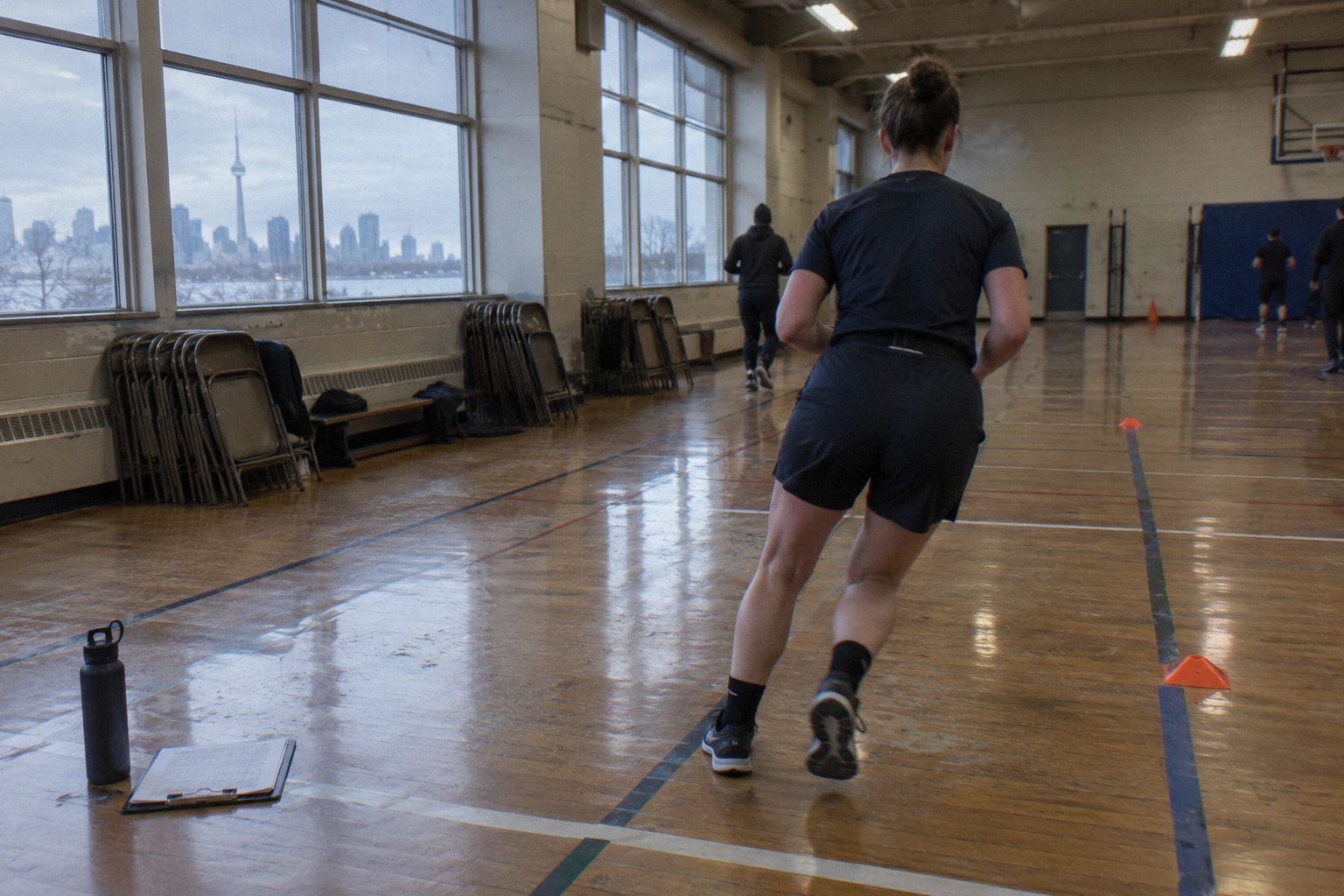
- Pass assessments, background, medical and physical tests, including the PREP pursuit and restraint circuit and 20m shuttle run used in Ontario, or equivalent tests elsewhere; this stage takes 3 to 12 months in total.
- Complete service training once hired, 26 weeks at the RCMP Academy (Depot) or 12 weeks at the Ontario Police College, at no tuition cost when the service has hired you first.
- Test your interest before applying with the 3-hour Understanding and Managing the Stresses of Police Work course from the University of Toronto on Coursera.
Do You Need A Licence Or Certificate To Work As A Police Officer In Canada?
Yes, training is mandatory in every province that sets out a regulator, though the rules differ sharply between Ontario and Quebec.
| Province | Required? | Regulator Or Registry | What It Means |
|---|---|---|---|
| Quebec | Yes | École nationale de police du Québec (ENPQ) | You need a Diploma of College Studies in police technology, or an Attestation of College Studies in police technology with a promise of employment, plus a driver's licence, fingerprints and a passed medical examination |
| Ontario | Yes | Ontario Police College | The prescribed training is the Basic Constable Training Program delivered by the College, taken after hiring |
A Coursera course certificate does not give you police training status anywhere in Canada. Ontario's Community Safety and Policing Act regulations name the Basic Constable Training Program at the Ontario Police College as the prescribed training, and Quebec's ENPQ sets its own admission requirements including a promise of employment from a Quebec police service. Both are entry doors controlled by the services themselves, not by course providers.
Which Policing Courses Are Worth Taking In Canada?
Coursera offers a fast way to test the field, Canadian college programs can provide policing-related diplomas and certificates, and Udemy sits in between; Ontario's prescribed training is still the OPC Basic Constable Training Program after hiring.
Understanding and Managing the Stresses of Police Work
Understanding and Managing the Stresses of Police Work is a 3-hour online course from the University of Toronto with a shareable certificate.
| Provider | University of Toronto |
|---|---|
| Length | 3 hours to complete |
| Rating | 4.8 (453 reviews) |
| Credential | Shareable certificate |
| Format | online |
Fiona's take: This is my top pick for anyone considering the field. It is short, rated 4.8 from 453 reviews, and it covers psychological challenges and stressors in police work. I tell clients to take it before applying anywhere, because it costs you one evening and tells you more about fit than any recruitment brochure. It does not qualify you for any police service.
Skip it if: Skip it if you are already deep in an application process and have real exposure to the job through ride-alongs or service experience.
Start On CourseraHot Topics in Criminal Justice
Hot Topics in Criminal Justice is a 2-week online course at 10 hours a week from Vanderbilt University with a shareable certificate.
| Provider | Vanderbilt University |
|---|---|
| Length | 2 weeks at 10 hours a week |
| Rating | 4.7 (199 reviews) |
| Credential | Shareable certificate |
| Format | online |
Fiona's take: At 4.7 from 199 reviews, this one builds criminal justice vocabulary around current debates in the justice system, which I find useful preparation for diploma coursework. Two weeks at 10 hours a week is a real commitment, so I recommend it for applicants who want substance rather than a quick sampler.
Skip it if: Skip it if you only want a fast feel for the field, since the 3-hour University of Toronto stress course does that job faster.
Start On CourseraLeaders in Citizen Security and Justice Management
Leaders in Citizen Security and Justice Management is a 4-week online course at 10 hours a week from Banco Interamericano de Desarrollo with a shareable certificate.
| Provider | Banco Interamericano de Desarrollo |
|---|---|
| Length | 4 weeks to complete at 10 hours a week |
| Credential | Shareable certificate |
| Format | online |
Fiona's take: This is the longest Coursera option in the pack and it leans toward justice management rather than frontline policing. I suggest it for applicants targeting promotion tracks or civilian justice roles later in a career, not as a first step toward Depot or the Ontario Police College.
Skip it if: Skip it if your goal is frontline hiring, where a college diploma or direct application matters far more.
Start On CourseraCertificate in Professional Criminology - Fully Accredited
Certificate in Professional Criminology is a 3h 51m online course from Dr. Ankita Kashyap on Udemy with an internationally accredited certificate.
| Provider | Dr. Ankita Kashyap |
|---|---|
| Length | 3h 51m total length |
| Rating | 4.6 (24 ratings) |
| Credential | Internationally Accredited Certificate |
| Format | online |
Fiona's take: The title sounds bigger than what it is: a 3-hour survey of criminology with a 4.6 rating from 24 ratings. It can fill theory gaps in a single evening, but no Canadian police service treats it as a credential, so treat it as background reading with a certificate attached.
Skip it if: Skip it if you expect the certificate to carry weight with a recruiter or a college admissions office.
View On UdemyPolice Legitimacy, Procedural Justice & Community Relations
Police Legitimacy, Procedural Justice & Community Relations is a 44m online course from Charles Rambo on Udemy with a certificate of completion.
| Provider | Charles Rambo |
|---|---|
| Length | 44m total length |
| Rating | 4.5 (39 ratings) |
| Credential | Certificate of completion |
| Format | online |
Fiona's take: At 44 minutes and a 4.5 rating from 39 ratings, this is a quick primer on procedural justice, a topic I consider core to modern community policing. It is a decent warm-up but nothing more.
Skip it if: Skip it if you already have any coursework or service exposure covering community policing.
View On UdemyPolicing and Community Safety
Policing and Community Safety is a 2-year in-person or hybrid diploma from Georgian College leading to an Ontario College Diploma.
| Provider | Georgian College |
|---|---|
| Length | 2 Years |
| Credential | Ontario College Diploma |
| Format | In-person and hybrid option, Ontario |
Fiona's take: This is the credential route in Ontario. Two years, with a hybrid option, and an Ontario College Diploma. I recommend it for Ontario applicants who want the diploma as a fallback if they are not hired straight out of high school; Ontario's prescribed training is still the Basic Constable Training Program at the Ontario Police College after hiring.
Skip it if: Skip it if you are outside Ontario or want the paid RCMP route instead.
See Program DetailsPolice Foundations
Police Foundations is a 4-semester Ontario College Diploma from Seneca Polytechnic delivered online or hybrid.
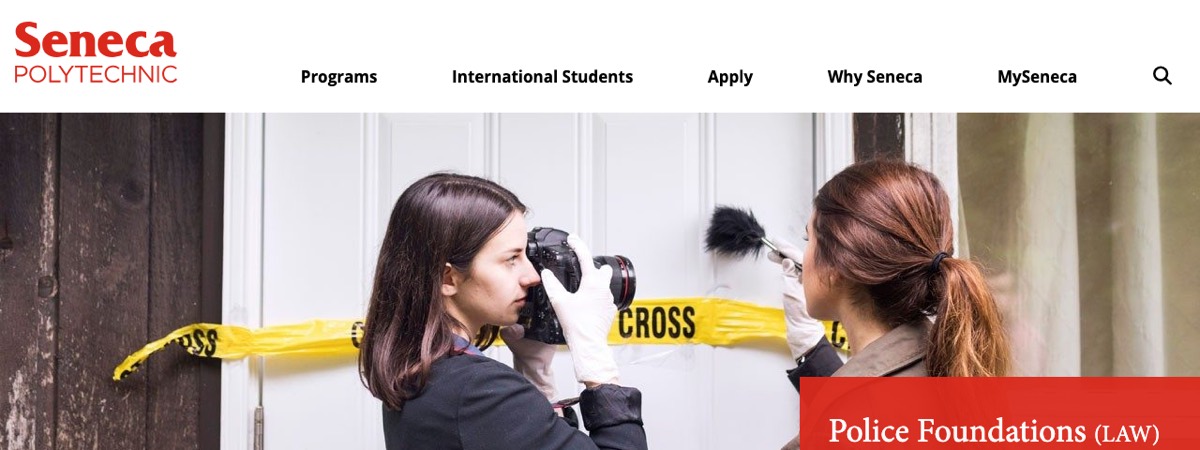
| Provider | Seneca Polytechnic |
|---|---|
| Length | 4 Semesters (Fall start - 24 months, Winter start - 16 months) |
| Credential | Ontario College Diploma |
| Format | Online, Hybrid, Ontario |
Fiona's take: Seneca's flexibility is the draw: a fall start runs 24 months and a winter start compresses to 16 months, and you can take it online. That winter-start option makes it one of the faster diploma routes in the pack. I recommend it for working applicants who cannot move for school.
Skip it if: Skip it if you would rather earn while you train through the RCMP.
See Program DetailsPolice Studies - Police and Investigations Diploma
Police Studies - Police and Investigations Diploma is a 2-year in-person diploma from MacEwan University.
| Provider | MacEwan University |
|---|---|
| Length | 2 years |
| Credential | Diploma |
| Format | in person, Alberta |
Fiona's take: MacEwan gives Alberta applicants a university-based police studies route with an investigations focus. Two years in person is a real commitment, but the university setting suits anyone weighing policing against other justice careers. I recommend it for Albertans who want that breadth.
Skip it if: Skip it if you want the shortest path, since direct application to a service remains faster.
See Program DetailsLaw Enforcement Program
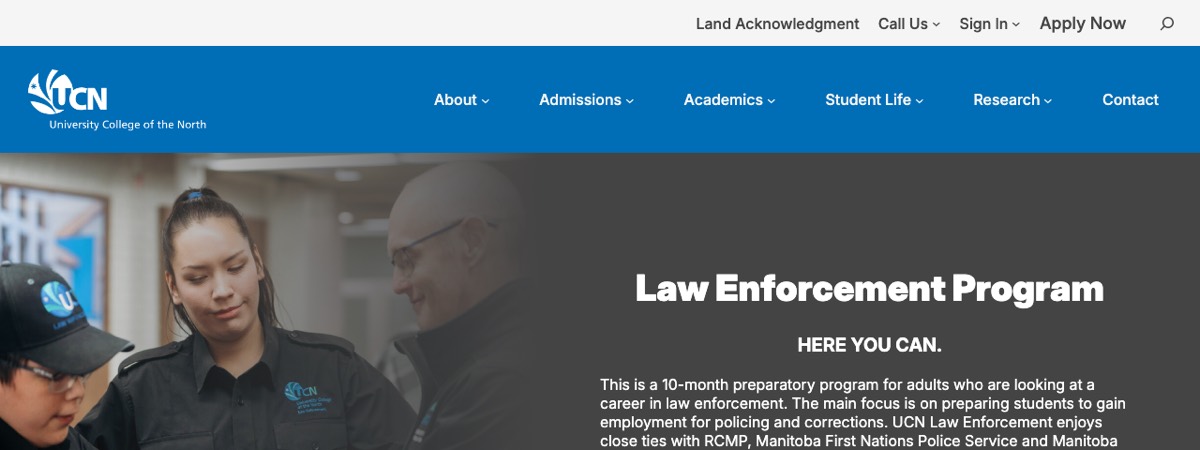
Law Enforcement Program is a 10-month in-person certificate from University College of the North in Manitoba.
| Provider | University College of the North |
|---|---|
| Length | 10 Months |
| Credential | Certificate |
| Format | In Person, Manitoba |
Fiona's take: At 10 months, this is the shortest college credential in the pack. University College of the North delivers it in person in Manitoba, and I recommend it for applicants in that province who want a policing-focused certificate without committing to a two-year diploma.
Skip it if: Skip it if you can access a two-year diploma or apply directly to a service more conveniently.
See Program DetailsPolice and Justice Studies Diploma
Police and Justice Studies Diploma is a two-year in-person diploma from Thompson Rivers University.
| Provider | Thompson Rivers University |
|---|---|
| Length | Two years |
| Credential | Diploma |
| Format | in person, British Columbia |
Fiona's take: Thompson Rivers gives British Columbia applicants a broad justice studies base rather than a service-specific pipeline. I recommend it for BC applicants who want options across policing, corrections and other justice roles.
Skip it if: Skip it if you are set on policing alone and want the direct application route.
See Program DetailsJustice Studies Diploma
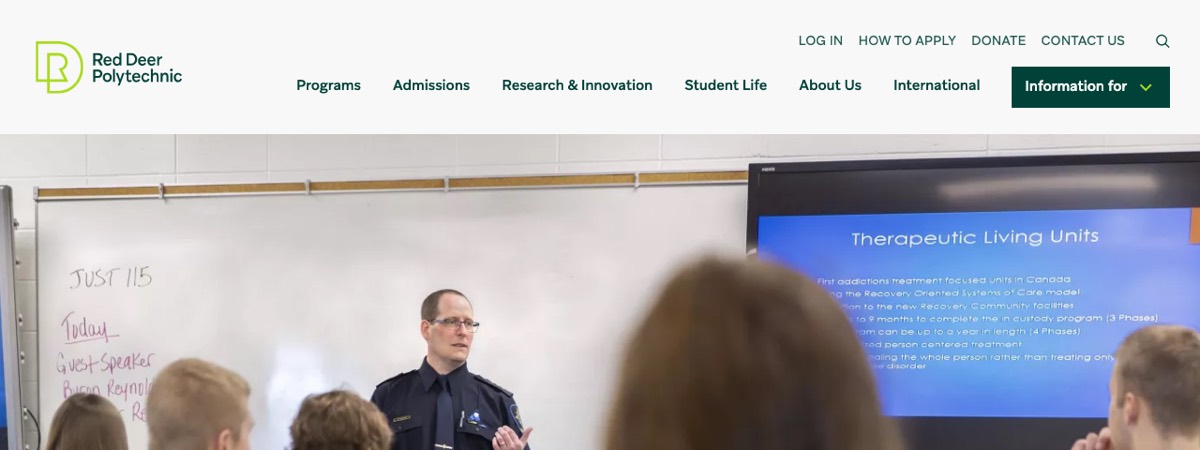
Justice Studies Diploma is a 2-year full-time on-campus diploma from Red Deer Polytechnic.
| Provider | Red Deer Polytechnic |
|---|---|
| Length | 2 Years |
| Credential | Diploma |
| Format | Full-Time On Campus, Alberta |
Fiona's take: Red Deer Polytechnic's broad justice curriculum makes it a solid Alberta alternative to MacEwan. I recommend it for Alberta applicants who prefer the polytechnic setting and a general justice studies base.
Skip it if: Skip it if you need online delivery, since this program is full-time on campus.
See Program DetailsPolicing and Community Safety
Policing and Community Safety is a 2-year in-person Ontario College Diploma from Fanshawe College.
| Provider | Fanshawe College |
|---|---|
| Length | 2-year diploma program |
| Credential | Ontario College Diploma |
| Format | in person, Ontario |
Fiona's take: Fanshawe's program covers the same ground as other Ontario policing diplomas over two years in person. I recommend it for applicants who want a local credential at a college known for its policing programs. The pack confirms OSAP eligibility for Confederation College's Police Foundations program; check Fanshawe directly.
Skip it if: Skip it if in-person delivery in that area is out of reach and Seneca's online option fits better.
See Program DetailsHow Much Does A Policing Education Cost In Canada?
Policing education costs range from zero with the RCMP to roughly $4,240 in first-year academic fees for an Ontario Police Foundations diploma.
| Item | Cost (CAD) |
|---|---|
| RCMP Cadet Training (26 weeks) | 0 (paid training) |
| Police Foundations diploma tuition per year (Confederation College, domestic) | $2,740 |
| Police Foundations estimated academic fees per year (tuition plus ancillary) | $4,240 |
| Ontario diploma route, full range per year | $4,000-5,500 |
| Record check, seminars, courses, first aid, medicals | $143+ |
Confederation College's Police Foundations listing breaks year one into $2,740 in tuition plus ancillary fees to reach $4,240, which is why the practical planning number is the higher one. Confederation also lists $143 for record check, seminars, courses, first aid and medicals. The RCMP route avoids tuition entirely, and successful applicants are paid through the 26 weeks at Depot, which makes it the no-tuition route for people who can get hired first.
The Coursera and Udemy courses in this comparison do not list a price in the pack, so check the current price on the platform before you enrol. Compare that against the $143 Confederation lists for record checks, first aid and medicals, and against the tuition you would avoid entirely by getting hired first.
How Much Does A Police Officer Earn In Canada?
Police officers (NOC 42100) earn a median of $50.00 per hour in Canada, with every province above $45.00.
| Province | Median Hourly |
|---|---|
| Canada (median) | $50.00 |
| Newfoundland and Labrador | $48.08 |
| Prince Edward Island | $52.88 |
| Nova Scotia | $50.00 |
| New Brunswick | $50.00 |
| Quebec | $45.08 |
| Ontario | $50.55 |
| Manitoba | $51.30 |
| Saskatchewan | $52.00 |
| Alberta | $50.00 |
| British Columbia | $54.00 |
| Yukon | $53.92 |
| Northwest Territories | $52.77 |
| Nunavut | $56.47 |
The spread matters less than in most careers: Quebec's $45.08 median is the lowest provincial figure and British Columbia's $54.00 is the highest, with the territories reaching $56.47 in Nunavut. At a national median of $50.00 per hour per Job Bank, policing pays at or above $45.00 everywhere in the country. Job Bank rates the outlook as good or balanced depending on the source, with openings projected from retirements and growth.
Is A Policing Certificate Worth It In 2026?
A policing certificate from Coursera or Udemy is worth almost nothing on its own as a hiring credential, and I say that plainly. Ontario prescribes the Basic Constable Training Program at the Ontario Police College, and Quebec's ENPQ requires a police technology DEC or AEC plus a promise of employment, so no online course opens those doors. What a 3-hour course like Understanding and Managing the Stresses of Police Work does is tell you whether the stress profile of the job fits you before you spend two years and thousands of dollars on a diploma.
The college diploma is worth it as insurance. Ontario removed its plan to mandate a postsecondary requirement, so a high school diploma is the minimum in Ontario, but many applicants still complete a Police Foundations diploma because it gives you a fallback credential if hiring stalls. At $50.55 median hourly in Ontario against roughly $4,240 in first-year fees, the wage stands on its own once you are hired.
My verdict: this career suits applicants who pass the medical, physical and background hurdles and who want structured, well-paid public service work. If any of those hurdles looks risky, test the field with a short Coursera course first, because it costs you a weekend instead of a tuition payment.
Can You Get Funding For A Policing Diploma?
Ontario applicants can access provincial student aid for eligible college programs.
- OSAP (Ontario Student Assistance Program). Confederation College lists its Police Foundations program as OSAP eligible. OSAP is a mix of grants and loans, and the loan portion must be repaid, so treat it as deferred cost rather than free money. Check with the college and the OSAP application for your exact assessment.
Policing Questions Canadians Ask
How Long Does It Take To Become A Police Officer In Canada?
The process typically takes 6 to 12 months including assessments and training, per the Ontario Association of Chiefs of Police hiring FAQ. College programs add 1 to 2 years on top of that, and the RCMP's Cadet Training itself runs 26 weeks at Depot.
What Education Is Required To Become A Police Officer In Ontario?
A high school diploma is the minimum in Ontario, and Ontario scrapped its plan to mandate a postsecondary requirement for police, as reported by The Globe and Mail. Many applicants still complete a Police Foundations diploma, which provides a fallback credential. You will complete the Ontario Police College Basic Constable Training Program after hiring.
Do I Need A College Diploma For Policing In Quebec?
Yes. Quebec's ENPQ requires a Diploma of College Studies in police technology, or an Attestation of College Studies in police technology with a promise of employment, plus ENPQ training, a driver's licence, fingerprints and a passed medical examination. Quebec is the strictest province in the pack on prior education.
Is RCMP Training Paid?
Yes. Successful applicants enter the 26-week Cadet Training Program at the RCMP Academy, known as Depot, and the pack confirms RCMP Cadet Training is paid and has no tuition cost. Other service training in the pack is listed at a cost of 0 if hired first, so hiring before training is the pattern to aim for.
What Physical Tests Are Required For Police Recruits?
In Ontario, recruits should expect PREP-style testing, including a pursuit and restraint circuit and a 20m shuttle run at the Ontario Police College or an equivalent location; other services may use equivalent tests. I tell applicants to train for the shuttle run specifically, because cardio standards end more applications than background checks do. Build in months of preparation time before testing.
What Is The Median Wage For Police Officers In Canada?
Police officers (NOC 42100) earn a median of $50.00 per hour nationally, per Job Bank's 2025 wage data. Provincially, the range runs from $45.08 in Quebec to $54.00 in British Columbia, with Nunavut highest at $56.47.
What Is The Job Outlook For Police Officers In Canada?
The outlook is rated good or balanced depending on the source, with NB Jobs rating the NOC 42100 profile as good and thousands of openings projected from retirements and growth. Demand varies by service and region, so check the specific force you are applying to as well as the national picture.
Can I Test Policing Interest With A Short Online Course?
Yes. The University of Toronto's Understanding and Managing the Stresses of Police Work takes 3 hours to complete and carries a shareable certificate, rated 4.8 from 453 reviews. It does not qualify you for any police service, but it exposes you to the stress realities of the job before you spend money on a diploma or months on an application. The pack does not list its price, so check Coursera for current pricing.
What's The Bottom Line On Policing Certificates In Canada?
- Online policing certificates from Coursera or Udemy never replace police training; Ontario requires the Ontario Police College Basic Constable Training Program and Quebec requires the ENPQ path.
- The RCMP route charges no tuition: 26 weeks of paid Cadet Training at Depot, following a 3 to 12 month application process.
- An Ontario Police Foundations diploma costs roughly $4,240 in year one at a public college and takes 2 years, plus 12 weeks at the Ontario Police College after hiring.
- Police officers (NOC 42100) earn a median of $50.00 per hour in Canada, from $45.08 in Quebec to $56.47 in Nunavut.
- Start with Understanding and Managing the Stresses of Police Work from the University of Toronto: 3 hours, rated 4.8 from 453 reviews, and it tells you whether this career fits before you commit to a diploma.